
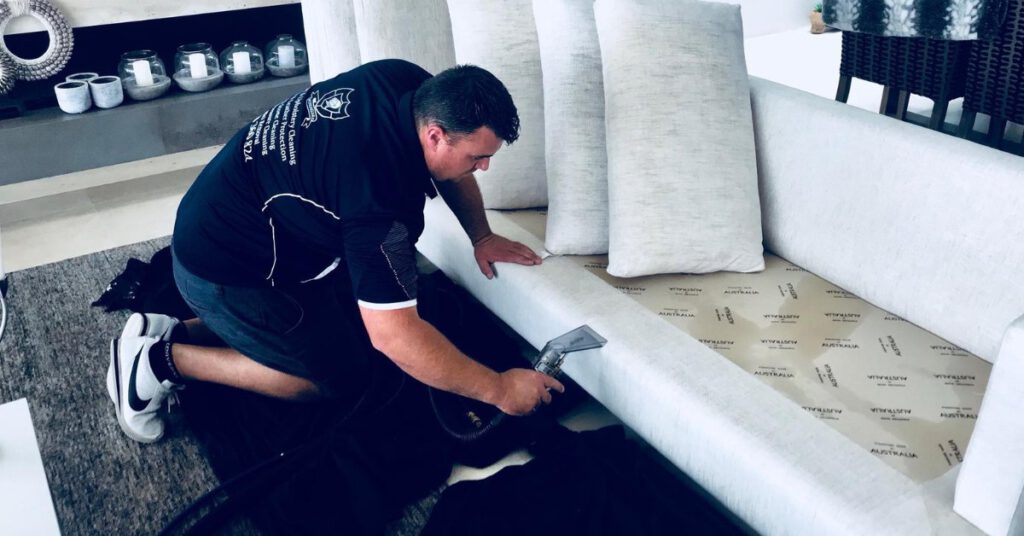
Using a hired extraction machine is not equivalent to engaging a professional upholstery cleaning service, as these represent distinct processes. The machine available for rental is designed to inject water into a fabric and extract a portion of it back out. While this description outlines its function, it also explains why many sofas appear worse after a DIY cleaning, often within just a week.
Since 1983, Wundaguard has specialised in cleaning and protecting furniture. Below, we will clarify the key differences in upholstery cleaning methods, prioritising the most significant aspects.
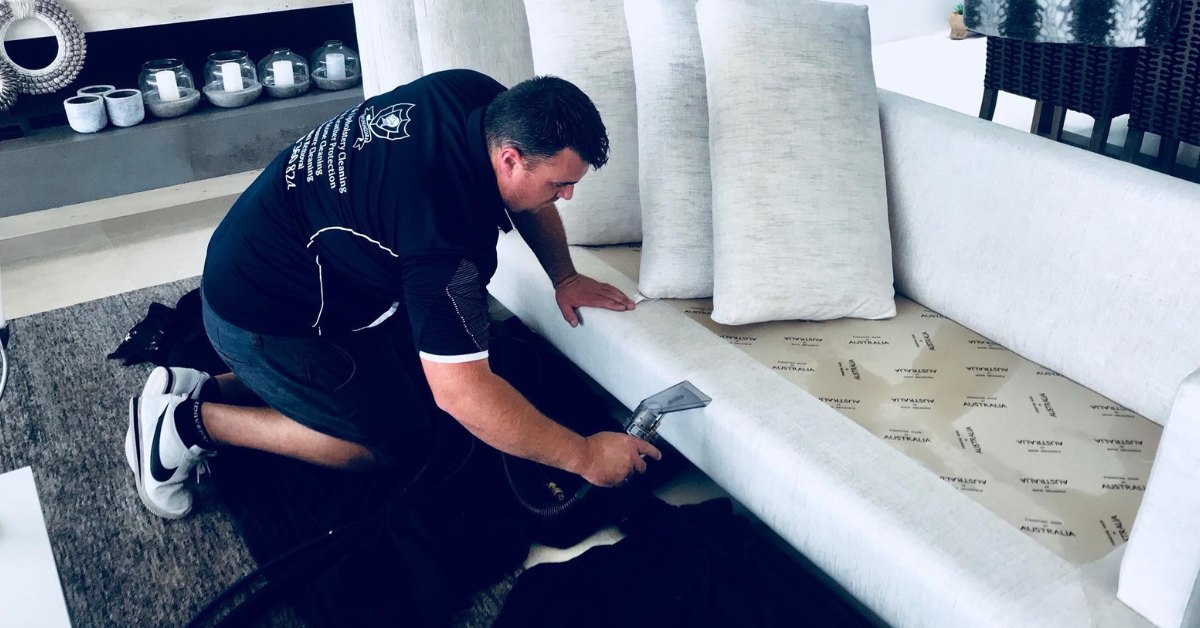
Essential Insights on Upholstery Cleaning
- Selection of the cleaning method should be based on the fabric type, rather than the machine available for hire.
- Excessive moisture can lead to wicking, unpleasant odours, and tannin bleeding, often manifesting days later.
- Rental machines lack the capability to control drying, which is a crucial aspect of the cleaning process.
- Your lounge features a cleaning code on its label, which determines the safest cleaning method.
How Does Professional Upholstery Cleaning Differ from DIY Methods?
The first distinction arises even before any moisture is introduced. A professional begins by identifying the type of fibre and examining the manufacturer’s cleaning code. This informs the selection of the appropriate cleaning method. In contrast, a hire machine offers only one cleaning approach, which is applied indiscriminately to any piece of furniture.
This choice is significant because upholstery fibres react differently when exposed to water. Fabrics such as viscose and rayon can lose their strength when wet, possibly causing permanent distortion. Velvet and boucle fabrics, which have a pile or loop texture, can become flattened due to water pressure. Linen is prone to shrinking and may watermark, while wool may felt if agitated. These considerations are quite common in Australian lounge rooms.
We have detailed the meanings of the W, S, W-S, and X tags on your furniture in a separate article. Taking a moment to read this before cleaning could be invaluable. An X coded fabric, for instance, must not be wet cleaned at all. Unfortunately, a hire machine cannot recognise this, nor can the person operating it.
What Are the Consequences of Over Wetting Upholstery?
Over wetting leads to moisture penetrating deeper into the furniture than the machine can effectively extract. Upholstery is not a flat surface; it consists of layers—fabric over foam atop webbing and a frame. A hire machine’s suction is designed for flat surfaces, not for complex structures.
The ensuing problems are predictable. Moisture becomes trapped within the foam, which can carry dissolved dirt back to the surface as it dries. This explains why a stain that was removed on Sunday can reappear as a brown ring by Wednesday. This phenomenon is known as wicking.
If the foam remains damp for an extended period, it can develop an unpleasant odour. in lighter-coloured frames, tannins from the timber may bleed into the fabric at the base, creating a difficult-to-reverse issue.
General Guidelines for Upholstery Cleaning
A professional clean should leave your lounge slightly damp to the touch, with a drying time of just a few hours—not soaking wet, nor taking a full day to dry. If you can press a towel into a cushion after cleaning and extract visible water, it indicates that too much moisture was introduced.
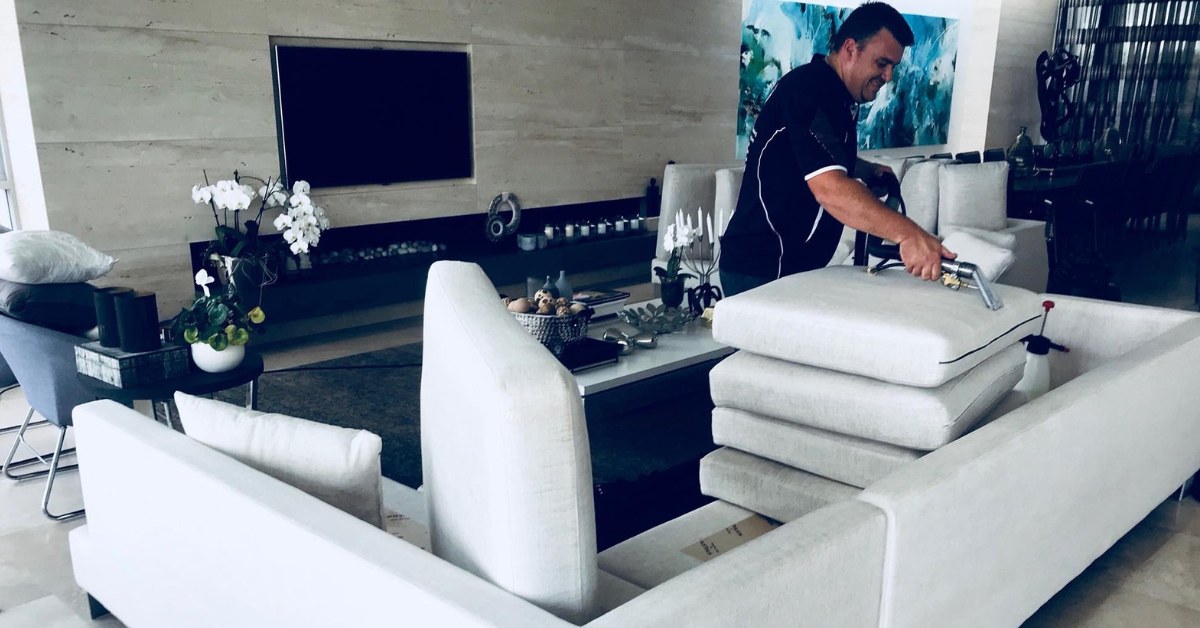
Is Drying an Integral Part of Upholstery Cleaning?
Absolutely, and it is an aspect that rental machines cannot assist with. Controlling the drying process is essential to prevent wicking, watermarking, and unpleasant odours.
On-site drying management involves regulating the initial moisture input, ensuring proper extraction, and utilising airflow to aid in drying. For instance, during a humid week in Sydney, a lounge that might dry in three hours in September could take nearly a whole day in February. The drying method must adapt to the weather conditions, which we discuss in our article on whether sofas should be steam cleaned or dry cleaned.
Dry cleaning solvents are specifically designed for fabrics and situations where water is not appropriate. Unfortunately, a hire machine does not provide that option.
How Do Cleaning Solutions Differ Between Professionals and DIY Methods?
Rental machines typically come with a generic cleaning solution that is broadly safe across various surfaces. being safe across multiple materials often means it is not particularly effective on any single type, and it frequently leaves behind a residue.
Residue poses a subtle challenge. Any detergent that remains in a fibre can create a sticky surface, which attracts soil more rapidly than clean fibres do. This is why a lounge that has been cleaned using DIY methods may appear acceptable for a couple of weeks before becoming dirty much faster than before. The fabric has not deteriorated; it has simply been left tacky.
There is a risk that the cleaning solution may disrupt any protective treatments that were applied when the lounge was delivered. An aggressive DIY cleaning method can strip away these protections, which were essential for making spills manageable in the first place.
When Is It Appropriate to Use DIY Cleaning Methods?
For fresh spills, a DIY approach is not just acceptable; it is often preferable, as speed is crucial in those initial moments. Be sure to blot—never rub—working from the outer edges toward the centre, and use the smallest amount of liquid necessary.
DIY becomes impractical when it comes to cleaning an entire piece, tackling older set-in stains, dealing with unidentified fabrics, or handling leather. We thoroughly address the spill-cleaning scenario in our article on why DIY spot cleaning can exacerbate stains.
What Are the Costs Associated with Professional Upholstery Cleaning?
At Wundaguard, we price upholstery cleaning based on the number of seats, with leather couch cleaning starting from $66 per seat. Fabric protection is also quoted per seat. Factors that influence the price include the type of fibre, the size of the piece, its condition, and whether post-cleaning protection is applied.
When comparing costs, focus not on the hire machine versus professional clean, but on the value of the clean versus the piece of furniture. A lounge is one of the more expensive items in a room, and the cost of a poorly executed cleaning method can far exceed the investment in a proper professional service.
You can explore the process in detail on our sofa cleaning page, or contact Wundaguard at 1300 360 824 for a quote tailored to your furniture needs.
Commonly Asked Questions
Is it Safe to Use a Hire Machine on My Couch with Caution?
If you have a W coded, colourfast fabric with a light soil load, you may achieve an acceptable result by being careful and using minimal moisture. for fabrics coded S or X, as well as velvet, boucle, viscose, linen, wool, or any leather, the potential for permanent damage is significant.
Why Did My Stain Reappear After Cleaning?
This phenomenon is known as wicking. Moisture penetrated deeper into the foam than could be extracted, leading to dissolved soil being brought back to the surface as the upholstery dried. This is a classic indicator of over wetting rather than a failure to remove the stain.
How Long Should It Take for My Lounge to Dry?
Drying should take hours, not days. The exact duration depends on the fabric, the cleaning method used, and the day's humidity. This is why the same lounge may dry in three hours in September but take most of a day in February. If a piece remains damp the following morning, it likely indicates too much moisture was introduced, increasing the risk of wicking.
Will Professional Cleaning Remove My Fabric Protection?
A properly executed professional clean is designed to work in harmony with any existing fabric protection, and this protection can be reapplied afterwards if it has worn off. An aggressive DIY clean using a generic solution is much more likely to strip away these protective treatments, which are crucial for maintaining the fabric's resilience against spills.
Do You Offer Cleaning for Rugs in Addition to Lounges?
Yes, we provide rug cleaning as well. This process differs significantly because the type of fibre determines whether a rug should be steam cleaned or dry cleaned, and rugs are handled off the floor rather than remaining in place. You can learn more about how this decision is made in our article on rug cleaning based on the fibre type.
Original Article First Published At: Professional Couch Cleaning vs a Hire Machine: What Actually Changes