

Epoxy does not adhere to concrete; instead, it penetrates into it. This distinction is crucial, as it underpins the necessity for grinding. A floor coated with epoxy on a smooth, sealed, or dusty slab will eventually peel away, regardless of the quality of the product used.
Evo Epoxy Flooring, located in Kellyville, offers concrete grinding and floor preparation as part of its services. This article explains the grinding process, the consequences of skipping it, and how to evaluate whether a quote includes this essential step.
Essential Insights on Concrete Grinding and Epoxy Preparation
- Grinding enhances the concrete surface, allowing the coating to bond mechanically.
- A smooth or sealed slab provides no grip for epoxy, leading to potential delamination.
- Acid etching and a quick sand are not effective alternatives to proper grinding.
- If a quote omits preparation details, it likely excludes essential tasks to secure the job.
Understanding Concrete Grinding: Why Is It Essential for Epoxy Application?
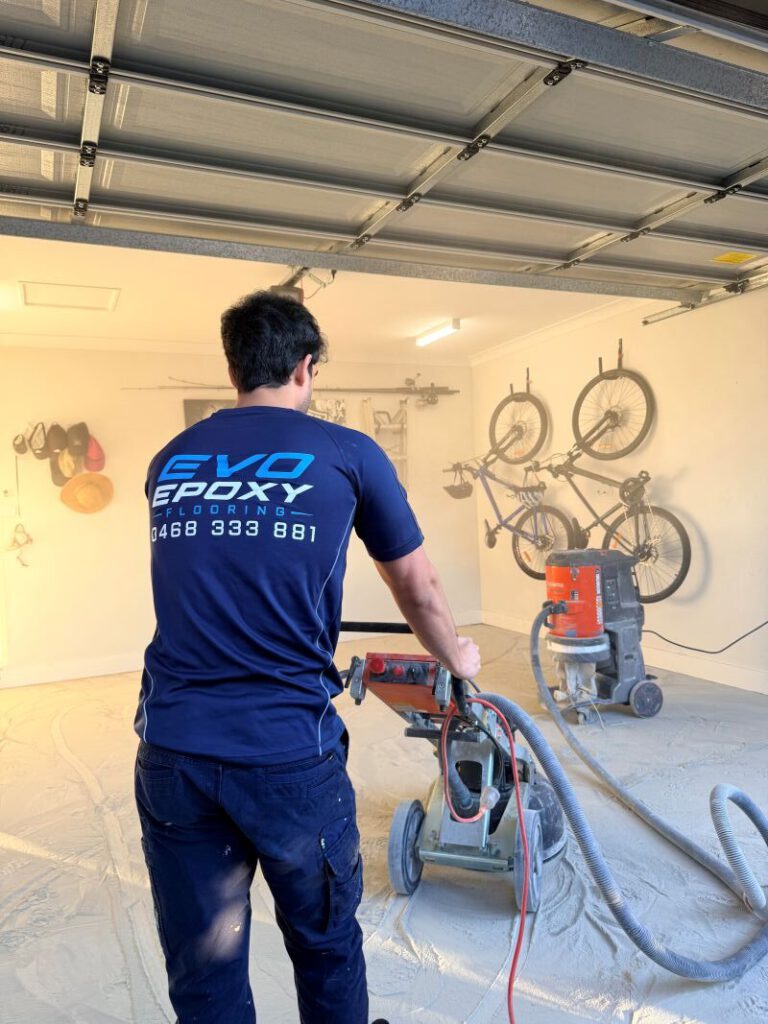
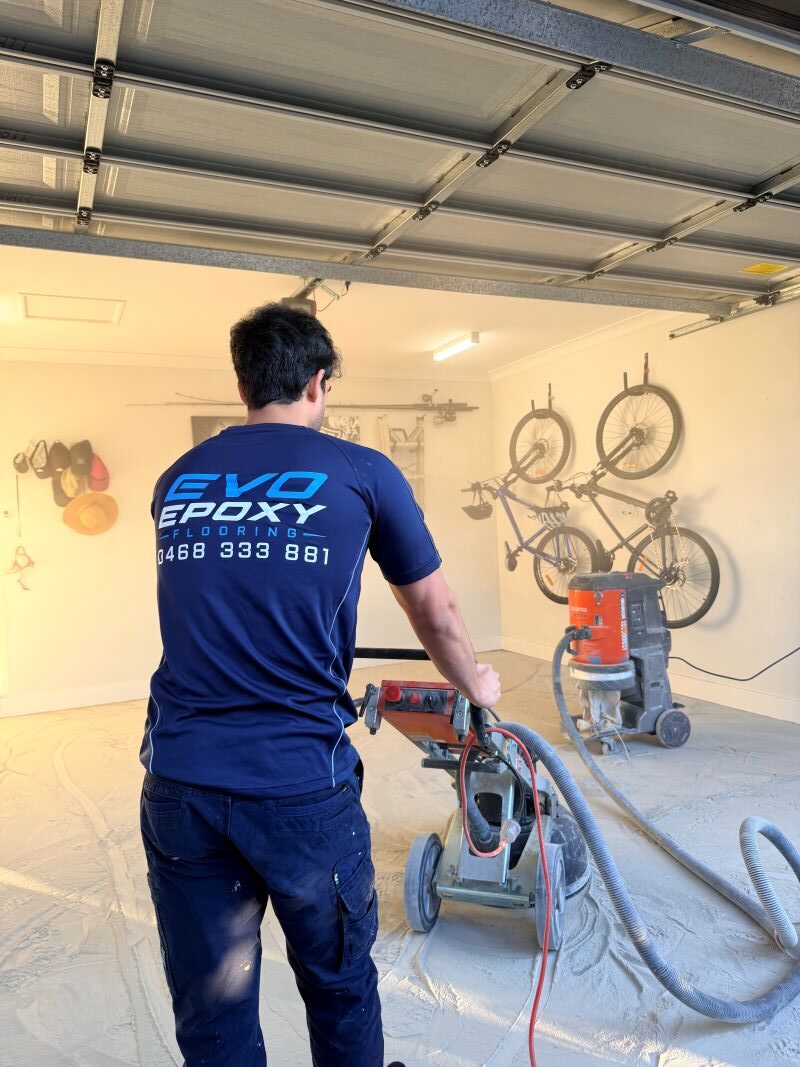
Concrete grinding employs diamond tools on a weighted machine to remove the upper layer of the slab. This process eliminates laitance, a weak layer of cement paste that forms as concrete cures, and leaves behind a rough, open profile that enhances adhesion.
This rough profile is crucial for bonding. Epoxy, initially a liquid, flows into the pores and fine scratches left by the grinding, hardening within them. The result is a mechanical bond rather than a simple adhesive layer.
If grinding is omitted, the coating must adhere to a polished, closed surface with no grip. While it may appear flawless initially, it typically fails later, often at edges or under heavy loads, and once it begins to lift, the problem worsens.
What Additional Issues Does Grinding Address Before Coating?
Preparation encompasses more than just creating a profile. Grinding reveals the true condition of the slab.
Many older garage floors are not bare concrete. They often contain curing compounds, old sealers, paint, adhesive from tiles or carpets, and oil that has penetrated over decades. Any of these can hinder epoxy bonding. Grinding removes surface contaminants and exposes deeper issues.
It also serves to level the slab. Trowel marks, high spots, and seams from multiple pours can create visible imperfections in the coating. Once the floor is glossy, these irregularities catch the light, making them more noticeable. Addressing these issues before applying the coating is much easier than trying to conceal them afterwards.
Why Is Oil Contamination a Concern in Garage Floors?
Oil in garage floors can migrate. You may grind away visible stains, but underlying contamination can resurface and affect the coating. A thorough preparation stage must include checking the slab for oil contamination after grinding, not just prior.
Can Acid Etching Replace Grinding?
No, acid etching is not a suitable substitute for grinding. It uses a diluted acid to etch the surface chemically and was once popular before grinders became common. it creates a much shallower profile than diamond grinding, fails to remove sealers, paint, or oil, and leaves behind salts that need to be neutralised and rinsed to prevent interference with the coating.
Consistency is another issue. Acid etching reacts differently to porous areas, resulting in an uneven profile across the floor. In contrast, diamond grinding ensures a uniform surface profile that is essential for successful coating application.
Using an orbital sander has similar drawbacks because it tends to polish rather than open the surface.
How Can You Identify Proper Floor Preparation?
A properly ground slab should appear dull, uniform, and slightly rough, resembling fine sandpaper. There should be no shiny spots. Glossy patches indicate areas where the grinder did not cut, and those spots are likely to fail first.
You should also witness the preparation process. Grinding generates significant dust, so a proper setup should include a vacuum connected to the machine. If someone arrives to coat your floor armed only with rollers and buckets, proper preparation is likely not being performed.
After finishing, signs of inadequate preparation can take months to manifest. Watch for lifting at edges, bubbles or blisters on the surface, and sections that peel away cleanly in sheets instead of tearing. A coating that separates smoothly, revealing untextured concrete beneath, indicates it never achieved a proper bond.
Does Every Floor Require the Same Level of Grinding?
No, this is where expertise comes into play. The extent of preparation required depends on the slab's condition, its history, and the type of coating being applied.
A newly poured residential garage with no previous coatings requires laitance removal and the establishment of a consistent profile. An old workshop slab with multiple coatings and years of oil contamination necessitates far more extensive preparation than the coating itself. Different finishes, like flake or metallic floors, also impose varying requirements because a high gloss finish highlights any imperfections in the slab.
Driveways present unique challenges due to their exposure to the elements and movement. We treat driveway coating and sealing as a distinct preparation issue, separate from garage flooring tasks.
What Details Should a Quote Include?
A quote should explicitly outline the preparation steps included. This includes diamond grinding, removal of any existing coatings, crack and joint repairs if necessary, and dust control measures.
If a quote only lists the coating system and provides a price per square metre, it likely omits the most labour-intensive aspect of the job. This omission is often intentional. Preparation is the slowest, messiest, and costliest phase, making it the first item cut when competing on price.
To determine the preparation required for your floor, we offer on-site assessments. Call 0468 333 881 or visit our garage epoxy flooring page to learn more about what a completed job entails.
Common Queries About Epoxy Flooring Preparation
Can Epoxy Be Applied Over an Existing Coating?
Sometimes, but only if the existing coating has been ground down and its bond integrity has been tested. Coating directly over an unstable layer risks the new floor being just as susceptible to failure as the old one, resulting in peeling at the same points.
How Much Dust Is Generated During Grinding?
A significant amount, which is why a vacuum is essential during the grinding process. When done correctly, dust is captured at the source rather than spreading throughout the house or workshop. If grinding occurs without proper extraction, dust will infiltrate nearby areas.
Is Grinding Necessary for a Brand New Slab?
Yes. New concrete contains laitance—the weak layer of fine cement paste that rises during curing—and may also have a curing compound applied shortly after pouring. Both must be removed to ensure proper bonding, making a thorough grind essential even for new slabs.
What Is the Duration of the Preparation Process?
The time required varies based on the slab's condition and size. A clean residential garage is quick to prepare, while a slab with old coatings, adhesives, or oil contamination will take significantly longer. This is why quotes for the same floor can differ widely.
What Are the Signs of a Failed Bond?
Signs include peeling in sheets, blisters, or sections lifting at the edges where wheels or doors catch them. If the piece that detaches is smooth underneath and the concrete below is also smooth, it indicates that the coating never achieved a proper bond with the slab.
Original Article First Published At: Concrete Grinding Before Epoxy: Why Skipping It Voids Your Floor


It’s fascinating to see how critical the grinding process is for ensuring a strong bond between epoxy and concrete! It’s a common misconception that simply applying a coat of epoxy will do the trick, but this article hits the nail on the head about mechanical bonding versus surface penetration. In my own experience, when I rushed through preparation on a project, I learned the hard way about the importance of the right surface texture – I faced peeling and delamination within months, which was quite disappointing.