
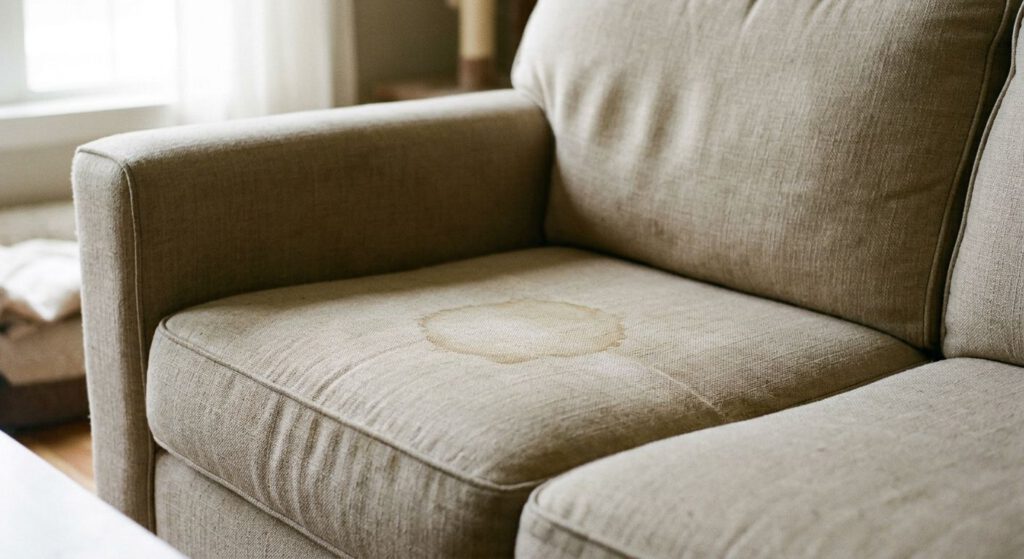
A glass of water spills, a damp towel rests on the couch, or someone gently wipes a small spot with a moist cloth. As the water evaporates, a few hours later, you may notice a pale ring or a brown edge on the upholstery that wasn’t there before. A water stain on a couch feels unjust, as the spill was merely water.
This guide delves into the reasons why water causes stains on fabric couches, identifies which water stains can typically be removed with appropriate cleaning techniques, discusses those that may persist, and indicates when it’s advisable to enlist a professional sofa cleaning service in Sydney.
What Causes Water Stains on a Fabric Couch?
Water leads to staining because it redistributes substances as it dries. When a section of upholstery becomes wet, the water lifts dirt, old residues, and sometimes loose dye from the fabric. As the area dries from the outside in, the water transports these materials to the edge of the wet spot, resulting in a ring that outlines the original spill.
Another factor lies beneath the fabric. A couch consists of fabric atop foam, webbing, and a frame, meaning water that seeps through penetrates deeper than what is visually apparent. As the foam dries, moisture moves back up to the surface, carrying dissolved dirt with it. This phenomenon is known as wicking, which explains why a mark can appear days after the spill seems to have dried. For a comprehensive understanding of wicking, refer to our post comparing professional couch cleaning with rental machines.
Warwick Fabrics, a leading Australian upholstery fabric supplier, cautions in its fabric cleaning guide that excessive wetting during spot cleaning can result in water marking and wetting of the underlying structure, potentially leading to additional stains. In essence, the water stain is often not solely due to the water itself, but rather what the water has displaced and how far it has penetrated into the couch.
How to Identify the Type of Water Stain on Your Couch
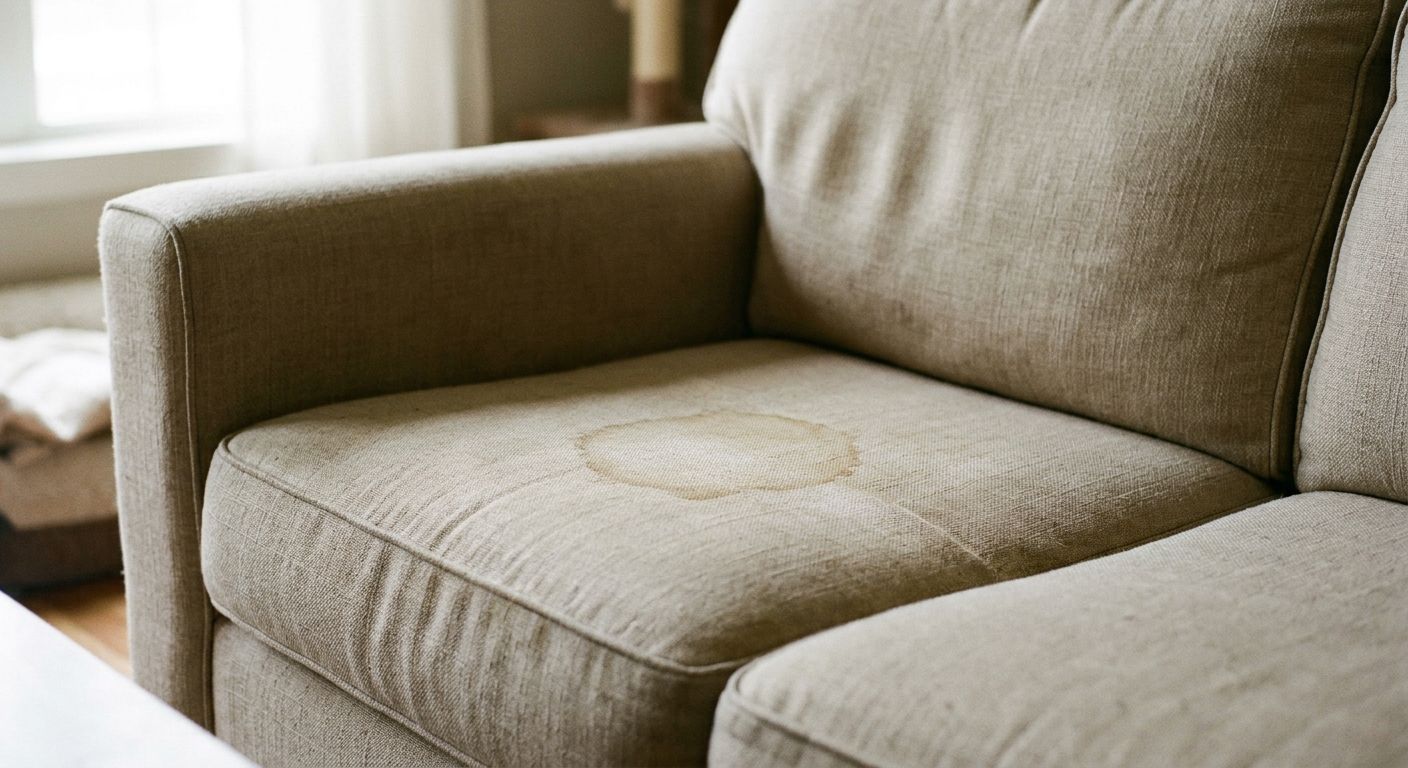
Not every water stain on a couch looks the same. By examining the colour and shape, you can glean important insights about the nature of the stain and the likelihood of successful removal.
- A light or dark ring with a clean centre: This indicates that soil and residues have been pushed to the edge of the wet patch as it dried.
- A brown edge or halo: This occurs when the water reacts with the fabric fibres or drags colour and residue along with it, often seen in natural fibres and water-sensitive materials.
- A mark that reappears after cleaning: This suggests that moisture penetrated deep into the foam and brought soil back to the surface as it dried.
- A yellow or brown stain along the base of the couch: On lighter couches, a soaked frame can leach timber tannins into the fabric, making it very challenging to reverse.
- A dull or flattened patch on velvet: The pile of the velvet may dry flattened or in varying directions, causing light to reflect differently.
Which Types of Fabric Couches Are Most Prone to Water Stains?
The type of fabric determines how a couch reacts to water. Many couches include a cleaning code on a tag found under the cushion or on the frame, indicating whether water is safe for cleaning. A code of W signifies that water-based cleaners are acceptable, S means solvent only, W-S indicates either option is suitable, and X means only vacuuming is allowed. For S or X fabrics, plain water can leave a watermark that may not come out with additional water. Our guide on understanding the W, S, W-S, and X tags on your lounge explains how to locate the code and what each letter signifies.
The fabrics most commonly affected by water marking include velvets, linens, viscose blends, and many designer fabrics found on newer couches. Viscose weakens when wet and may distort, while linen can shrink and watermark. Velvet often contains viscose and is typically coded S, meaning a damp cloth can both leave a ring and crush the pile simultaneously. If your couch is made of velvet, our article on how to clean a velvet sofa without crushing the pile provides detailed guidance.
Can You Remove a Water Stain from a Couch?
Many water stains on fabric couches can be removed or significantly improved, but this is not guaranteed for all stains. The outcome hinges on three main factors: what the water has carried, the type of fabric and its cleaning code, and what cleaning methods have already been attempted on the stain.
The soil that forms the ring remains embedded in the fibres. An effective clean that evenly removes this soil across the entire panel and dries the fabric quickly can eliminate the outline of the stain.
Some stains prove more challenging to remove. When water has transported dye from the fabric, when timber tannins have bled through from the frame, or when the fibre itself has suffered damage, the stain may become permanent. Repeated attempts at home can also diminish the chances of successful removal, as each round of scrubbing and re-wetting tends to spread the ring further and push residues deeper into the fabric. For velvet, a professional low-moisture re-clean and controlled drying can often even out a water ring, but there are no guarantees once a ring has set. Before starting the cleaning process, the technician inspects the fabric and the stain, providing insights on expected results.
Steps to Take When Water Spills on Your Fabric Couch
The initial moments following a spill are crucial in determining whether it dries cleanly or leaves a water stain behind. Your goal should be to extract the water from the couch rather than attempting to clean it immediately.
- Blot the area promptly with a clean, dry, white cloth or towel. Press down, lift, and then move to a dry section of the cloth.
- Avoid rubbing. Rubbing forces water deeper into the fabric’s weave and spreads the edge of the wet area.
- Consult the cleaning code before applying any additional products to the fabric.
- Do not remove cushion covers for separate washing, even if they have zips. Warwick Fabrics advises against detaching covers for individual cleaning.
- Allow the area to dry in a shaded spot, away from direct heat sources.
If a ring has already formed, refrain from further action. Adding more water to a dried water stain typically enlarges the ring, and on S or X fabrics, this may lead to a permanent mark. Warwick Fabrics also points out that it is generally more effective to clean entire panels of fabric rather than attempting spot cleaning small areas, which can be challenging to do evenly at home without causing over-wetting.
Why DIY Attempts Often Worsen Water Stains on a Couch
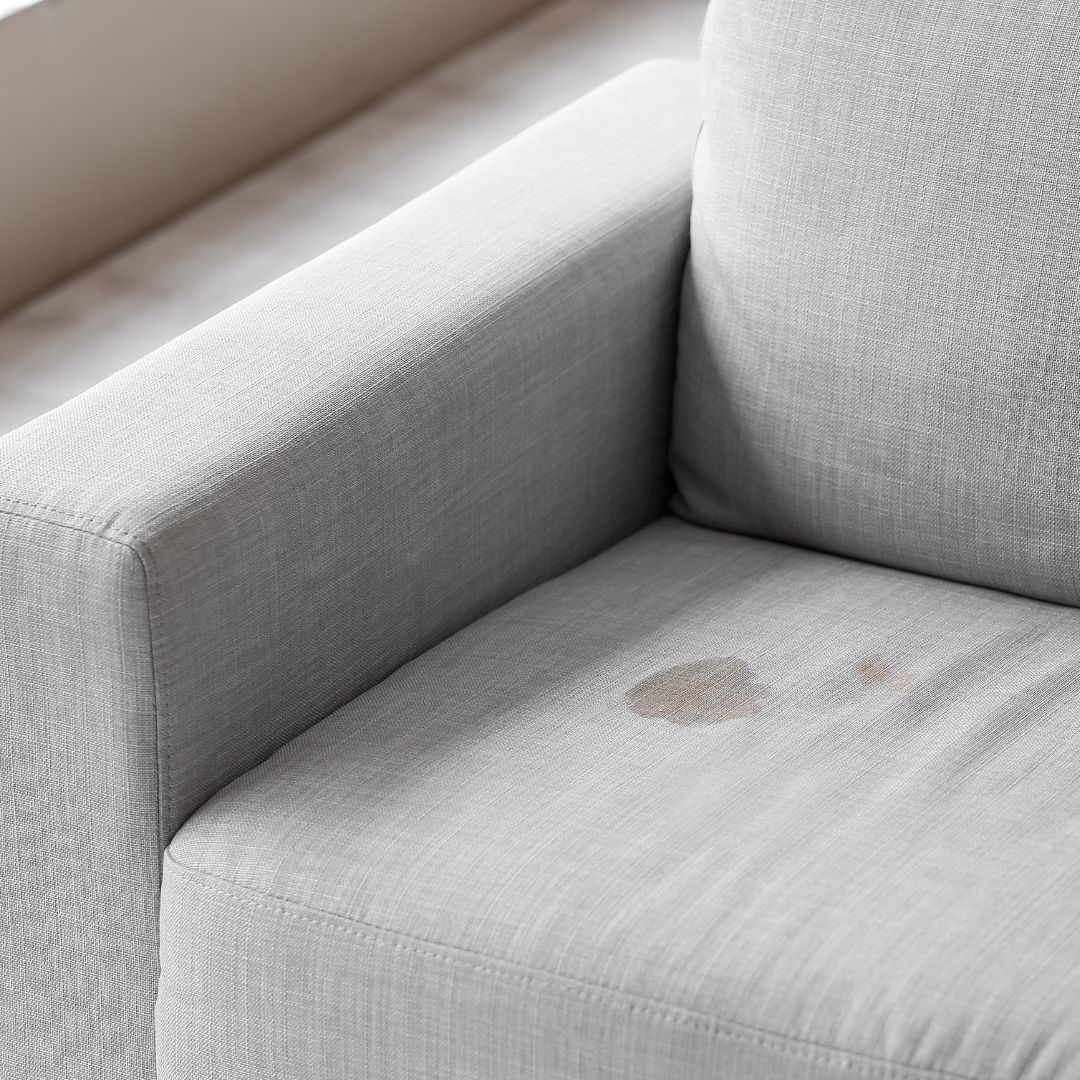
Many individuals instinctively grab a damp cloth and some detergent, then scrub at the ring. This approach introduces more water, which creates a larger edge. If detergent isn’t thoroughly rinsed out, it leaves a residue that attracts dirt, causing the cleaned area to appear darker than the surrounding fabric. Rental machines inject a significant amount of water into the couch and lack control over the drying speed of the foam, leading to wicking and unpleasant odours.
Every additional attempt can limit options for professional cleaning because a stain treated with inappropriate products is more difficult to lift evenly. We discuss common pitfalls in our article on why DIY spot cleaning frequently exacerbates stains. If the mark is a ring rather than a fresh spill, booking a professional clean early provides the best chance for a successful outcome.
How Wundaguard Effectively Removes Water Stains from Fabric Couches
Wundaguard has been cleaning and protecting upholstery throughout Sydney since 1983. Our sofa cleaning process follows a systematic seven-step approach tailored to the fabric and the specific stain. Throughout the cleaning procedure, the technician carefully manages moisture levels and drying speed, ensuring that even drying prevents new rings from forming.
- Inspection of the fabric type, cleaning code, condition of the couch, and the water stain itself.
- A pre-vacuum to eliminate dry soil and dust from the surface and crevices.
- Pre-spotting of the stain and any other marks.
- An even pre-spray of cleaning solution across the entire panel to ensure comprehensive treatment.
- A deep clean using hot water extraction or a dry, low-moisture method, selected based on the fabric type.
- Spot treatment for any remaining stains.
- Deodorising to leave the couch smelling fresh.
Durable, colourfast fabrics typically undergo hot water extraction. Delicate fabrics, natural fibres, and those that should not be excessively wet are cleaned using a dry or low-moisture method. The criteria for choosing between the two methods are detailed in our guide on whether sofas should be steam cleaned or dry cleaned. Sofa and couch cleaning services start from $55 per seat, and you can view the complete service details on our sofa cleaning Sydney page.
Preventing Future Water Stains on Your Couch
Applying fabric protection provides an additional buffer. A protected fabric absorbs liquids more slowly, allowing spills to remain on the surface long enough to be blotted away before soaking into the foam. This is particularly important for water-sensitive fabrics that are prone to marking. Wundaguard offers fabric protection starting from $44 per seat, which can be applied during the same visit as a sofa clean.
Protection must be complemented by proper care. Warwick Fabrics notes that fabric protectors do not eliminate the need for regular vacuuming, routine cleaning, or general upkeep. Quickly blotting spills, keeping wet towels and swimsuits off the cushions, and scheduling regular couch cleaning all contribute to reducing the risk of future water stains.
Common Questions About Water Stains on Couches
Will a water stain on a couch disappear on its own?
The ring consists of soil, residues, or dye that the water has moved to the edge of the wet area, and this material remains in the fibres until it is evenly cleaned out. Leaving the ring undisturbed is generally better than scrubbing it with additional water.
Are water stains on a fabric couch permanent?
Many water stains on fabric couches can be significantly improved or removed, especially if addressed promptly. Stains are more likely to become permanent if the water has transported dye, if timber tannins have bled from the frame, or if the fibres have been damaged due to repeated home cleaning attempts.
Why did a water stain appear after I cleaned my couch?
A mark that surfaces post-cleaning is typically a result of wicking. Excess water has infiltrated the foam, and as it dries, it brings dissolved soil back to the surface. This indicates over-wetting rather than a failure to remove the stain.
Can you remove a water stain from a velvet or linen couch?
Velvet and linen require a low-moisture cleaning method and careful drying, as both are easily marked by water. Velvet also needs grooming of the pile during drying to prevent it from becoming crushed. A professional low-moisture re-clean and controlled drying can often even out a water ring on velvet, but it is not guaranteed once the ring has set.
How much does it cost to clean a water stain off a couch?
Wundaguard offers sofa and couch cleaning services priced per seat, starting from $55. The final cost depends on the size of the couch, the type of fabric, and its condition. Fabric protection can be added after the clean for a fee starting from $44 per seat. For a quote on your couch, please call 1300 360 824.
Schedule a Professional Sofa Clean for Your Water Stain in Sydney
If you have a water stain on your couch, quickly blot it dry, check the cleaning code, and leave the ring untouched until a professional can assess the fabric. Wundaguard provides cleaning services for fabric couches across Sydney, from Smeaton Grange and the Macarthur region to the inner suburbs. Let us know the type of fabric, the substance that was spilled, and any cleaning attempts made so far, and we will advise on the best cleaning method for your couch. Call 1300 360 824 or contact Wundaguard to book your appointment.
Original Article First Published At: Wundaguard’s Guide to Why Water Leaves a Stain on a Fabric Couch, and When It Will Come Out