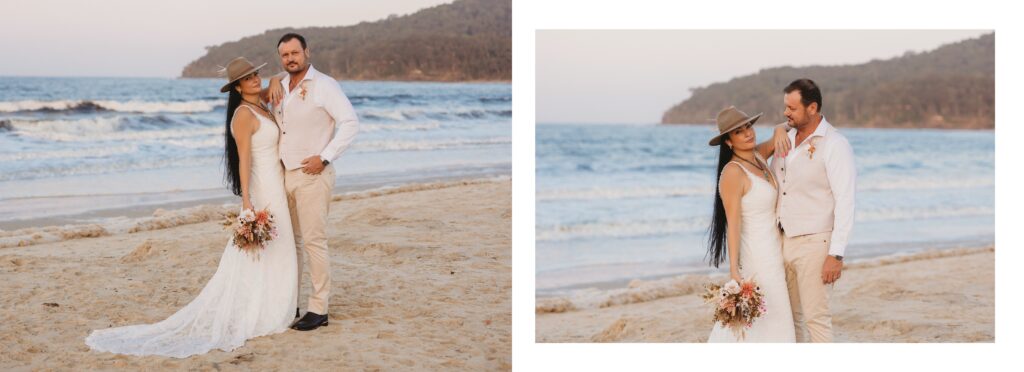

Bridal makeup should prioritise individuality over social media trends.
I’ve put it out there!
Before anyone starts typing a response, let me clarify.
Today’s makeup landscape is heavily shaped by social media performance. Dramatic transformations, artificial intelligence, trending techniques, and signature Instagram styles dominate our feeds. As a makeup artist, I thrive on creativity; editorial, runway, fashion, and film should challenge norms and inspire innovation.
Bridal makeup requires a distinct approach.
With over 22 years in the wedding industry and more than 2,500 weddings to my name, I’ve learnt that one of the most crucial skills isn’t merely replicating a look. It’s about comprehending why that look suits the individual wearing it.
A technique that dazzles on one person may not have the same effect on another. A lipstick or blush that’s trending might clash with someone’s natural colouring. a signature Instagram look isn’t necessarily the ideal choice for every bride.
Your wedding makeup isn’t designed for a fleeting social media snapshot. It will be photographed, filmed, cherished, and remembered for years to come.
This is where I believe we’ve lost sight of something fundamentally important.
Colour harmony is essential.
Are Makeup Artists Being Educated on Colour Harmony or Just Application?
This is a question I’ve been pondering as I explore colour analysis further.
Are makeup artists receiving adequate training to grasp colour harmony from the outset? In my observations, standard makeup education typically covers the colour wheel, complementary and contrasting colours, using colour for impactful eyeshadow, colour correction, and finding a foundation shade that fits.
These are undoubtedly important skills.
understanding how to utilise the colour wheel does not equate to comprehending the unique colouring of the individual in front of you.
Are we truly educated to look beyond surface appearances? To identify underlying skin undertones, analyse natural hair colour, assess contrast, and recognise how all these aspects interact?
Consider a bride who arrives at her trial with a deep, warm spray tan and honey-blonde dyed hair. It’s tempting to instinctively choose warmer foundation, blush, and eyeshadow to complement her visible tones.
But what if her natural skin undertone is cool or neutral? What if her natural hair is significantly darker and cooler?
Simply matching the warmth visible on the surface does not guarantee harmony. It may lead us further from what truly complements her.
Of course, her tan, chosen hair colour, and wedding style are significant. It’s about discerning the difference between her natural colouring and the alterations she’s made, then making educated decisions to unify everything.
I believe there’s a disconnect between learning how to apply colour and being taught to evaluate it on an individual basis. If these critical aspects aren’t covered during foundational training, how can we expect to recognise what’s lacking?
For me, delving into personal colour analysis has added a valuable layer to the skills I’ve honed over two decades.
I didn’t just study the theory; I applied it on my own wedding day. I selected colours I had never considered before, stepped outside my comfort zone, and embraced the principles of colour harmony. The outcome surprised even me. I’ve shared my own photos further down to illustrate this, as sometimes, you must practise what you preach!
The Instagram Influence: Are Trends Overriding Individual Needs?
Recently, I shared a before-and-after transformation of a bride, with her consent, after she requested that I use her own makeup products for her wedding look.
This sparked an intriguing discussion: how do you maintain a balance between respecting a client’s wishes and your professional obligation to steer them toward a result that you believe will be more flattering and cohesive?
At times, the colours, undertones, or product combinations may not harmonise as effectively as they could.
The post addressed this very challenge. It wasn’t about stripping a client of their choices but rather highlighting the significance of professional insight and articulating why an alternative might yield better results.
Let’s just say it ignited an engaging conversation. By engaging, I mean a few rather spirited keyboard warriors! 
Some comments were less than pleasant, but I remained professional and positive. In a light-hearted twist, it also turned out to be my highest-engagement post ever. So, cheers to the algorithm!
Yet, amidst the noise, it reinforced a crucial point.
Education is vital. Professional insight is essential.
Our role isn’t merely to apply products or recreate a look someone has saved from Pinterest. It’s about comprehending why particular colours, textures, placements, and finishes work, and how to tailor them to the individual in our chair.
A makeup look can be technically impressive, flawlessly executed, and garner thousands of likes. But does that automatically make it the ideal choice for the wearer?
I don’t advocate for blindly adhering to trends, nor do I dismiss them. Trends can motivate us and introduce exciting new techniques. popularity does not equate to expertise, and a bride isn’t merely a blank canvas for an artist to imprint their signature Instagram style upon.
The finest makeup artists don’t just master the creation of a look; they grasp why they’re crafting it.
Grasping Your Natural Colouring
In recent months, I’ve immersed myself in the study of personal colour analysis. You may have noticed the seasonal system: Winter, Spring, Summer, and Autumn.
Each season encompasses distinct characteristics:
- Winter: Cooler, clearer, and higher in contrast.
- Spring: Warmer, brighter, and fresher.
- Summer: Cooler, softer, and more muted.
- Autumn: Warmer, richer, and earthier.
There are further nuances within each season, making it not as straightforward as categorising someone into one of four boxes.
What intrigues me is how colour interacts with our natural features. Skin undertone, hair and eye colour, and the contrast between them can significantly affect which shades create harmony.
Consider a cool rose pink versus a warm peach blush. Both can be stunning, but on different complexions, one may enliven the face while the other feels discordant.
The same principle applies to lipstick, eyeshadow, and bronzer. It’s not about labelling colours as right or wrong. It’s about understanding why a colour resonates.
One of the most profound lessons from my colour analysis study is the importance of undertone. This consideration extends far beyond merely finding a foundation that matches your face.
Fake tan can alter the surface appearance of the skin. Hair may be dyed several shades away from its natural colour, and brows may be tinted. Observing someone’s surface skin or hair colour isn’t always sufficient; we must consider the broader picture.
Reflecting on Past Work with a New Perspective
Here’s something that piques my interest.
After more than 22 years in the wedding industry and a portfolio of over 2,500 weddings, I believed I had a solid grasp of what works. Experience is invaluable, without a doubt.
Studying colour analysis has provided me with a fresh perspective.
I’ve revisited my earlier work and noticed subtle details that I might now approach differently. Not because those looks were flawed or the techniques incorrect, but because I can now identify opportunities for enhanced harmony and cohesion.
A slightly altered blush tone, a more harmonious lip colour, or a different approach to warmth or contrast can make a significant difference.
Sometimes, these changes are minor, but the overall impact can be surprisingly profound.
This serves as a reminder that experience doesn’t signify the end of learning. The willingness to continually question, refine, and enhance your craft is what transforms you into a superior artist.
Does Colour Analysis Imply New Constraints?
Absolutely not.
I don’t want brides to feel confined by a seasonal palette or believe they cannot wear a lipstick, eyeshadow, or blush that doesn’t fit neatly into a category.
If you adore a certain colour, that’s essential too. Personal style, personality, and preference should always play a role in the conversation.
Colour analysis serves as a guide, not rigid instructions. It offers another lens through which to understand how colour interacts with your features, creating a more harmonious outcome.
Sometimes, the most beautiful results arise from comprehending the guidelines well enough to know when to bend them.
How Does This Impact Your Bridal Hair and Makeup?
At Hollywood Brides, we’ve always believed that bridal beauty should feel personal.
We aim for you to look like your most confident, polished, and beautiful self.
This means looking beyond fleeting trends and inspiration images to consider your complexion, undertone, eye colour, hair colour, personal style, and the overall aesthetic of your wedding.
Whether we’re crafting bridal hair and makeup for a Brisbane bride, a Sunshine Coast wedding, or anywhere in between, our starting point should always be the individual.
We’re more than happy to create full glam, soft glam, or natural beauty. What matters is that the look is authentically yours.
Trends will always come and go.
Understanding colour harmony allows us to create a look that feels tailored just for you.
Natural. Polished. Unapologetically YOU.
With over 22 years of experience in bridal hair and makeup across Brisbane and the Sunshine Coast, Hollywood Brides is consistently seeking ways to refine our craft, expand our knowledge, and provide our brides with an even better experience.
Beautiful people. Beautiful stories. Beautiful mornings.
Hollywood Brides | Bridal Hair & Makeup Brisbane and Sunshine Coast
I’m eager to hear what fellow artists think.
Was personal colour analysis part of your original makeup training, or is it knowledge you’ve had to seek out independently?
Are we doing enough as an industry to discern the difference between matching visible colours and understanding the underlying colouring?
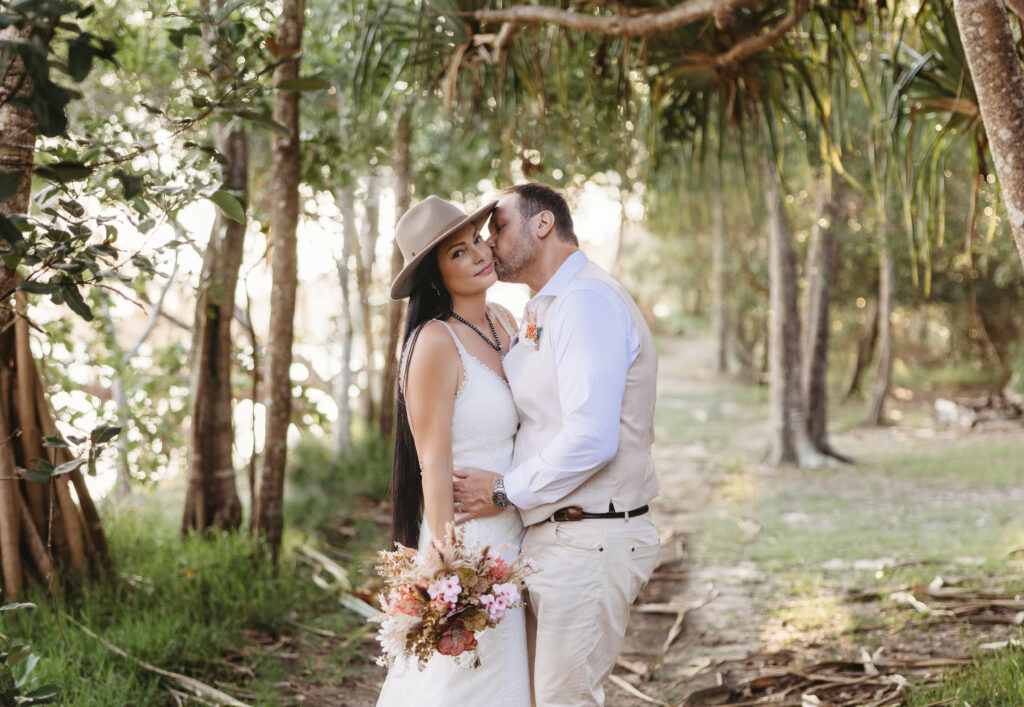
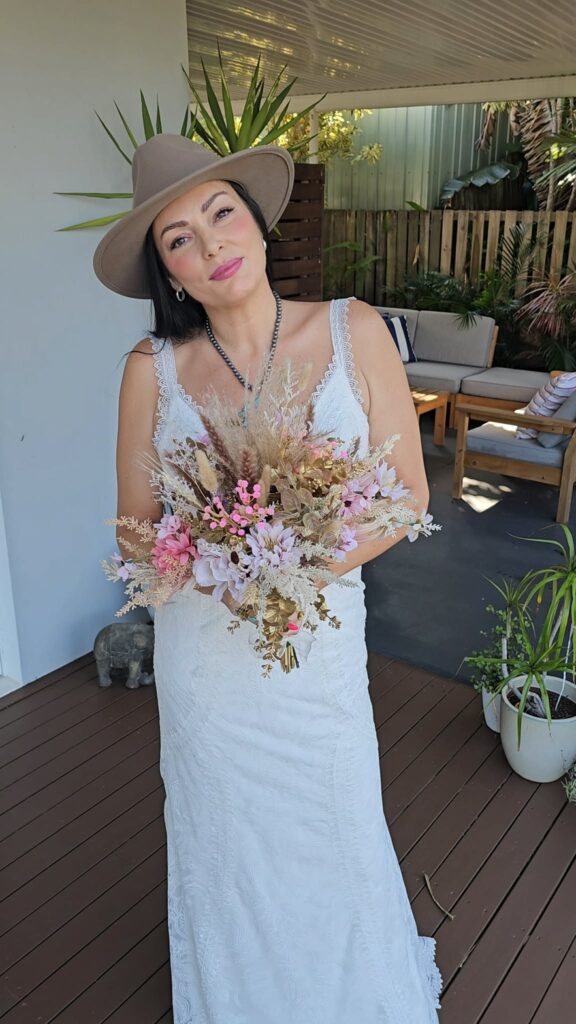
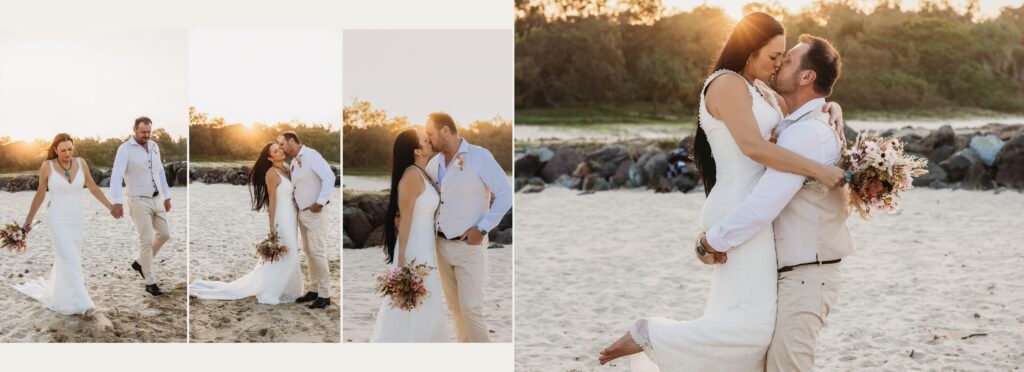
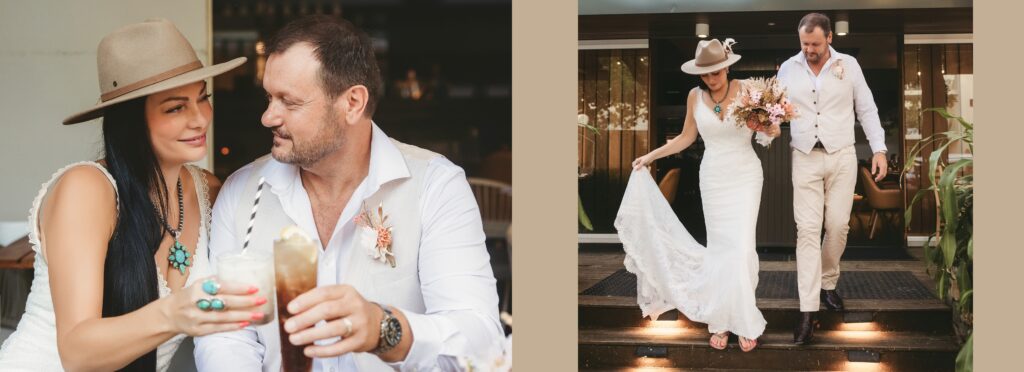
Here I am on my wedding day a few weeks ago, donning colours I would never typically select. After identifying as a Deep Winter, I swapped my usual warm tones and nude lip for vibrant, cool pinks that align with my natural high contrast.
Knowing we’d be photographed in that stunning golden hour sunset light, I recognised that warmer tones could leave me looking washed out, as colours can appear quite different in that light. You’ll notice in the photos below that the bright, cooler colours had a completely different effect.
With my newfound colour theory and a willingness to step beyond my comfort zone… I absolutely loved it!
Sometimes, the colours we least expect have the power to bring us to life. Mon xx