

Short answer: Yes, you can landscape around a termite barrier, but three key factors can compromise it: planting too close, piling mulch or soil over it, and excessive watering. Maintain a safe distance from the foundation, select appropriate mulch, and ensure the barrier is inspected following any significant gardening activity.
Landscaping enhances the aesthetic appeal and value of your home, yet it can inadvertently jeopardise termite barriers if not executed with care.
Termite barriers play a crucial role in safeguarding your property against damaging termite invasions.
Nevertheless, specific landscaping practices and maintenance routines can disrupt these protective measures or make them ineffective.
Here’s what you should know to ensure your landscaping remains safe from termites while preserving your barrier.

What You Need to Know About Termite Barriers
Termite barriers consist of physical or chemical systems installed around or beneath a building to prevent termites from gaining access. Every home should have some form of termite management system, and understanding what has been implemented at your property is essential.
The simplest way to check is by looking in your electrical meter box, where information about the installed barrier is usually found.
These barriers are vital for protecting structures, particularly in regions like Sydney’s Hills District, where termite activity is prevalent.
- Physical Barriers: Typically constructed from materials such as stainless steel mesh or graded stones, these barriers are installed underneath a building to block termites from tunnelling through.
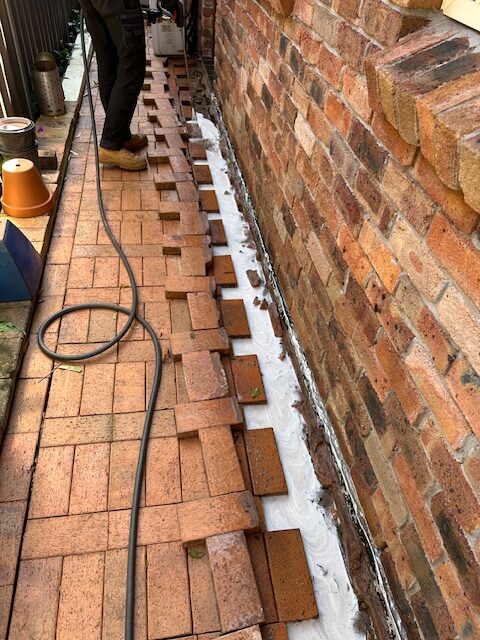
- Chemical Barriers: Liquid termiticides are applied to the soil surrounding a structure, creating a treated zone that deters or eliminates termites.
How Does Landscaping Impact Termite Barriers?
Certain landscaping activities can unintentionally harm or weaken termite barriers, leading to vulnerabilities for infestations.
1. Planting Too Close to the Foundation
When plants, shrubs, or trees are situated too near your home, they can create multiple issues:
- Roots may penetrate physical barriers or disturb the treated soil in chemical barriers.
- Thick vegetation can trap moisture around the building’s foundation, which attracts termites.
2. Adding Soil or Mulch Near the Barrier
Creating layers of soil or mulch close to the foundation can form a bridge over chemical barriers, allowing termites to bypass the protection entirely. Organic mulch, in particular, offers food and shelter for termites.
3. Hardscaping and Paving
Installing paving, patios, or retaining walls near your property can disrupt termite barriers. Soil movement during these projects may break the chemical seal or create gaps in physical barriers.
4. Irrigation Systems
Overwatering or poorly designed irrigation systems can saturate the soil surrounding the foundation, diluting the termiticides in chemical barriers and fostering conditions that are conducive to termite activity.
Essential Landscaping Practices to Protect Termite Barriers
1. Ensure Sufficient Clearance
- Maintain a distance of at least 50cm between plants and trees and your home’s foundation.
- Select smaller, non-invasive plants with limited root systems.
2. Select Termite-Resistant Mulch
- Choose inorganic mulches such as gravel or stone, or opt for termite-resistant options like cedar or cypress chips.
- Avoid piling mulch higher than 5cm and ensure it remains at least 15cm away from the foundation.
3. Prevent Disruption of the Barrier
- When digging or installing features close to your home, consult a professional to avoid disturbing termite barriers or baits.
- If you need to alter the soil, have the barrier inspected and retreated if necessary.
4. Plan Your Design Wisely
- Aim irrigation systems away from the foundation to prevent excess moisture accumulation near the barrier.
- Install root barriers for large trees to prevent roots from encroaching on the termite protection.
- Identify termite reticulation pipes and take care to avoid damaging them.
What Steps to Take if Your Barrier is Compromised?
If landscaping efforts or natural events have disturbed your termite barrier, prompt action is necessary:
- Schedule a Professional Inspection: A qualified termite inspection can identify weaknesses and ascertain whether termites have infiltrated the barrier.
- Reinforce the Barrier: Physical barriers may require repairs, while chemical barriers might need retreatment or topping up to restore their effectiveness.
- Implement Regular Monitoring: Routine termite inspections are essential to ensure your barrier remains intact, keeping your property protected.
Landscaping Strategies That Boost Termite Protection
With careful planning, your landscaping can work hand-in-hand with termite protection:
- Utilise gravel paths or decorative stones along the foundation to create a dry zone that deters termites.
- Incorporate raised garden beds with adequate clearance from the house.
- Regularly trim back vegetation to ensure sufficient airflow and minimise moisture accumulation.
Landscaping doesn’t have to compromise your termite barrier.
By understanding how your garden design influences termite protection, you can achieve a beautiful, pest-free home.
For expert advice on termite management or barrier maintenance, reach out to our team today.
We can assist you in securing your home while creating the landscape of your dreams.
Original Article First Published At: Landscaping with Termite Barriers



I never thought landscaping could be a literal minefield for termite barriers! It’s like trying to have a garden party while keeping a watchful eye on your less-than-invited guests—those sneaky termites. I guess I’ll have to keep reminding my partner that those “cute little flower beds” can’t be planted right next to the foundation. I mean, who knew mulch could be such a double agent?
I appreciate the insightful breakdown of how landscaping can interact with termite barriers! It’s interesting to think about the balance between beautifying our outdoor spaces and protecting our homes from pests. I’ve found that strategically choosing plants with deeper root systems not only helps in maintaining a safe distance but also adds a lovely texture to the garden. Native plants, in particular, seem to thrive without disrupting these protective measures.
It’s fascinating how landscaping can transform a home while also posing challenges for termite barriers. I recently redesigned my garden and made sure to keep all planting a safe distance from the foundation, yet I still found myself debating the best type of mulch to use. I opted for a cedar mulch that I read could deter some pests while also being aesthetically pleasing. Has anyone else explored natural deterrents in their landscaping? I’m curious about what other techniques folks use to balance beauty with safety, especially in regions with heavy termite activity. It would be great to share thoughts on effective landscaping that promotes health and safety without compromising protective measures!
It’s interesting to see how landscaping can have such a dual role—enhancing beauty while posing risks to something as crucial as termite barriers. I’ve always thought of my garden as a sanctuary, a space where I can unwind and connect with nature, but this really highlights the need for balance.