

Project Location: Chelmer
Project Scope: Switchboard enhancement
Result: Comprehensive single-phase switchboard upgrade supporting a 17.86kW solar installation, 30kWh battery storage, and ducted air conditioning—no three-phase upgrade was necessary.
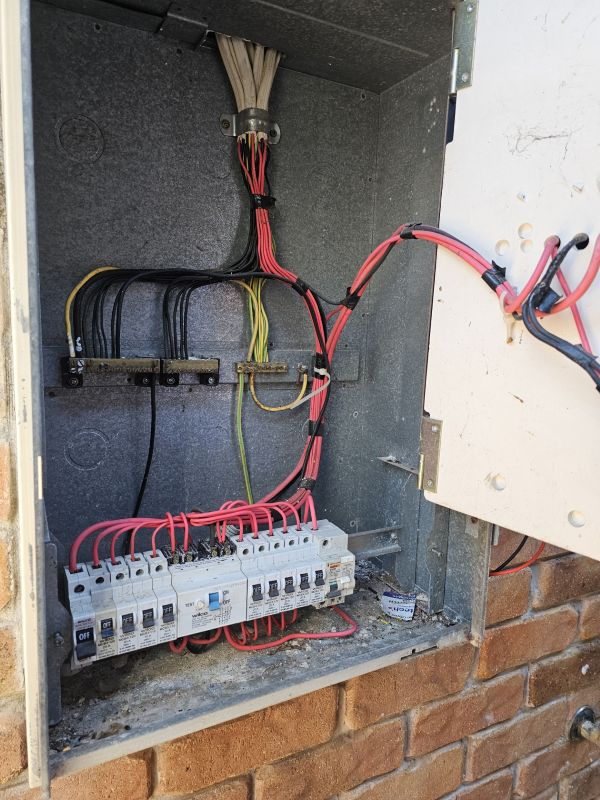
Engagement of Precision Electrical & Air for Switchboard Enhancement
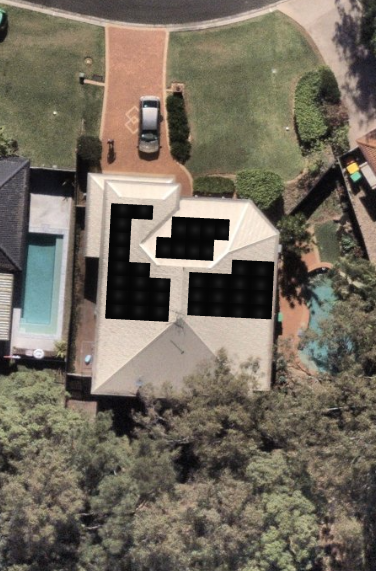
This homeowner in Chelmer embarked on a significant renovation journey, featuring the installation of a 17.86kW single-phase solar photovoltaic (PV) system, along with a 30kWh modular battery storage solution and comprehensive home blackout protection. Additionally, a new ducted air conditioning system was included in the plans. Prior to connecting these systems, it was crucial to evaluate and upgrade the existing switchboard to ensure it met current compliance standards and could safely manage the increased electrical loads.
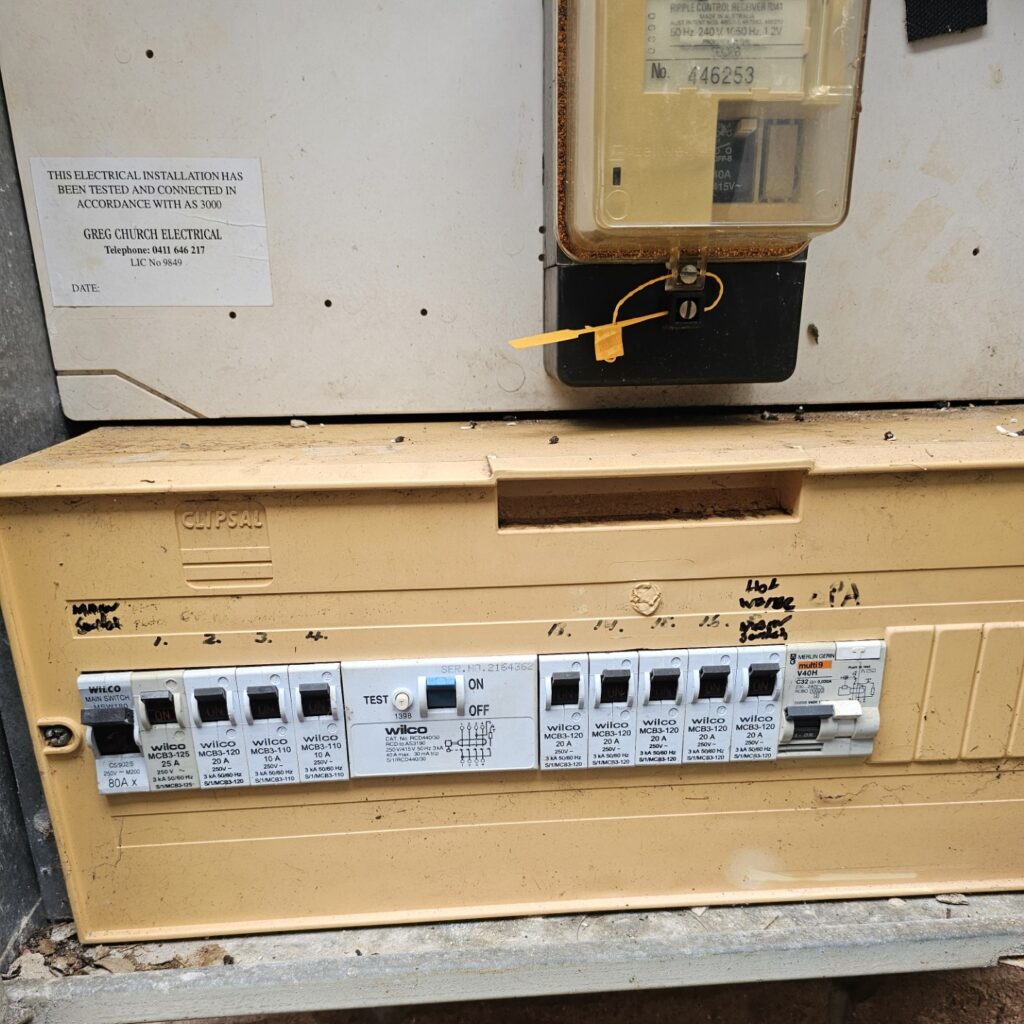
The old switchboard was outdated, featuring antiquated circuit breakers, a solitary Residual Current Device (RCD) that protected the entire property, and lacked the capacity for integrating solar energy and battery storage. Furthermore, the circuit labelling was inadequate, making it non-compliant with modern standards for contemporary energy generation systems.
The Critical Question: Was a Three-Phase Upgrade Necessary?
Given the specifications of a 17.86kW solar system paired with a 30kWh battery, it is a common assumption that a three-phase upgrade might be required. This misconception could have resulted in significant costs for the homeowner, ranging between $3,500 and $6,000, in addition to an extended waiting period for Energex network approval.
Initial Technical Assessment Conducted
Two key factors influenced the decision on whether a three-phase upgrade was needed. Firstly, the supply cable for the home was located in close proximity to the street junction. This positioning allowed the voltage rise calculation for solar export to remain comfortably within Energex's single-phase limit of 2%. Secondly, as the solar and battery system functions to reduce, rather than increase, demand on the grid, there was no technical basis from the network side necessitating a three-phase upgrade. Furthermore, the ducted air conditioning system also complied with the parameters suitable for single-phase operation.
Consequently, the single-phase configuration was maintained. The switchboard was enhanced to ensure it could safely and compliantly accommodate all new electrical loads.
Detailed Overview of Installed Components
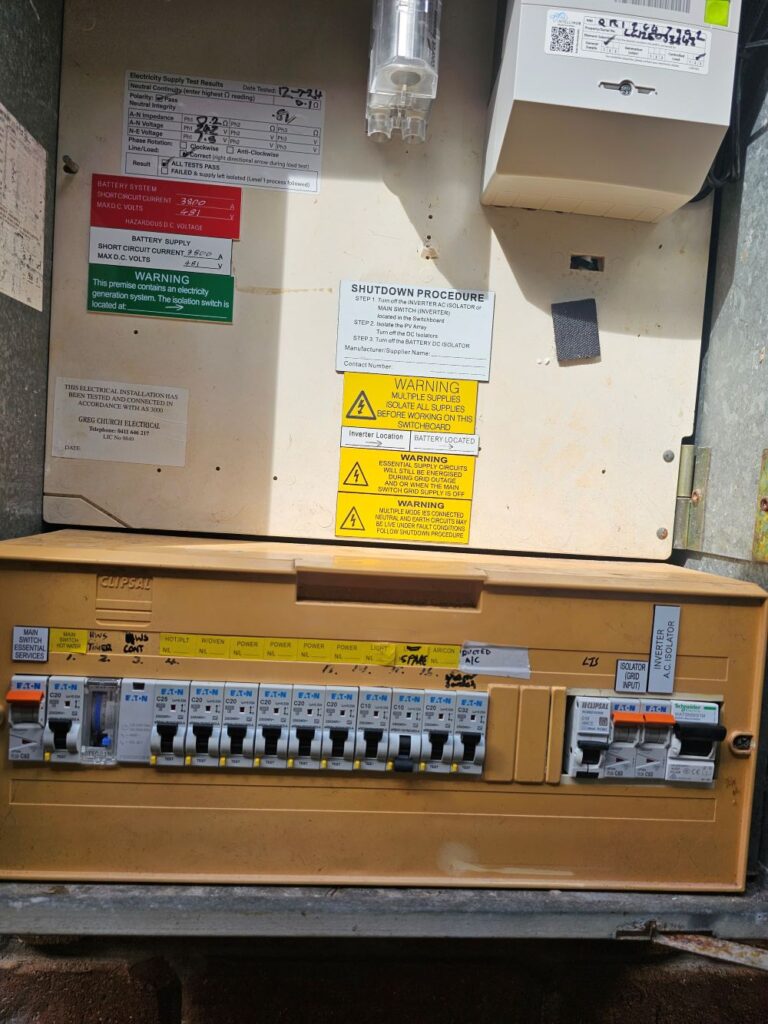
The existing switchboard was completely dismantled and underwent a comprehensive reconfiguration. All circuit breakers were replaced with new units from Eaton, which were correctly rated and individually labelled for easy identification. The circuits were meticulously separated; power, lighting, hot plates, ovens, split system air conditioning, and ducted air conditioning each received dedicated, protected circuits for enhanced safety and compliance.
A timer for the hot water service was incorporated to automatically operate during peak solar generation hours. This strategic feature reduces reliance on the grid by optimising the use of the system's output throughout the day. Alongside this, a dedicated Hot Water Service (HWS) contactor circuit was also installed for proper functionality.
The upgraded switchboard was designed to seamlessly integrate the solar inverter and battery system. This included the installation of an AC isolator, a dedicated grid isolator, and comprehensive safety labelling that indicated the battery system rating at 481V DC with a short circuit current of 3800A, alongside multiple supply warnings and a complete shutdown procedure. All electricity supply tests were conducted, successfully passing and documented on the switchboard.
The completed switchboard now fully complies with the latest Australian standards, ensuring it is set up correctly for any future electrician servicing the property.
Successful Outcome Achieved for Homeowner
The homeowner now possesses a fully upgraded and compliant switchboard capable of safely supporting their solar system, 30kWh battery, and ducted air conditioning, all functioning effectively on a single-phase configuration. Importantly, they avoided unnecessary expenses associated with a three-phase upgrade that was not required for their specific situation.
Have You Received a Quote for a Three-Phase Upgrade and Are Unsure About Its Necessity?
While three-phase upgrades can be essential in certain circumstances, they are not universally required. If you've been presented with a substantial quote for a switchboard upgrade and are uncertain about its validity in your case, let Precision Electrical & Air conduct a thorough analysis. We will provide you with a transparent assessment based on your cable distance, load requirements, and the actual criteria that Energex will approve for your property.
We ensure no upselling occurs, just the accurate answer tailored for your home.
Your Top Questions Answered
How do electricians determine the necessity of three-phase power for solar systems?
The assessment hinges on two primary factors: voltage rise and load demand. Electricians measure the distance of the cable from your property to the street junction, calculating the potential voltage increase when your solar system exports energy back into the grid. Energex permits a maximum voltage rise of 2% for single-phase connections. If the cable run is short and the solar system's export remains within this limit, a single-phase setup suffices. Conversely, if the voltage rise exceeds this threshold, three-phase power becomes necessary to distribute the export load across three conductors, bringing the voltage rise back within acceptable limits.
Does having a larger solar system automatically necessitate three-phase power?
No, the size of the system alone does not dictate whether three-phase power is required. A 17.86kW solar system can operate legally and safely on a single-phase basis if the voltage rise calculations are favourable and no new high-demand loads are introduced to the property. The determining factors include the cable length to the street junction, the existing load profile of the home, and the technical requirements from the network distributor—not merely the kilowatt rating of the solar panels.
What is voltage rise, and why is it crucial for solar energy installations?
Voltage rise refers to the increase in electrical voltage that occurs when a solar system sends power back into the grid. The farther your home is from the street junction, the greater the resistance in the cable, leading to a higher voltage rise during export. Excessive voltage rise can cause issues for neighbouring properties connected to the same line. Network distributors such as Energex impose strict limits—usually set at 2% for single-phase connections. Electricians must calculate whether your solar system remains within this limit to ascertain if single-phase or three-phase power is suitable for your property.


It’s interesting to see how a single-phase upgrade sufficed for such a substantial solar installation and battery setup. It raises questions about the typical assumptions regarding three-phase systems, especially in residential settings. Many homeowners may automatically opt for a three-phase upgrade without considering whether their current needs can be met with a single-phase solution.
You bring up a great point about the tendency for homeowners to lean towards three-phase systems without fully assessing their needs. It’s fascinating how a single-phase upgrade can handle significant solar and battery installations, and it challenges the assumption that more phases automatically mean better performance.
It’s fascinating to see how modern electrical solutions are evolving to meet the needs of homeowners today, especially in the context of sustainability and energy efficiency. The decision of this Chelmer homeowner to go for a comprehensive single-phase switchboard upgrade, rather than a three-phase one, really highlights the importance of tailored solutions.
This blog post brings to light some fascinating elements of modern electrical systems, particularly the decision-making process around switchboard upgrades. It’s intriguing to see how advancements in energy storage and solar technology can influence what might seem like a straightforward choice regarding electrical systems.
It’s fascinating to see how the evolution of residential energy solutions is shaping projects like the one in Chelmer! The decision to stick with a single-phase upgrade while accommodating such a robust solar installation and battery storage reflects a keen understanding of both energy efficiency and cost-effectiveness. It raises some interesting questions about modern home energy management.