

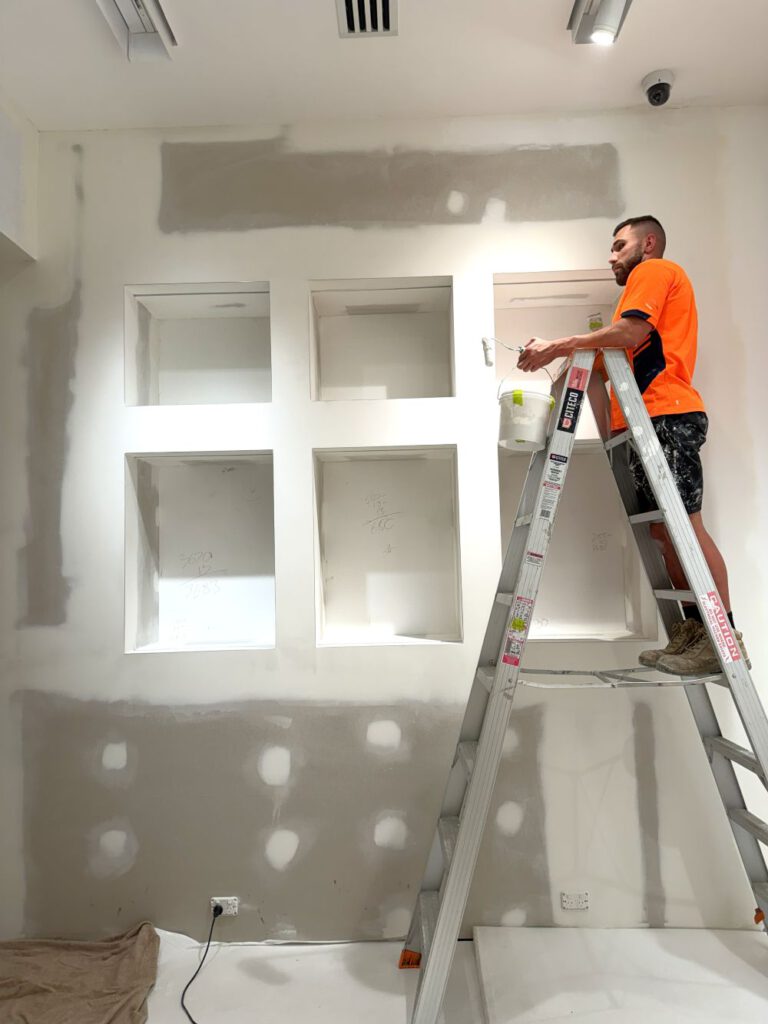
Most commercial painting quotations are based solely on the square metres of flat wall space. This method proves inadequate when intricate display cabinets, glass counters, and recessed lighting are present in the room. We recently experienced this firsthand during a project involving a comprehensive interior repaint for a luxury jewellery retailer located in a Sydney shopping centre.
Essential Insights
- Intricate display areas, rather than mere wall space, significantly slow down a retail repaint and distinguish a hasty job from a meticulously completed one.
- In a jewellery store, the presence of fixtures leaves very little flat, uninterrupted wall to paint, necessitating extensive precision cutting-in by hand.
- Zaf Painting (NSW licence 467348C, fully insured) delivered a finish that meets the high standards required for luxury retail environments.
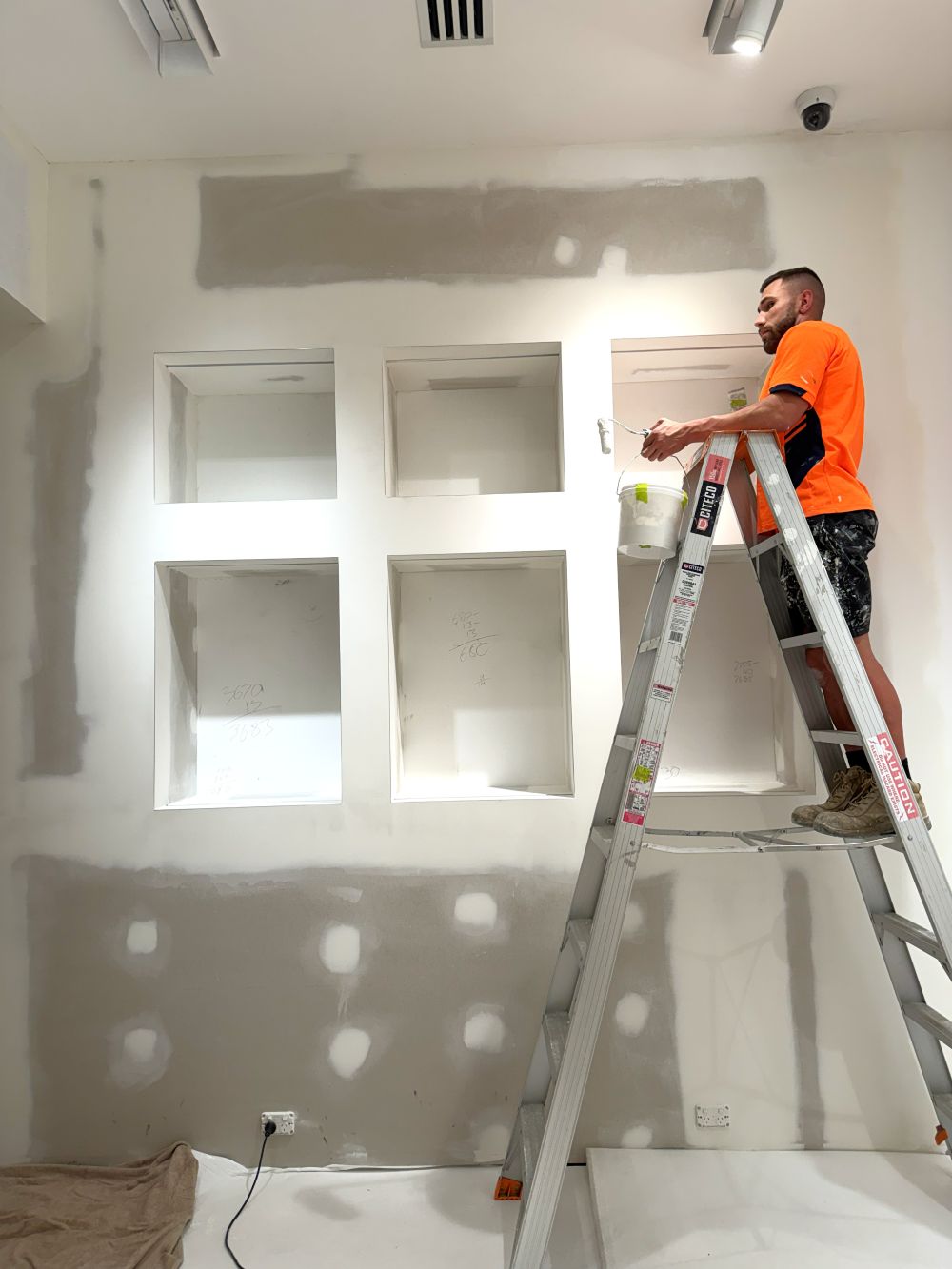
Project Overview: Repainting a Jewellery Store in a Busy Shopping Centre
The initial brief seemed simple: repaint the interior of a jewellery retailer situated within a Sydney shopping centre. retail fitout work rarely remains uncomplicated once you are actually in the space. A jewellery store is not just a room with four flat walls; it is designed around display cabinets, glass cases, mirrored panels, and specialised lighting intended to showcase the merchandise, rather than easing the painter's task.
This fundamental difference highlights the challenge of quoting a retail job versus a standard office or hallway repaint. While the floor plan may appear small when measured, the reality of the intricate cutting-in work presents a starkly different scenario.
Such work typically occurs after the shopping centre has closed, allowing for quieter surroundings while avoiding foot traffic. There is no margin for error; any mistakes made must be rectified before the shop opens again.
Throughout this project, the unique challenges were evident. Each display bay, every fixture edge, and every strip of wall between cabinets required individual attention, treating each section as its own distinct area rather than a continuous surface.
The Challenge: Navigating Intricate Display Areas
This aspect of retail painting is often overlooked in square-metre estimates. The scope included the display tables and recessed wall niches designed to showcase mineral specimens and jewellery pieces, along with the primary walls of the store. Each niche represents a unique, boxed-in section with its own internal corners and lighting, rather than a flat surface that can be painted in one go.
Cutting in around a display case is vastly different from cutting in around a door frame. The edges are tighter, and the nearby surfaces often consist of glass or polished fixtures that cannot endure any stray brush marks. The finish must appear deliberate up close, rather than only looking fine from a distance. In a store that focuses on displaying small, high-value items, unsightly paint lines are the first detail that catches a customer's eye.
This challenge defines the job: it is not merely about the litres of paint applied to the walls but rather the extensive hours dedicated to those areas that cannot be rolled.
The Strategy: Meeting the Standards Required for Luxury Retail Fitouts
A store of this calibre does not have the luxury of making a second impression once it reopens. The finish must endure under retail lighting, which is specifically designed to enhance the appearance of everything nearby. This type of lighting reveals any uneven cut-in lines or inconsistent sheen.
Our approach on this job adhered to these high standards: meticulous masking around every fixture, patient hand cutting-in rather than hastily rushing sections with a roller, and a finish evaluated under the store’s own lighting rather than under a work light.
Dulux Berkshire White provided the bright, clean base that a jewellery display requires. We hold NSW painting licence 467348C and full insurance to cover all aspects of the job.
The quality of the finish is what ultimately gets assessed by everyone who walks through the door next.
Final Outcome
The completed space presents as a jewellery store should: clean lines around every cabinet, no visible brush marks adjacent to the glass, and a finish that remains consistent across all of the small, segmented areas.
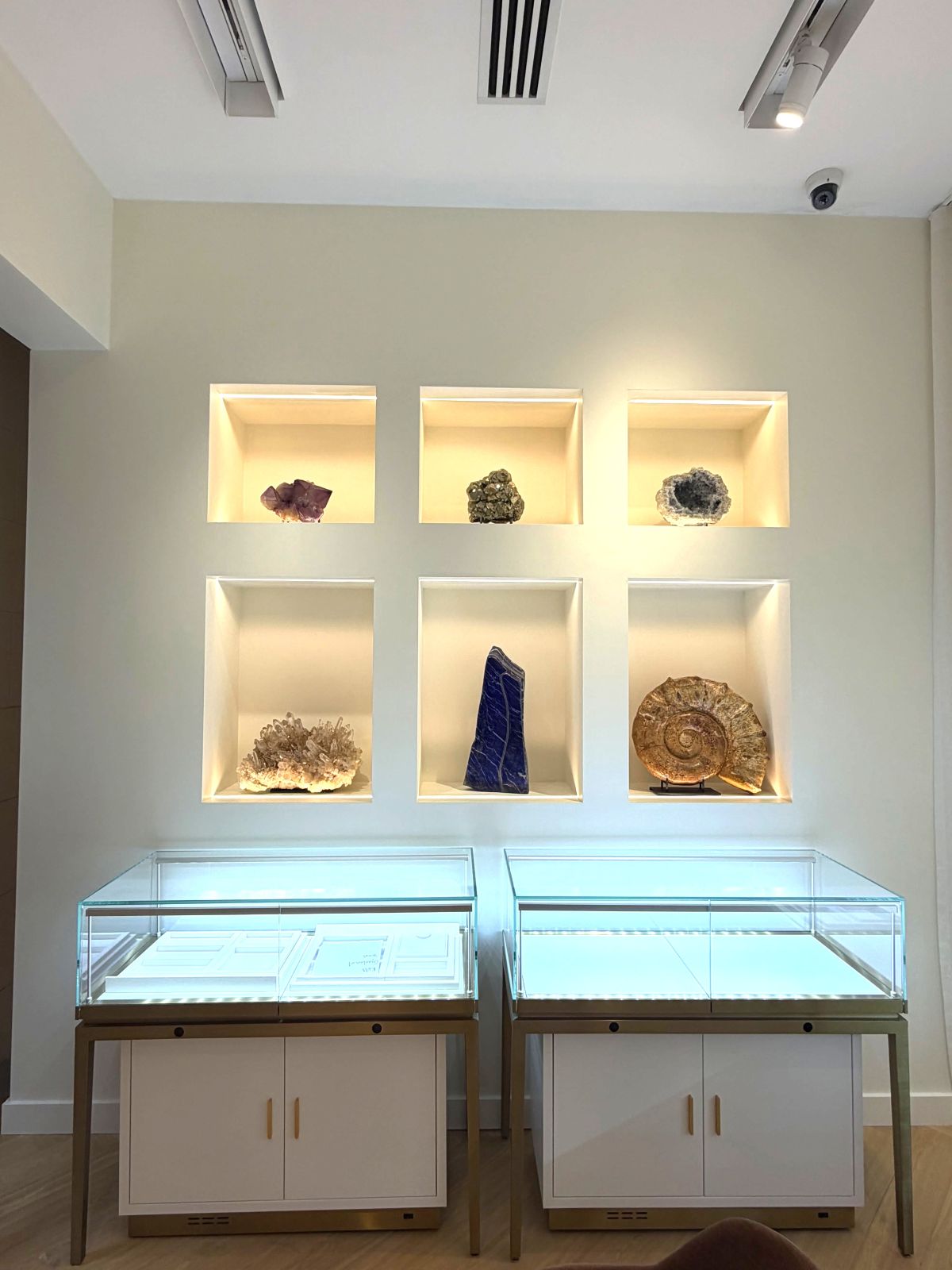
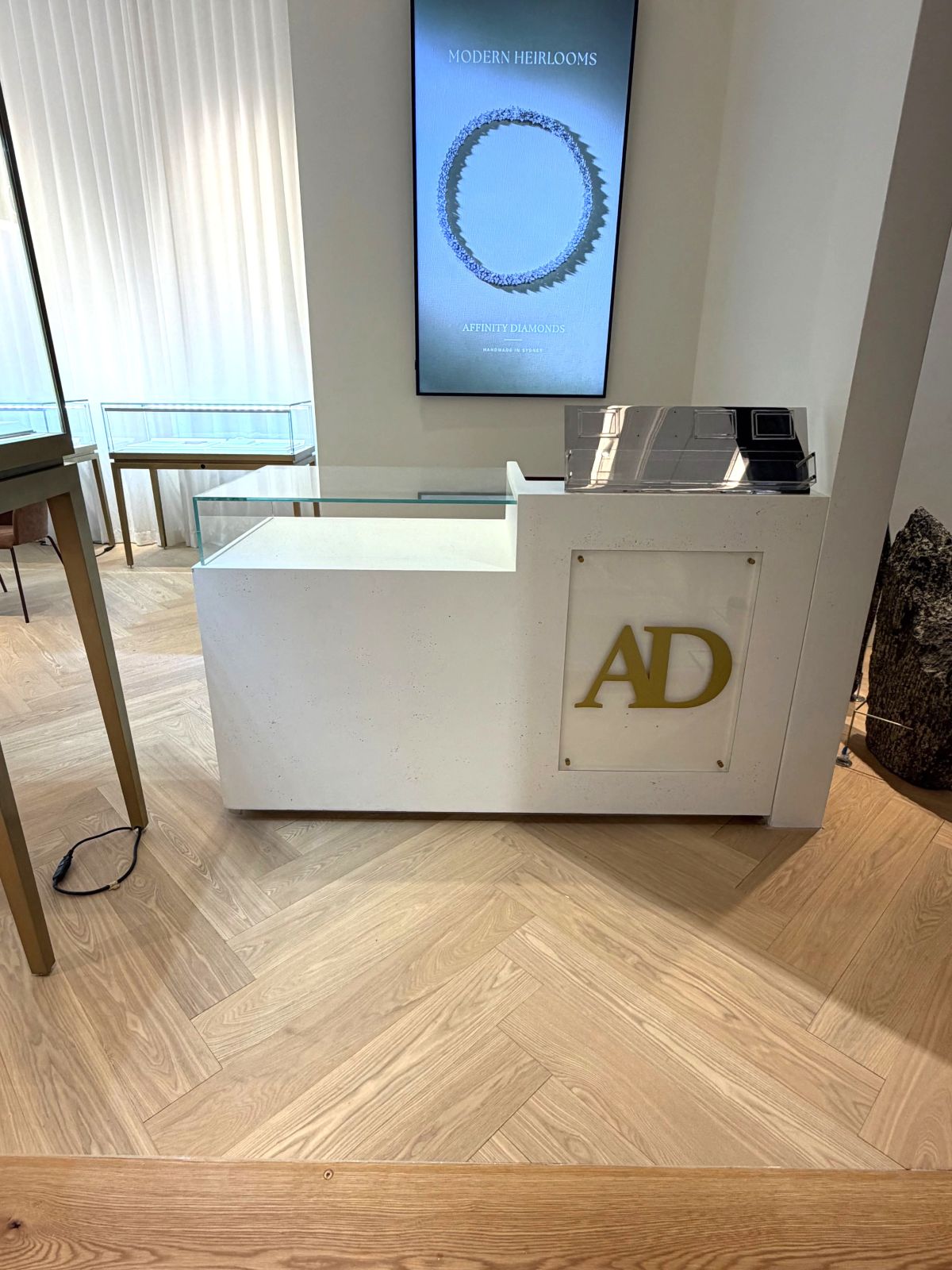
Each display bay in that store possessed a unique shape and varying amounts of usable wall space. This complexity is what a standard commercial painting quote fails to consider, and it is this factor that extended the duration of the job while enhancing its overall appearance compared to a typical repaint of the same floor area.
Understanding the Importance of Hiring the Right Painter for Retail Fitouts
If you are a shop owner, centre manager, or fitout contractor evaluating quotes for a retail space, the square-metre figure on a quote does not indicate whether a painter can effectively manage a room filled with fixtures. Isn’t that the critical difference between a quote that appears economical and a finish that ultimately appears subpar?
The projects that distinguish skilled painters are not the flat hallway walls. They are the spaces designed around display cases, cabinetry, and glass, where the majority of the effort is focused on precision rather than mere coverage. That is where a hurried job becomes evident, and where a well-executed finish earns repeat referrals from the shopping centre or the fitout company that initially engaged the painter.
If your upcoming project involves a retail space characterised by a plethora of fixtures rather than flat walls, this is a conversation to have with your commercial painter in Sydney before the quote is prepared, rather than after the first coat has been applied.
Common Inquiries
Does repainting a retail fitout typically cost more than repainting a standard office?
It can, primarily due to labour costs rather than paint volume. A space filled with heavy fixtures and display cabinets requires significantly more hand cutting-in per square metre than an open office wall, and this time investment is reflected in the quote.
How can you paint around glass display cases without causing damage?
This requires careful masking before any paint is applied, along with hand cutting-in rather than rolling near the edges. Glass and polished fixtures reveal stray brush marks immediately, making the quality of masking and the precision of the cut-in line more critical than they would be near a standard door frame.
Is it possible to carry out commercial painting without closing a shop during trading hours?
Scheduling depends on the shopping centre and the retailer’s operating hours. It is advisable to discuss access and timing directly with your painter during the quoting process, alongside the layout of fixtures and displays, to ensure both the cost and timeline are accurate from the outset.
Original Article First Published At: Painting a Jewellery Store: Why Precision Painting Is Essential for Retail Fitouts


You’ve brought up such an important point about the intricacies of commercial painting—especially in high-end retail spaces like jewellery stores. It’s fascinating how the perceived simplicity of a project can quickly transform into a complex task when architectural features come into play.