
Choosing Between Line Pump and Boom Pump Hire
A line pump is ideal for residential projects such as house slabs, driveways, footings, and in tight backyard spaces because it transports concrete through hoses laid along the ground. Conversely, a boom pump excels in situations where the pour is elevated, behind structures, or spread across large sites, thanks to its folding arm that places concrete from above. Your site access, the height of the pour, and the overall size will determine which option is best for your needs.
- Ground-level pour with walkable access: use a line pump
- Pours above a house, fence, or pool: opt for a boom pump
- Upper-storey slabs or elevated decks: choose a boom pump
- Narrow side passages or courtyards: consider a small line pump
- Large commercial or civil pours with multiple points: go with a boom pump
Defining a Concrete Line Pump: What You Need to Know
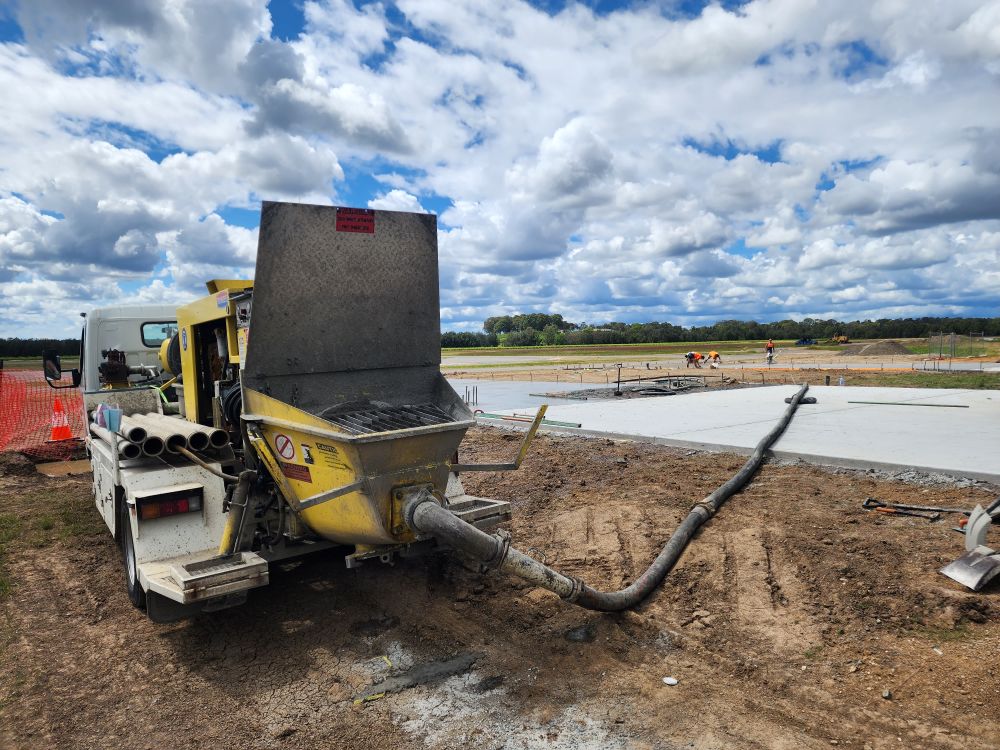
A concrete line pump moves concrete from the truck to the pour site through steel and rubber hoses positioned along the ground. The concrete truck discharges its load into the pump, which then transports the mix down the line to the precise location where the concreters work. This method is the backbone of residential concrete pumping.
Due to the hose sections' flexible nature, our operator can navigate the pump around corners, through garages, alongside houses, or over fences. This adaptability is why line pump hire is the preferred choice for the majority of house and backyard pours throughout Maitland, Newcastle, and Lake Macquarie.
Types of Pours Perfectly Suited for a Concrete Line Pump
- House slabs and foundations
- Driveways and pathways
- Floors for garages and sheds
- Pool surrounds and landscaping projects
- Footings and strip foundations
- Granny flat slabs
If the concrete truck can park within a reasonable distance from the pour, a line pump is typically sufficient. We have enough hose to reach most standard residential setups without needing to relocate the truck during the pour.
Operating a Line Pump on Confined Sites
A line pump truck can usually park on the street or in the driveway, eliminating the need for the expansive setup area required by a boom truck. Our team skillfully runs the hose through side paths, under scaffolding, and around structures, employing protection mats whenever the line crosses finished surfaces. In challenging setups, such as battle-axe blocks, townhouse developments, and rear extensions, this capability is often the key difference between successfully pumping concrete and resorting to barrowing it manually.
Understanding Boom Pumps: When to Opt for This Solution
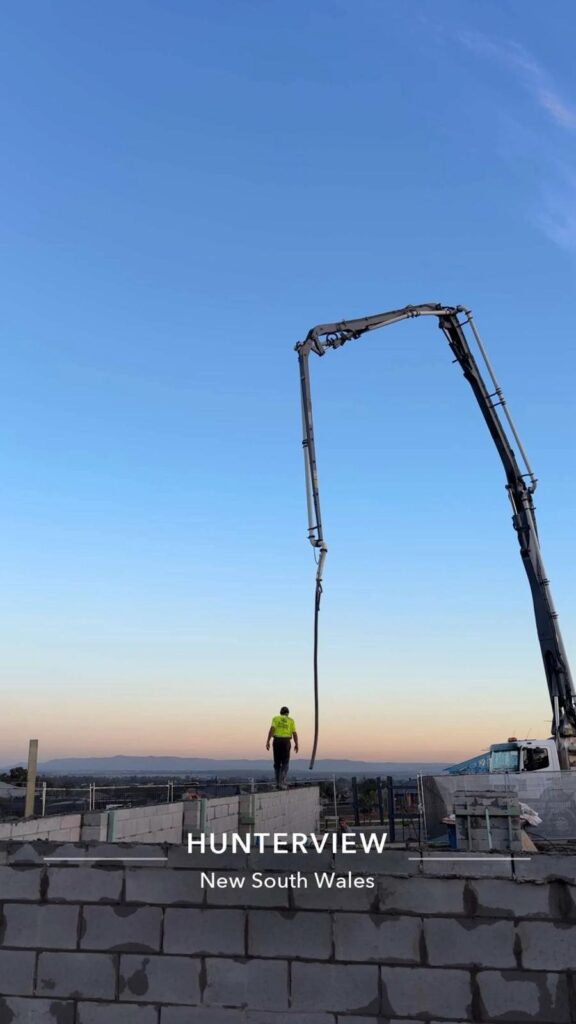
A boom pump is a concrete pump mounted on a truck equipped with a hydraulic folding arm, known as the boom. This arm extends over fences, across excavations, and above existing buildings, allowing the operator to precisely guide the end hose remotely to deposit concrete exactly where the concreter requires it. You will need a boom pump when a line cannot reach the designated pour location.
In the Hunter Valley and Newcastle regions, boom pumps are called upon when height or volume is essential for the pour, including tasks like bridge decks, multi-storey constructions, and large industrial pads. A boom pump proves advantageous when:
- The pour is elevated, such as second-storey slabs, raised decks, or retaining walls
- The concrete must be placed over or around existing structures like houses, fences, or pools
- The site features multiple pour points requiring continuous concrete placement
- Ground access is obstructed, but the pour is accessible from above
- The pour volume is significant, such as for commercial slabs, warehouse floors, or civil infrastructure projects
Essential Site Requirements for a Boom Pump
A boom truck requires a stable and flat surface with ample space to safely extend the arm. The reach achievable on the day depends on where the truck can park and the obstacles the boom needs to clear. Reach is divided into height and lateral distance; these two factors are interdependent, meaning that a boom fully extended sideways will not also be at its maximum height. For detailed information on boom operations, refer to our guide on when a boom pump is necessary.
Comparing Line Pumps and Boom Pumps: Key Differences
The table below outlines the distinctions between line pumps and boom pumps based on the factors that typically influence your booking decision.
| Line Pump | Boom Pump | |
|---|---|---|
| Method of Concrete Delivery | Through hoses laid along the ground | Via a folding arm that delivers it from above |
| Optimal Use Cases | Ground-level and low-rise pours | Pours at height, over obstacles, or across expansive sites |
| Common Applications | House slabs, driveways, footings, shed floors, pool perimeters | Upper-storey slabs, commercial slabs, civil engineering projects, multi-storey structures |
| Truck Parking Location | Typically on the street or in the driveway | On a stable, flat area with sufficient space to unfold the boom |
| Cost Consideration | Generally the more economical option for standard residential pours | Justifiable when the pour's reach or volume necessitates it |
Guidelines for Selecting Between Line and Boom Pumps for Your Pour
Begin by assessing the route from the truck to the pour site. If our operator can easily lay the hose along the ground from where the truck parks to the formwork, a line pump is usually sufficient. If the concrete needs to be elevated to a suspended slab or must navigate over a house or pool, a boom pump is necessary.
Next, consider the pour's size and layout. A simple house slab or driveway is well-suited for a line pump. In contrast, a large slab requiring multiple pour points, or a commercial pour needing continuous placement, is where a boom pump truly excels, as the arm can move between locations without the crew having to drag hoses over freshly poured concrete.
Evaluate the space available for the truck to set up. A boom requires a solid, level surface with overhead clearance for unfolding. If the only parking spot is a narrow street with low-hanging power lines or trees, a line pump run through the property's side may be the better alternative. For a detailed guide on determining reach and size, see our article on what size concrete pump do I need.
The Role of Small Concrete Pumps
A small concrete pump, commonly referred to as a mini pump, functions as a line pump within a compact machine designed for tight access. If a person can walk through the gap, the hose can typically be routed there. Small pumps are ideal for narrow side passages, courtyards, backyard slabs, and sites where full-sized trucks cannot fit. Our guide on concrete pumping in tight spaces explains how we approach these challenges.
Preparing for Your Concrete Pump Hire Booking
You don’t need to decide on the specific pump type before reaching out. Our team will help determine the best option based on your site details, and providing a few photos of the access can greatly assist in this process. When you call or complete the quote form, please have the following information ready:
- The suburb and address of your site
- Your preferred date and start time for the pour
- Approximately how many cubic metres of concrete you require
- Whether your concrete delivery is already scheduled
- Whether you have concreters available for the pour
- Any obstacles present, such as houses, fences, pools, power lines, or steep driveways
We accommodate early starts to align with your pour schedule, and every pump we provide comes with an experienced operator, so you won’t need to find your own.
Frequently Asked Questions About Line and Boom Pump Hire
What distinguishes a concrete pump from a boom pump?
A boom pump is a specific type of concrete pump. The other common type is the line pump. A line pump transports concrete through hoses laid along the ground, while a boom pump features a truck-mounted folding arm that delivers concrete from above. Most residential pours utilise a line pump, whereas pours that require height or navigate obstacles typically employ a boom pump.
What applications are suited for a boom pump?
Boom pumps are utilised when concrete must reach a pour location that a ground-level hose cannot access. This includes upper-storey and suspended slabs, retaining walls, pours at the back of a house or pool, commercial slabs with multiple pour points, and civil engineering projects such as bridge decks. The operator navigates the concrete placement remotely from the end of the boom arm.
What is the maximum reach of a line pump?
The reach of a line pump varies based on the length of hose used and the route it takes from the truck to the pour site. We maintain sufficient hose length to cover most standard residential setups without relocating the truck. If your pour is significantly distanced from the street, please send us photos of the access, and we will confirm the setup before your scheduled pour day.
Can a line pump operate through a house or beneath scaffolding?
Yes. With proper planning, our crew can effectively run line pump hoses through carports, hallways, and beneath scaffolding. We place protective mats where necessary to ensure floors, paths, and gardens remain clean.
Concrete Pump Hire Services Across Newcastle and the Hunter Region
Hunter Concrete Pump Hire, located in Rutherford, offers line pumps, boom pumps, and small pumps across Newcastle, Maitland, Cessnock, Singleton, Lake Macquarie, and Port Stephens. Pricing varies based on the pump type, pour specifics, and site conditions, so every booking begins with a tailored quote.
Unsure whether your project requires a line pump or a boom pump? Contact us at 0419 252 930 or send an enquiry with your site details, and we will recommend the most suitable pump for your project while explaining the rationale behind our suggestion.
Original Article First Published At: Line Pump vs Boom Pump: Which One is Right for Your Construction Project