
Maintaining a concrete tile roof primarily involves caring for specific components that deteriorate much sooner than the tiles themselves. The mortar beneath the ridge capping, the pointing that seals it, the valley irons, and the surface of the tiles all face the harsh elements of Melbourne’s sun, rain, and cold nights. By addressing these aspects at the appropriate times, a concrete tiled roof can effectively protect your home from the elements for many additional years.
This comprehensive guide covers the essential aspects of tiled roof maintenance, the frequency of required attention, visible signs of wear from ground level, and what to expect during a roof inspection by Traditional Roofing. We specialise in both concrete and terracotta tiled roofs throughout Melbourne and the Macedon Ranges, operating from our base in Sunbury.
What Essential Tasks Are Involved in Concrete Tile Roof Maintenance?
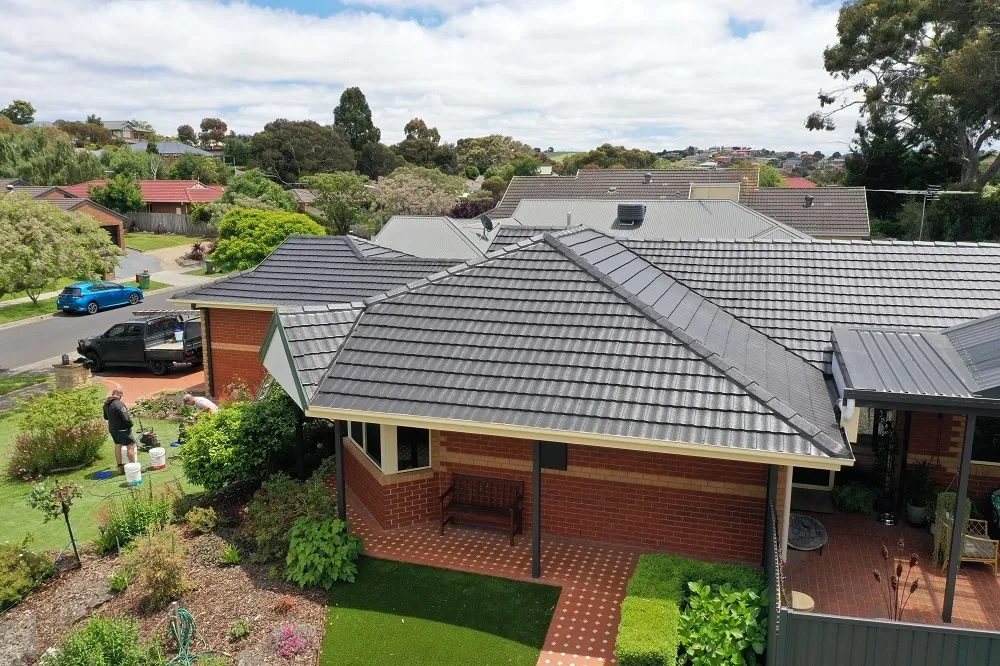
Concrete tile roof maintenance entails inspecting and repairing the sections of the roof that allow water ingress when they fail. Most roofs we examine reveal issues stemming from a few common areas: broken roof tiles, rusty or blocked valleys, and deteriorated mortar along the ridges. Addressing these concerns early can prevent minor defects from escalating into significant leaks through your ceiling.
There are four key areas of a concrete tiled roof that require the most attention throughout its lifespan:
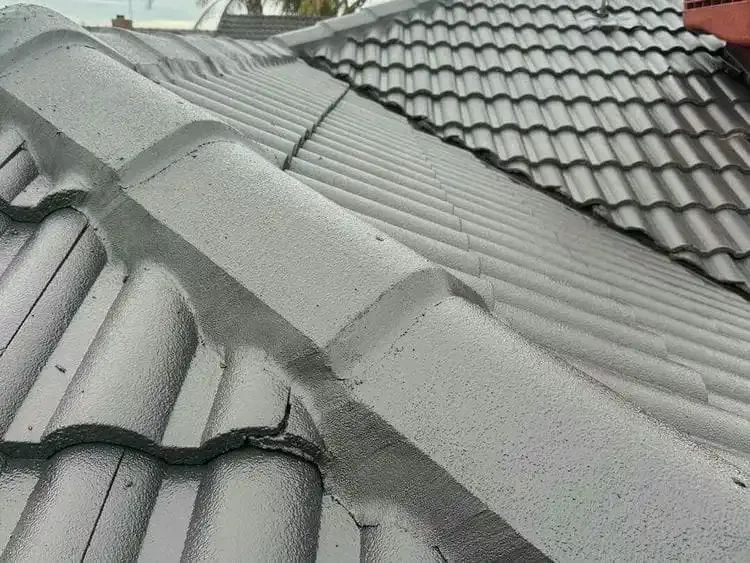
- Ridge and hip capping. The caps at the peak of the roof rest on a layer of mortar known as bedding, while a finishing layer called pointing seals the joints on top.
- Valley irons. These metal channels are located where two roof slopes converge, directing a substantial volume of rainwater into the gutters.
- The tiles themselves. Over time, tiles may crack, misalign, or lose their protective surface coating.
- Gutters. We provide a complimentary gutter cleaning with every roof restoration service, ensuring proper drainage.
Tiled roof maintenance is not a one-size-fits-all service. Some roofs may only require the replacement of a single cracked tile, while others might need the ridge capping to be rebedded and repointed. In some cases, a complete roof restoration may be necessary. An inspection will determine the specific needs of your roof.
How Frequently Should You Maintain Your Concrete Tile Roof?
Generally, a tiled roof requires maintenance every 10 to 15 years, typically involving the rebedding and repointing of the ridge capping. Once your roof reaches the age of 10 years, it’s advisable to schedule regular inspections, even if there are no visible signs of problems from the ground.
The age of your roof is significant because the materials are constantly exposed to the elements. Over the years, UV rays, rain, and temperature fluctuations can deteriorate the bedding mortar, leading to cracking and crumbling. As concrete tiles age, they lose their surface integrity, becoming more porous and less effective at shedding water.
Certain homes may require inspections sooner than the standard timeframe. For example, tiles can crack due to hail or falling branches, so it is wise to schedule an inspection following severe weather. If trees overhang your roof, or if you plan to install solar panels, a pre-installation inspection is crucial. Many roofing issues can become complicated and costly to address once the solar panels are installed, making early intervention beneficial.
What Signs Indicate Your Tile Roof Requires Maintenance That You Can Spot From the Ground?
Most warning signs can be identified from ground level or within your home. It is essential to avoid climbing onto the roof yourself, as concrete and terracotta tiles can easily crack underfoot, and working at height presents significant risks. Instead, watch for these indicators:
- Cracked or crumbling pointing on the ridge capping. Gaps, hairline fractures, or pieces breaking away along the ridges indicate that the seal has failed.
- Loose or misaligned ridge caps. Caps that appear askew have likely lost their grip on the bedding beneath.
- Fragments of mortar in the gutters or on the ground. This often signifies that the bedding is deteriorating.
- Cracked or misaligned tiles. Tiles can crack due to age, hail strikes, falling branches, or foot traffic, and they may slip out of position when their fixings fail.
- Rust, holes, or heavy lichen growth in the valleys. Water overflowing from a valley during heavy rain can also indicate a failing valley iron.
- Faded or flaking roof coating. Peeling paint on the ceiling below may suggest that the roof has not been adequately maintained.
- Lichen, moss, and dirt accumulation on the tiles. These growths retain moisture against the tiles, accelerating wear.
- Water stains on ceilings or damp patches on walls.
A water stain may not always be positioned directly beneath the source of the problem. Water can infiltrate through cracked pointing, weakened bedding, slipped tiles, or rusted valley irons, often travelling along the roof before manifesting inside. This is why we conduct a thorough inspection of the entire roof when investigating the cause of a leak.
Why Is Ridge Capping Critical to Tiled Roof Maintenance?
The ridge and hip capping are located along the most exposed edges of your roof, and the pointing that seals these areas is crucial for preventing wind-driven rain from penetrating underneath. Two layers work together to keep the caps secure. The bedding is the mortar that supports the caps, while the pointing is the layer applied on top to seal the joints against water, dust, and debris.
Many older roofs in Melbourne were pointed with rigid sand and cement mortar. This inflexible mortar cannot accommodate the natural expansion and contraction of the roof due to temperature fluctuations, leading to cracking and eventual loss. Today, we use a flexible pointing compound that maintains its bond as the roof shifts with the changing seasons.
What type of repair does your ridge capping require? If the pointing is cracked but the bedding remains intact, then simply repointing may suffice. if the caps are loose or the underlying mortar is crumbling, rebedding is necessary. We will lift the caps, remove the old bedding, lay down fresh bedding, realign each cap, and finish the ridge with flexible pointing.
Caring for the Valleys and Tiles of Your Concrete Tile Roof
Valleys are the internal channels where two sloping sections of the roof converge. Each valley on a tiled roof is lined with a valley iron that directs rainwater to the gutters, which is essential for handling large volumes of water during heavy rainfall. A rusted or perforated valley iron can lead directly to leaks.
When a valley iron has rusted through, we will replace it, install a new valley iron, and then carefully re-lay and secure the tiles on either side. We replace any broken tiles and reposition any that have slipped out of alignment. Every gap in the tiles presents a potential entry point for water, as well as for birds or vermin seeking shelter in your roof space. Our tile and valley repairs page showcases examples of our work on Melbourne homes.
We can replace individual broken tiles or larger sections as needed. While on the roof, we will also inspect for additional cracked or slipped tiles, ensuring you are informed about any issues before they develop into leaks.
When Does Concrete Tile Roof Maintenance Transition Into a Roof Restoration?
A roof restoration is warranted when the ridge capping, tiles, and surface show signs of wear simultaneously. Many homeowners mistakenly believe that a worn roof necessitates a complete replacement. a restoration is significantly more cost-effective than a new roof and often provides everything a tired tiled roof requires.
A restoration by Traditional Roofing consolidates all necessary maintenance into a single visit:
- A comprehensive roof inspection prior to any work commencing.
- Repairs to broken tiles and any damaged areas.
- A high-pressure clean to eliminate lichen, moss, and grime from every tile.
- Rebedding and repointing of the ridge and hip capping as needed.
- Application of a protective membrane coating where required.
- A complimentary gutter clean and final inspection before we depart.
If your roof has only a few damaged tiles or some cracked pointing, a simple roof repair may be all that is necessary. We will recommend only the work that your roof truly needs and clearly explain the reasons behind our recommendations before providing a quote.
What to Expect During a Tile Roof Maintenance Inspection
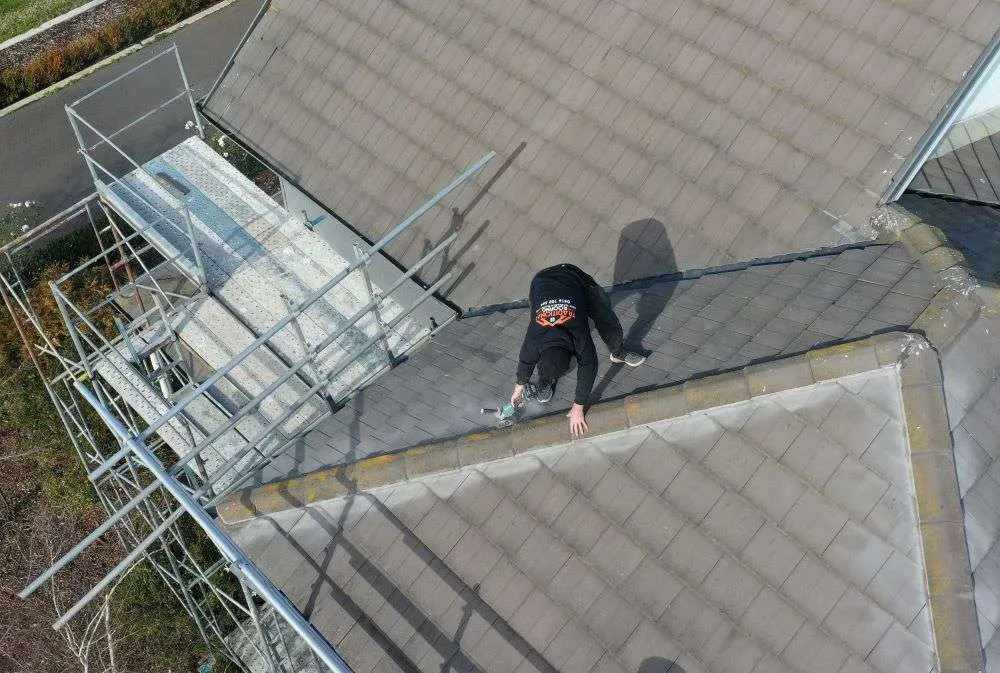
Obtaining a free quote is the simplest way to determine your tiled roof’s maintenance needs. Our team will access your roof, take photographs, and identify necessary repairs, explaining our findings to you. You will receive a straightforward, detailed quote with no hidden charges.
Here’s how to arrange an inspection:
- Book online, detailing any issues you have noticed and their locations.
- We will schedule your home for our next roof inspection day.
- You will receive an SMS with a one-hour window for our arrival.
- We will inspect the roof and provide you with a detailed quote.
- If you choose to proceed, we will carry out the work and thoroughly check every part of the roof before we leave.
We plan each inspection day for maximum efficiency, so we cannot guarantee specific times. You will receive a tracking link once Justin is en route. With experience in the roofing industry since 1997, Justin supervises every project we undertake.
Commonly Asked Questions About Tile Roof Maintenance
Is there a difference between concrete and terracotta tile roof maintenance?
The ridge capping, valleys, and gutters require the same checks for both types of roofs. The key difference lies in the tile surface. Concrete tiles gradually lose their surface and become more porous over time, necessitating cleaning and possibly a membrane coating. In contrast, terracotta roofs typically require cleaning to remove lichen and moss, restoring the tiles to their original colour.
Can tiled roof maintenance prevent a leak from developing?
Yes, and this is the primary purpose of maintenance. Regular upkeep on a tiled roof helps to prevent leaks. Common issues such as broken tiles, rusty or blocked valleys, and deteriorated mortar can lead to leaks, and addressing these problems early is quicker and more cost-effective than waiting for water to start coming through the ceiling.
Should I have my tile roof inspected before installing solar panels?
Yes, it is a wise decision. Solar panels represent a significant investment, and certain roof problems can become challenging or expensive to fix after the panels are installed. We can inspect and repair your tiled roof before the panels are added. Your solar provider will handle the supply and installation of the panels.
Schedule Your Concrete Tile Roof Maintenance Check with Traditional Roofing
If your concrete or terracotta tiled roof is over 10 years old, or if you’ve noticed cracked pointing, loose ridge caps, or stains on your ceiling, contact us for a free quote. We will inspect your roof, explain our findings, and recommend any necessary work. Traditional Roofing is a family-owned business based in Sunbury, specialising in tiled roofs throughout Melbourne and the Macedon Ranges. You can book online via our contact page or call us at (03) 9020 4430.
Original Article First Published At: Concrete Tile Roof Maintenance in Melbourne: What Your Tiled Roof Needs, How Often and the Signs to Watch For, From Traditional Roofing