

Understanding Commercial Roofing Requirements
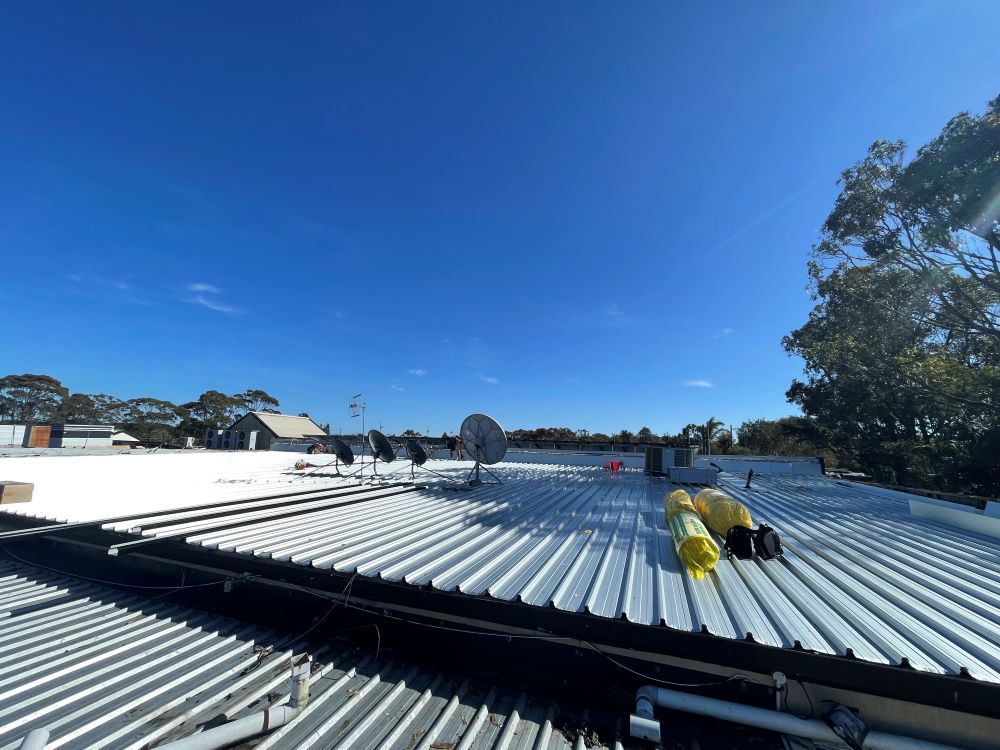
A leaking commercial roof doesn't necessarily indicate that a full replacement is needed. Most leaks originate from issues such as failed flashings, clogged box gutters, split sheet laps, or corroded fasteners, all of which are often repairable. Full replacement should only be considered when the entire roof's deck, structure, or sheeting has reached the end of its service life.
For those managing warehouses, factories, strata blocks, or retail buildings on the Central Coast, visible leaks may only be a small part of the issue. Water can travel along purlins and accumulate above suspended ceilings before it becomes evident inside the building. The best course of action depends on the specific failures, the extent of the roof affected, and how long you can continue patching leaks before it becomes financially unwise.
Key Takeaways on Commercial Roofing
The majority of commercial roof leaks can be repaired.
Full replacement is necessary only when failures are widespread rather than isolated.
Box gutters and flashings account for more leaks than the roofing sheets themselves.
Costs vary based on roof size, accessibility, height, sheet profile, deck condition, and required downtime, rather than a standard per-metre rate.
Signs such as standing water and rust spreading along sheet laps indicate it may be time to consider re-roofing.
AWS Roofing provides complimentary commercial roof inspections throughout Gosford, Wyong, and Tuggerah, complete with a written report regardless of the outcome.
What Are the Common Causes of Commercial Roof Leaks?
Most leaks in commercial roofs begin at the seams rather than the sheets themselves. Flashings, box gutters, penetrations, and sheet laps fail long before high-quality metal sheeting shows signs of wear. On large, low-pitch roofs common in the Central Coast region, water moves slowly and can exploit every weak fastener, lifted lap, and undersized gutter, causing a single failure point to flood a significant internal area.
Commercial roofs experience different types of failure compared to residential roofs due to their scale and low pitch. The flatter the pitch, the slower the drainage, which increases reliance on effective seals and gutters. We frequently see a few common culprits behind the majority of leakage calls.
Box Gutters and Internal Drainage Issues
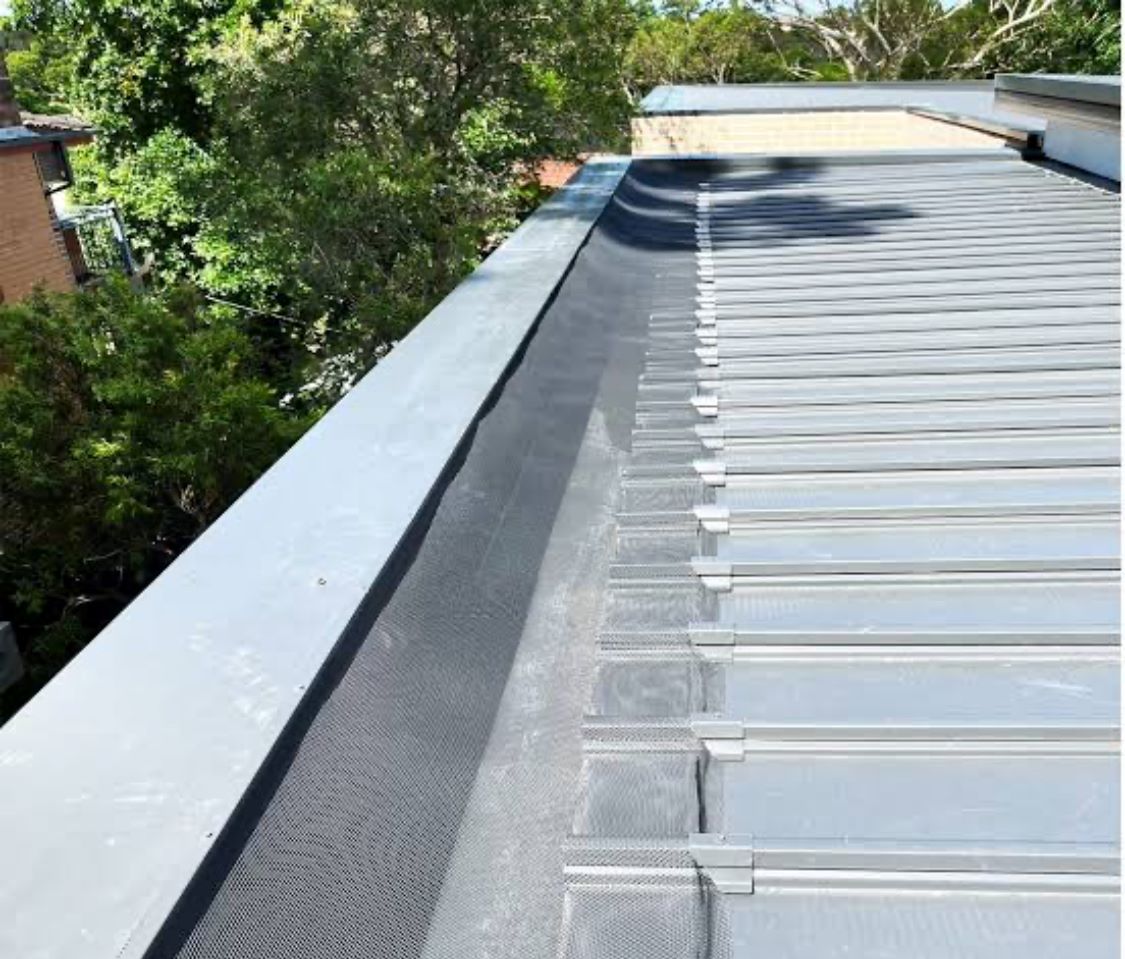
Box gutters are the primary source of serious leaks in commercial buildings. Often positioned within the roofline and frequently undersized for modern rainfall, they can overflow when blocked, directing water straight into the interior instead of draining off the edge. Leaf litter, sediment, and malfunctioning sumps are common problems in Central Coast industrial sites. A blocked box gutter during a summer storm can release litres of water into the building within minutes.
Failures in Flashings and Penetrations
Each pipe, vent, skylight, air conditioning unit, and parapet represents a potential leak point. Flashings around these penetrations rely on sealants and lap details that deteriorate over years of exposure to UV rays and thermal movement. When these fail, water can travel under the sheets and appear metres away from the original fault, explaining why the stain on your ceiling often doesn't align with the leak source.
Corrosion of Fasteners and Sheet Laps
Over time, screws and washers can degrade, leaving open holes at each fixing point. The salt-laden air along the coast accelerates rust at sheet laps and around fasteners. Once corrosion spreads across multiple sheets rather than remaining localized, patching becomes economically unviable, making re-sheeting the more sensible long-term solution.
Is It Possible to Repair a Leaking Commercial Roof Instead of Replacing It?
In most instances, a leaking commercial roof can indeed be repaired rather than replaced. If the issue is localized, targeted repairs to flashing, fasteners, a section of box gutter, or a few corroded sheets can restore watertightness at a fraction of the cost of a complete re-roof. Replacement becomes relevant only when corrosion, deck damage, or sheet fatigue is found on a broader scale across the roof.
The key consideration is whether the issue is localised or systemic. A single faulty flashing or a blocked sump can be repaired, while rust spreading along multiple laps, a deck that feels soft underfoot, or a roof that has been patched repeatedly may signal that its service life has ended.
Repairing can buy you time, which may be ideal if a budget cycle or tenancy change is imminent. there comes a point when repeated repairs become cost-prohibitive, and the disruption from ongoing access outweighs the benefit of patching. Our team will provide you with an honest assessment of your roof's condition, rather than defaulting to a larger job. For comprehensive details on our commercial services, visit our commercial roofing Central Coast page.
When Is It Time to Replace a Commercial Roof?
Consider replacing a commercial roof when corrosion, leaks, and deck damage are widespread rather than isolated. Clear indicators include rust spreading over multiple sheet laps, water pooling that fails to drain, sagging or soft decking, and a history of leaks where fixing one area merely shifts the problem elsewhere. At this stage, re-roofing becomes more cost-effective than an endless cycle of patching.
Several signs strongly indicate the need for replacement over repair. Keep an eye out for these across your building.
Rust Found Along Sheet Laps
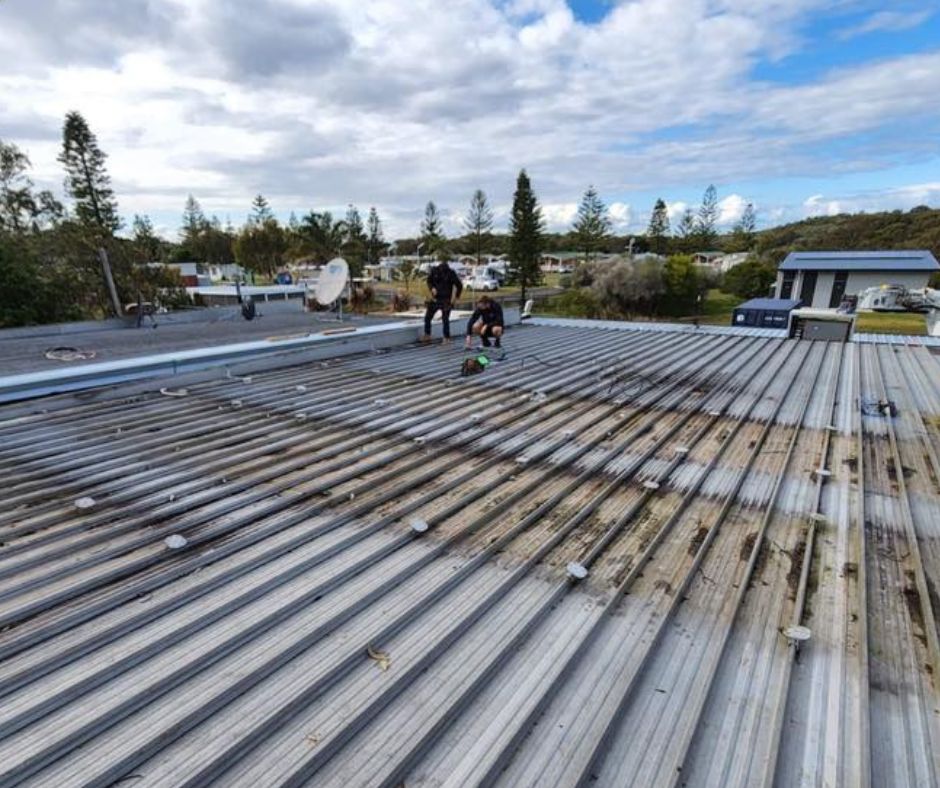
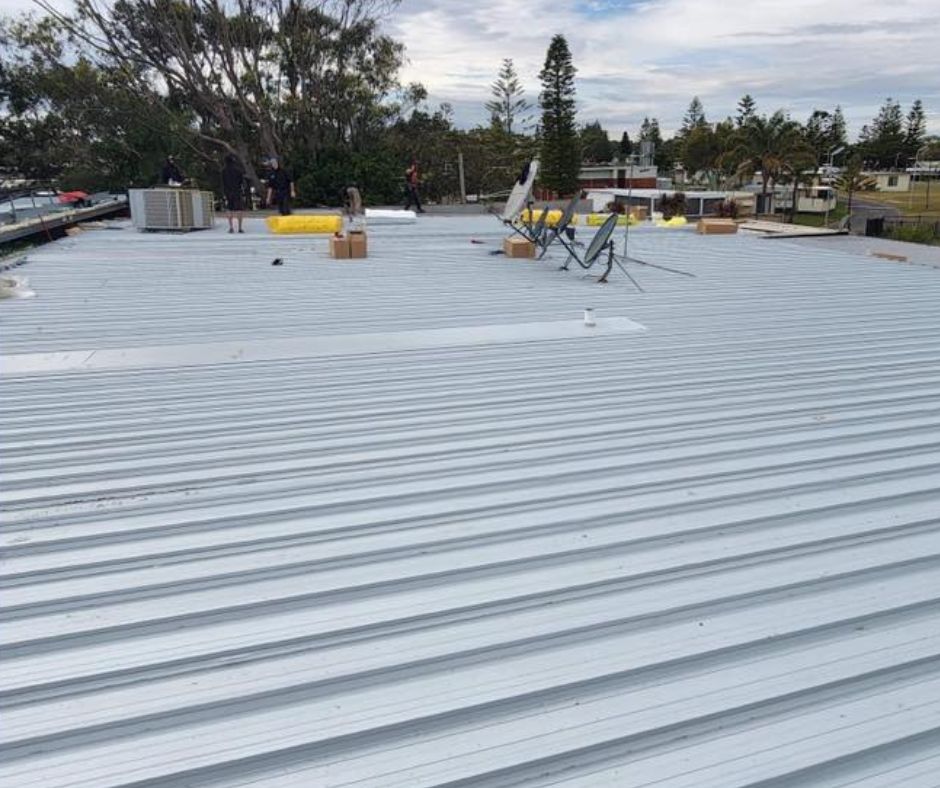
Surface rust on a single panel can be repaired. if rust is running along the overlapping joins of multiple sheets, this indicates that the protective coating has failed across the roof, allowing water to seep under the laps. Re-sheeting with modern coastal-grade steel resets the longevity of your roof and mitigates the recurring risk of leaks.
Ponding Water and Ineffective Drainage
Water that remains on the roof after rainfall, instead of draining away, signifies a structural and waterproofing issue. Ponding accelerates corrosion, stresses the sheeting, and overloads the deck. If your roof has multiple areas that pond, replacing it with corrective falls and upgraded drainage systems typically resolves the issue permanently.
A Compromised Deck
Years of water infiltration can severely damage the underlying timber or steel deck. Soft, rusted, or sagging decking cannot safely support new sheeting without remedial work. We evaluate the deck during our inspection because the condition beneath often dictates whether repair or replacement is necessary more than the visible sheets do.
.slider-654.bafg-twentytwenty-container { height: 500px !important;
} .slider-654.bafg-twentytwenty-container img { height: 500px !important; width: 100% !important;
}
.slider-info-654.bafg-slider-info .bafg-slider-title { font-size: 22px;
} .slider-info-654.bafg-slider-info .bafg-slider-description {
} .slider-info-654.bafg-slider-info .bafg_slider_readmore_button { text-align: center;
} .slider-info-654.bafg-slider-info .bafg_slider_readmore_button:hover {
}
.slider-654 .twentytwenty-overlay:hover { background-color: rgba(0, 0, 0, 0.5);
}
What Influences the Cost of a Commercial Roof Replacement?
The cost associated with replacing a commercial roof is influenced by various factors including roof size, accessibility, height, sheet profile, the condition of the existing deck, and the required downtime for the project, rather than a standard per-square-metre rate. Two buildings with identical footprints can have vastly different quotes once factors like access, drainage upgrades, and operational restrictions are considered. The only way to obtain an accurate figure is through a site inspection.
At AWS Roofing, we don’t have fixed pricing for commercial work because every roof is unique. Instead, we provide transparency regarding the factors that impact the final number, enabling you to evaluate quotes with confidence and accuracy.
Size, Accessibility, and Height
The size of a large warehouse roof inherently results in higher material and labour costs due to its area. accessibility significantly impacts the overall cost as well. Multi-storey buildings, limited street access, ongoing operations beneath, and the requirement for cranes, scaffolding, or scissor lifts all add complexity and cost to a commercial project compared to a simple ground-level roof.
Deck Condition and Potential Hidden Repairs
What we uncover once the old sheeting is removed can affect the overall cost. Corroded purlins, rotten timber, or damaged insulation may require remediation before new sheets can be installed. A comprehensive inspection beforehand helps minimise surprises, though in older Central Coast buildings, the deck often presents genuine variables.
Sheet Profile, Material Quality, and Necessary Drainage Upgrades
The profile and grade of sheets are vital considerations for commercial roofs. Low-pitch buildings typically require concealed-fix or high-rib profiles to effectively manage water at shallow falls, and coastal-grade steel is essential in areas near the water. If the job involves upsizing box gutters or correcting falls, this expands the scope but addresses the root cause. New guttering is often included in commercial re-roofing quotes.
Downtime and Staging Considerations
Maintaining business continuity shapes the project timeline. Staging work around trading hours, weekend access, or section-by-section replacement allows operations to continue but usually extends the project duration compared to working in a vacant building. We collaborate with you to plan the sequence so that production, tenants, or trade can continue while the roof is being installed.
What Is the Estimated Duration for a Commercial Roof Replacement?
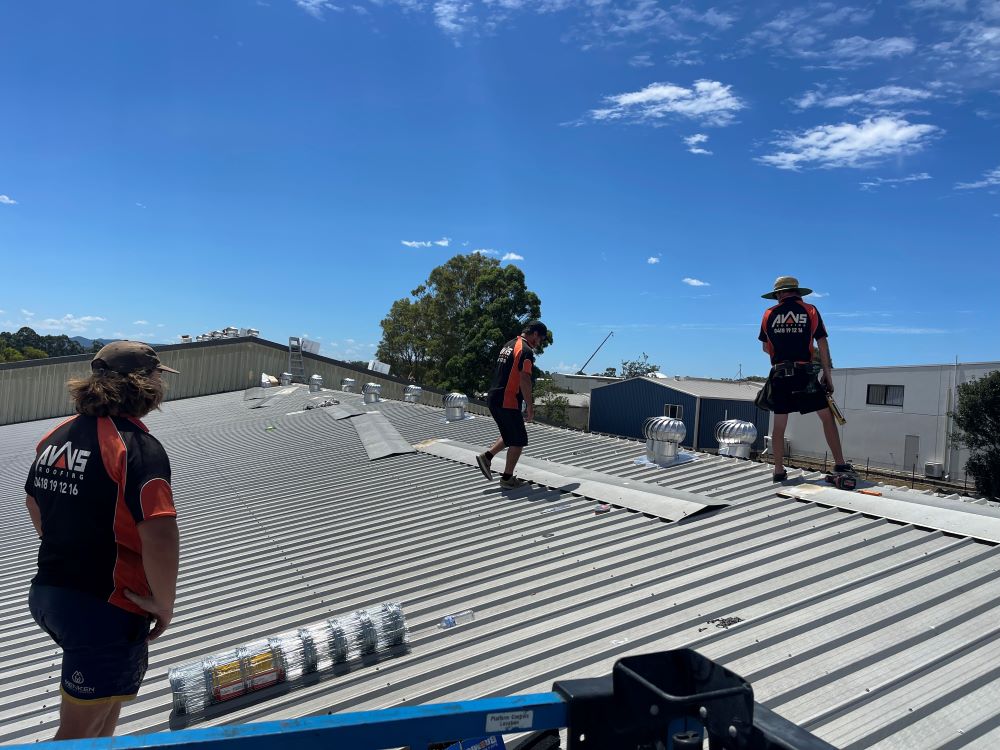
The timeline for replacing a commercial roof is influenced by various factors including roof size, access, weather conditions, and how the work must be staged around your operations. This can range from a few days for a small unit to several weeks for larger warehouses. Staging around trading hours extends the project duration but allows for uninterrupted business operations. A precise timeframe will be determined during the inspection and scope assessment.
One aspect that surprises many building owners is the staging process, rather than the roofing itself. A vacant building allows for continuous work. an occupied factory, tenanted strata block, or retail site requires careful sequencing to ensure each area is watertight before progressing, trading a longer timeline for minimal disruption to ongoing operations.
Weather conditions on the Central Coast also play a critical role. We take care not to strip more roof than we can secure before the next weather change, as an exposed deck combined with a coastal storm is a scenario no building owner desires. Our larger team enables us to work efficiently, minimising the time your roof is exposed.
Why Opt for Metal Sheeting for Your Commercial Re-Roof?
Metal sheeting has become the preferred choice for commercial and industrial re-roofing due to its ability to span large low-pitch areas, quickly shed water, and withstand coastal conditions with minimal maintenance. Coastal-grade steel offers resistance to the salt air that can corrode inferior materials throughout Gosford, Wyong, and Tuggerah. Long-run sheets also mean fewer joins and reduced potential leak points across extensive roofs.
For commercial properties, metal is valued for its performance. Long-run sheeting often covers the distance from ridge to gutter in one continuous length on many roofs, eliminating the end laps where leaks typically originate. It is lightweight, fast to install over vast areas, and pairs well with the upgraded drainage systems required for low-pitch commercial roofs.
Given the coastal environment, material grade is essential. The relentless salt-laden air can severely impact industrial roofs near the water, making it crucial to specify coastal-grade steel from the outset to prevent premature corrosion. Our metal roofing page details the various profiles and grades we use.
Contact the AWS Roofing team to get your commercial roofing needs addressed promptly.
Common Questions About Commercial Roofing
Does a leaking commercial roof always necessitate replacement?
Not necessarily. Most commercial leaks can be repaired, as they typically arise from failed flashings, blocked or undersized box gutters, deteriorated fasteners, or a few corroded sheets instead of the entire roof reaching the end of its service life. A targeted repair can restore watertightness for a fraction of the cost of a complete re-roof. Replacement is only warranted when issues are widespread, corrosion is advancing across multiple sheet laps, the deck is compromised, or a pattern of patching leads to new leaks appearing after each storm. The honest assessment lies in determining whether the problem is localised or systemic. AWS Roofing conducts comprehensive inspections of the entire roof, including the deck and drainage, to clarify the situation rather than defaulting to a larger job. You will receive a written report regardless of the findings, allowing for informed planning and budgeting.
What is the primary cause of commercial roof leaks?
Box gutters and flashings are responsible for more significant leaks in commercial roofs than the metal sheets themselves. Positioned within the roofline, box gutters are often undersized for modern heavy rainfall. When they become clogged with debris, overflow can lead directly into the building. Flashings surrounding pipes, skylights, air conditioning units, and parapets are the next most common source of leaks, as their sealants and lap details deteriorate over time due to UV exposure and thermal movement. Corroded fasteners and rusted sheet laps also contribute, particularly along the coast where salt air accelerates corrosion. Water often travels along purlins before it penetrates indoors, making it likely that the stain on your ceiling does not directly correlate to the original fault. This is why a thorough inspection is crucial, emphasising the need for a detailed examination rather than simply addressing visible leaks, which is the first step our team takes on commercial sites.
How can a commercial roof replacement occur without disrupting business operations?
We organise the work to ensure that your operations continue seamlessly. For occupied warehouses, factories, retail spaces, and strata blocks, the roof is replaced in sections, with each area secured watertight before moving to the next. If trading hours are a concern, we can schedule work around them, including access during weekends or after hours for sites that cannot pause operations during the week. We ensure that we do not strip more roof than we can adequately cover before inclement weather arrives, protecting your inventory, equipment, and tenants underneath. This meticulous approach allows for minimal disruption to ongoing activities while extending the project timeline. We discuss the staging with you during the inspection so you are fully informed about which areas will be affected and when. Our larger team also enables us to maintain momentum once work begins, shortening the overall project duration. For more details, visit our commercial roofing Central Coast page.
What is the cost of a commercial roof replacement on the Central Coast?
There is no fixed per-square-metre price, as commercial roofs vary significantly, making a single rate inaccurate. Costs are influenced by the roof's size, accessibility and height, the sheet profile and grade, the deck's condition after the old sheeting has been removed, any necessary drainage upgrades such as larger box gutters, and the required staging around your operations. Two buildings with the same footprint may receive vastly different quotes once factors like access equipment and ongoing operations are taken into account. AWS Roofing does not publish pricing for this reason. Instead, we conduct a thorough inspection of your roof, assess the actual requirements including what lies beneath the sheets, and provide you with an accurate written quote you can trust. A free commercial roof inspection is the only way to obtain an estimate that reflects your unique building rather than a generic guess.
Obtain Clear Guidance on Your Commercial Roof
The quickest way to determine whether you need a repair or a replacement is through a comprehensive inspection. AWS Roofing offers free commercial roof inspections across the Central Coast, covering areas from Gosford and Wyong to Tuggerah and beyond. We evaluate the roof sheets, flashings, box gutters, and the underlying deck, then provide you with a written report and an honest recommendation—be it repair or replacement—with no pressure to opt for the larger job.
We are fully licensed, insured, and WorkCover accredited, with every job backed by a written warranty. Our larger team enables us to stage commercial work around your operations, ensuring minimal disruption.
Schedule a free commercial roof inspection, and we will provide you with a clear understanding of your roof’s needs and the steps required to address them.
-
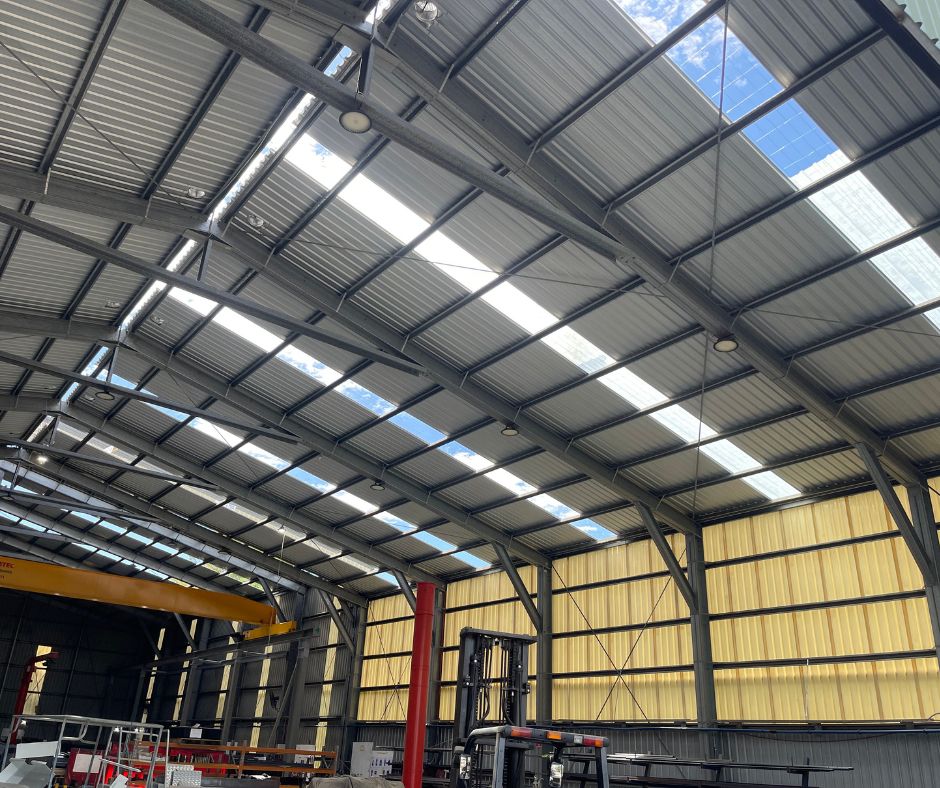
Commercial Roofing Morisset
Overview of the Commercial Roofing Morisset Project: This large factory in Morrisett lacked natural light and would become hot and stuffy as temperatures increased. The AWS Roofing team enhanced the factory's lighting by replacing sections of the existing metal roof sheeting with Trimdek fibreglass roof sheeting.
Original Article First Published At: Replacing A Commercial Roof That Leaks

You make an excellent point about the potential for repair rather than outright replacement! I’ve had my share of experiences with commercial roofs, and it’s surprising how often leaks can be traced back to those smaller issues you mentioned, like failed flashings or clogged gutters. It really highlights the importance of regular maintenance and inspections, especially in places where the roof structure is complex—like older warehouses or multi-story retail buildings.
You’re spot on about that surprising connection between those minor issues and major leaks. It’s often the less glamorous parts of the roof—the flashings, the gutters—that can dictate the long-term health of the whole structure. I can’t tell you how many times I’ve seen a small buildup of debris lead to significant water damage further down the line.
It’s interesting to see how many property managers overlook the more minor issues that can lead to significant leaks in commercial roofing. I’ve encountered situations where a simple repair—like fixing flashings or cleaning out box gutters—has extended the life of a roof by several years. It’s a reminder of how essential regular maintenance is, especially for those managing larger properties like warehouses and factories.