
Affordable Ways to Stay Cool in Your Brisbane Home with Ceiling Fans
Brisbane's southside summers can be incredibly hot and humid, making it essential to find effective cooling solutions. While many households rely on air conditioning, integrating ceiling fans can enhance comfort and reduce energy costs. By using ceiling fans, you can allow your air conditioning unit to work more efficiently and lower your electricity bills.
When you operate a ceiling fan alongside your air conditioner, you can increase the thermostat setting by 4 to 5 degrees without sacrificing comfort, potentially reducing cooling expenses by as much as 30%. The airflow from the fan creates a wind chill effect, making the room feel cooler than the temperature displayed on the thermostat.
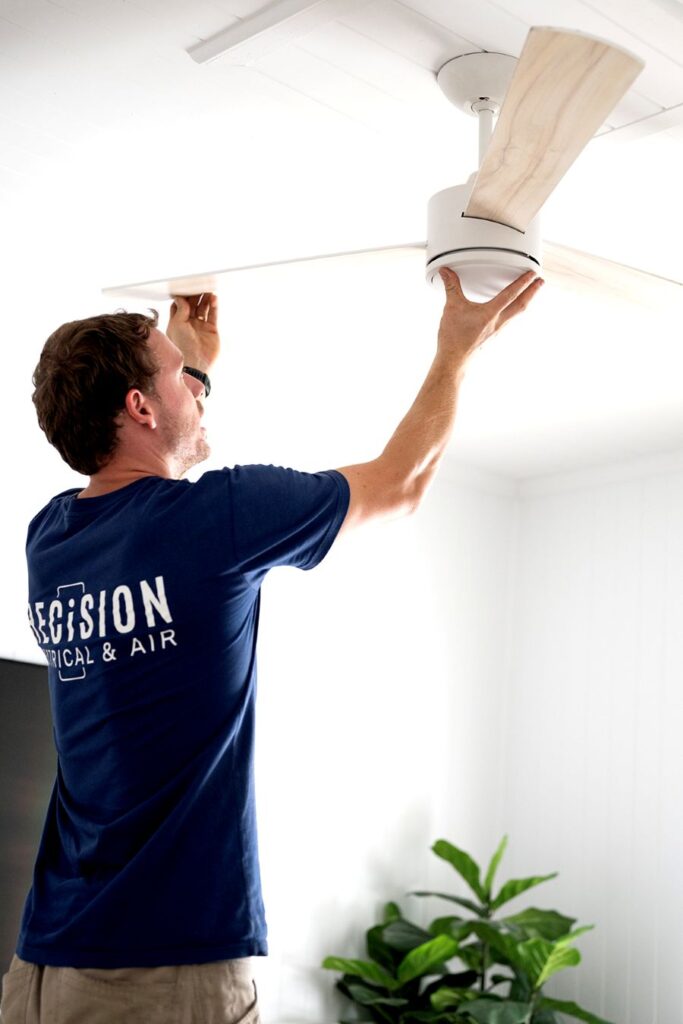
A qualified electrician can install ceiling fans in most rooms within a few hours. It is crucial to secure them to a ceiling joist or a fan-rated bracket to ensure stable operation without any wobbling.
Today, there is a wide variety of ceiling fans available, making it easy to find one that complements any room while providing relief from the heat during the summer months.
The Importance of Proper Ceiling Fan Installation
Correct installation of a ceiling fan ensures a comfortable environment and quiet operation for years. Poor installation can lead to wobbling, noise, or worse issues. Here’s what constitutes a proper installation.
Prioritising Safety in Installation
The fan must be securely attached to a suitable electrical box that is fastened to a ceiling joist or support beam. Installing a fan using a standard light fixture can be dangerous, leading to the fan potentially falling and causing injury.
The wiring must comply with Australian electrical standards, which necessitates the expertise of a licensed electrician. The fan blades should be positioned at least 2.1 metres above the floor and maintain a minimum of 30 centimetres of clearance from the walls.
It’s essential for the blades to be balanced and securely fastened. A loose blade could detach while the fan is in operation, posing significant risks.
Optimising Airflow for Maximum Efficiency
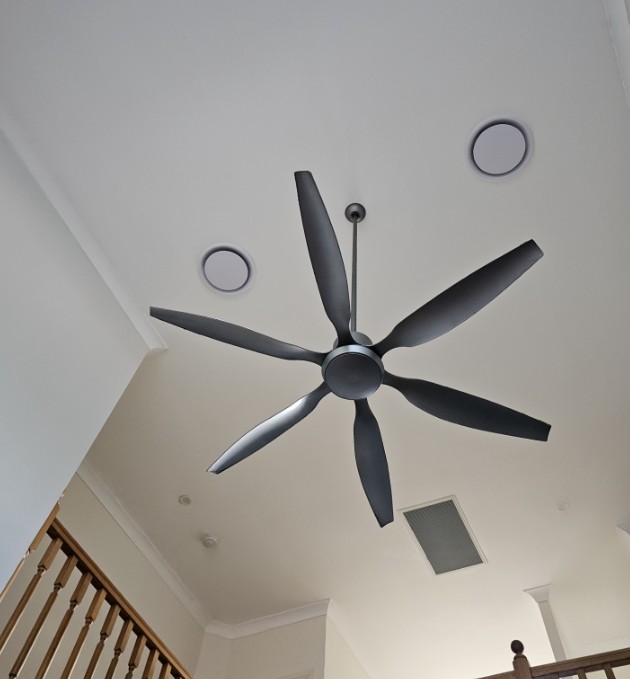
The height at which a fan is installed greatly impacts its ability to circulate air effectively. For standard 2.4-metre ceilings, a flush mount is suitable. In spaces with higher ceilings, using an extension rod brings the fan down to the optimal height of 2.1 to 2.4 metres.
The pitch of the blades should ideally be between 12 and 15 degrees for optimal airflow. During summer, run the fan in an anticlockwise direction, and in winter, switch it to clockwise.
Maintaining clean and balanced blades is vital. Dust accumulation and unbalanced blades can hinder airflow and lead to noise issues, such as ticking or humming.
Insider Tip: Choose the right size fan for your room. A fan with a diameter of 1.2 metres is suitable for spaces up to 12 square metres, while larger rooms may require fans measuring up to 1.5 metres in diameter.
Enhancing Air Conditioner Efficiency with Ceiling Fans
Ceiling fans and air conditioners serve distinct purposes. The air conditioner cools and dehumidifies the air, while the fan helps distribute that cool air throughout the room. Combining both creates an evenly cool and comfortable environment while saving on energy costs.
Circulating Cool Air Effectively
An air conditioner operating alone tends to allow cool air to settle near the floor, leaving warmer air near the ceiling. A ceiling fan helps push that cool air back down and circulate it throughout the room.
The breeze generated by the fan can make you feel up to 4 degrees cooler, even if the thermostat is set higher. Moving air increases the rate at which your body loses heat, allowing you to remain comfortable in a warmer room.
A properly sized fan ensures that air reaches every corner of the room, eliminating the hot and cold spots often experienced with air conditioning alone.
Reducing Energy Costs with Combined Use
Using the fan in conjunction with the air conditioner allows you to raise the thermostat setting by 2 to 3 degrees while maintaining comfort. This adjustment can lead to a reduction in cooling costs by up to 15%.
Ceiling fans consume only 30 to 60 watts of power, whereas air conditioners can draw between 900 and 3,500 watts. This means the fan can significantly contribute to cooling without adding much to your electricity bill.
- Ceiling fan: 2 to 5 cents per hour
- Air conditioner: 25 to 90 cents per hour
Extending the Lifespan of Your Air Conditioner
When a ceiling fan assists in cooling, the air conditioner doesn't need to exert as much effort. This results in fewer on-off cycles, reducing wear on the most expensive components.
As the room reaches the desired temperature more quickly and maintains it, the air conditioning unit runs less, relieving stress on the compressor and fan motors — the components you want to preserve the longest.
With consistent use, ceiling fans can decrease an air conditioner's runtime by 30 to 50%, significantly extending its lifespan.
Maximising Ceiling Fan Effectiveness for Brisbane Homes
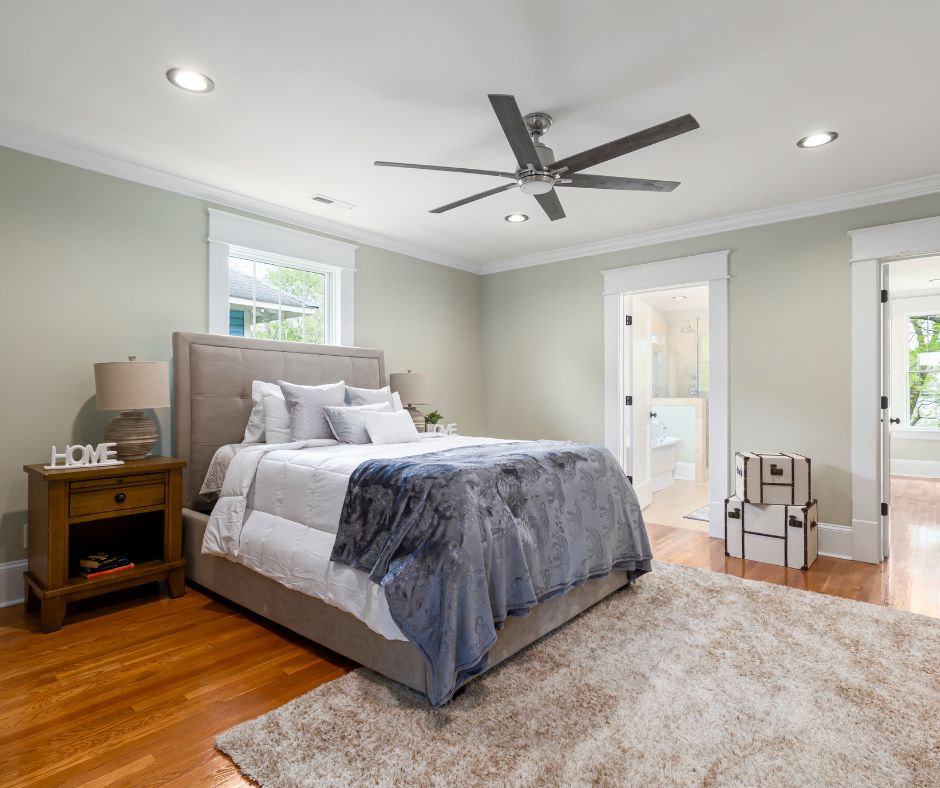
The performance of a ceiling fan depends on two main factors: the direction of rotation and its suitability for the room. Get both right for optimal cooling efficiency and energy savings.
Adjusting Fan Direction According to the Season
During the hot Brisbane summers, set the fan to rotate anticlockwise. This creates a downward airflow, providing a refreshing breeze that makes you feel several degrees cooler.
On mild winter days, switch the fan to clockwise at a low speed. This gentle updraft helps bring the warm air that has risen to the ceiling back down into the living space.
The direction switch is located on the motor housing. Ensure the fan has completely stopped before changing the direction to prevent damage to the switch.
Choosing the Right Fan Size for Your Room
The size of your fan should correspond to the dimensions of the room:
| Room Size | Recommended Fan Diameter |
|---|---|
| Up to 4m² | 90-105cm |
| 4-6m² | 105-132cm |
| 6-9m² | 132-152cm |
| Over 9m² | 152cm or larger |
Install the fan 2.1 to 2.4 metres above the floor for optimal airflow. In rooms with sloped ceilings, use an extension rod to maintain this height.
Ensure there is at least 50 centimetres of space between the tips of the blades and the walls to prevent air turbulence and ensure smooth operation.
Managing Humidity in Brisbane Homes
Brisbane's subtropical climate often brings high humidity levels that can make indoor spaces feel uncomfortable. A ceiling fan, when used with an air conditioner, effectively combats this discomfort without significantly increasing energy expenses.
Combatting Humidity and Stagnant Air
By keeping air in motion, a ceiling fan promotes evaporation of sweat from your skin, which is essential for cooling down on humid days. This movement is key to feeling comfortable rather than clammy.
Circulating air helps prevent moisture from accumulating in corners and other quiet areas, thus reducing the likelihood of mould growth in your Brisbane home.
Keep the fan set to rotate anticlockwise during summer to ensure optimal cooling effect.
Using Fans and Air Conditioning Together for Best Results
When running the ceiling fan, you can increase the temperature setting of your air conditioner by 2 to 3 degrees without feeling any difference. This simple adjustment can reduce your energy bill by 10 to 15%.
The fan also ensures even distribution of cool air, preventing it from simply sinking to the floor while the warmer air remains trapped above.
Benefits of Using Fans and Air Conditioning Together:
- Reduced workload on your air conditioning system
- More consistent temperature throughout the room
- Lower energy costs
- Enhanced comfort during humid conditions
For optimal performance, position the fan in the centre of the room, maintaining a height of 2.1 to 2.4 metres above the floor.
Common Questions About Ceiling Fans
Is it beneficial to use a ceiling fan with an air conditioner?
Absolutely. Operating a ceiling fan alongside your air conditioner allows you to raise the thermostat setting by 2 to 4 degrees without sacrificing comfort. This can lead to a reduction in cooling costs of up to 30%. The fan creates a wind chill effect, making the space feel cooler and promoting even distribution of the air conditioner's output.
What direction should a ceiling fan spin during summer?
In summer, the fan should spin anticlockwise. This directs air downward, creating a cooling breeze that can make you feel up to 4 degrees cooler. In winter, switch the fan to clockwise at a low speed to help circulate the warm air that rises to the ceiling back down into the living space.
How does power consumption of a ceiling fan compare to an air conditioner?
A ceiling fan consumes between 30 to 60 watts, costing approximately 2 to 5 cents per hour. In contrast, an air conditioner uses between 900 and 3,500 watts, resulting in costs of around 25 to 90 cents per hour. Running both the fan and setting the air conditioner a few degrees higher is significantly more cost-effective than operating the air conditioner alone at a lower temperature.
How do I determine the right size ceiling fan for my room?
Select a fan size that matches your room size: for spaces up to 4m², choose a fan between 90 to 105cm; for 4 to 6m², opt for 105 to 132cm; for 6 to 9m², select 132 to 152cm; and for rooms larger than 9m², use a fan of 152cm or more. A well-sized fan effectively moves air throughout the room without causing turbulence near the walls.
What is the ideal height for installing a ceiling fan?
Fan blades should be positioned 2.1 to 2.4 metres above the floor to ensure optimal airflow and safety. For standard 2.4-metre ceilings, a flush mount is appropriate. For higher ceilings, use an extension rod to achieve the correct height. Ensure there is at least 30cm of clearance between the blades and the ceiling, and 50cm between the tips of the blades and the walls.
Do ceiling fans help manage humidity in Brisbane?
Yes. The high humidity in Brisbane makes air movement crucial for comfort. A ceiling fan keeps air circulating, which speeds up the evaporation of sweat and helps you feel cooler on humid days. This airflow also prevents moisture from settling on surfaces, reducing the risk of mould in corners and quiet areas.
Is it necessary to hire an electrician for ceiling fan installation in Brisbane?
Yes. Proper installation requires securing the fan to a ceiling joist or a fan-rated bracket and ensuring the wiring complies with Australian electrical standards. Incorrectly mounted fans pose safety risks. A licensed electrician can complete most installations within a few hours, ensuring the work is safe and compliant while eliminating wobbling.
Can ceiling fans prolong the lifespan of my air conditioner?
Yes. When a ceiling fan aids in air distribution, the air conditioner operates less frequently to maintain the desired temperature. This results in fewer on-off cycles and reduced strain on critical components, such as the compressor and fan motors, which can extend the system's lifespan.
Considering ceiling fans for your home? Contact the team at Precision Electrical & Air at 0423 163 359, and we will help you select the ideal fans for your space and ensure safe installation. Ceiling Fan Installation Brisbane
Original Article First Published At: Ceiling Fans with Air Conditioning: How Brisbane Homeowners Save Up to 30% on Cooling Costs