


“Why would I require more than one pair of glasses?” This is a query I receive quite frequently, and I completely understand the reasoning behind it. A patient comes in and expresses the desire for a single pair that can handle everything: driving, working on the computer, reading, watching TV, shopping, playing golf, and dining out. At first glance, this seems perfectly logical. After all, you have only one pair of eyes, so one pair of glasses should suffice, right?
In brief: sometimes one pair does the job well, but expecting a single pair to meet all your needs often results in compromises regarding comfort, clarity, or performance. The essential question isn’t “what can you see?” but rather “what do you need to accomplish?” Selecting the right lens for each task makes a significant difference.

Understanding Glasses Through the Shoe Analogy
A simple way to explain this concept is by comparing glasses to footwear. Most individuals do not possess just one pair of shoes for every occasion; you might have walking shoes, work shoes, athletic trainers, boots, and a nicer pair for dining out. Could you wear trainers to a wedding? Perhaps. But would they be the ideal choice? Probably not. It’s simply impractical to expect one pair of shoes to meet every need, and the same applies to your eyewear.
How you use your eyes on a daily basis is far more important than how many letters you can read on an eye chart. Do you spend your day in front of a computer? Drive for long distances? Struggle with glare? Read for extended periods? Engage in activities like sewing, painting, gardening, fishing, or golfing? Do you use one screen, two, or even three? Each of these scenarios points to a different optimal solution.

Why Driving Requires Dedicated Eyewear
Driving entails specific visual demands: clear vision at a distance, awareness of your surroundings, quick reading of signs, and accurate judgement of distance and movement. You also face varying light conditions, such as bright sunlight, road glare, reflections, rain, and night driving. Polarised sunglasses effectively reduce glare from roads and other surfaces, significantly enhancing comfort when outdoors. A pair of glasses that excels at reading or office tasks may not be suitable for driving, especially when considering challenges like poor night vision.
The Unique Visual Needs of Computer Work
A notable shift throughout my career has been the amount of time people now dedicate to screens, often spending six, eight, or even ten hours a day in front of them. Screens fall into the “intermediate” distance category, which is neither as far as a road sign nor as close as a book. This can create discomfort for individuals with presbyopia or those who wear multifocals. While general-purpose multifocals work well for everyday use, they often do not provide the most comfortable field of vision for long hours of screen work. This discomfort leads many to lift their chin, lean in, or constantly adjust their posture, which over time contributes to headaches, eye strain, and tension in the neck and shoulders. This is where occupational lenses, sometimes referred to as office or extended-reader lenses, become essential as they are specifically designed for computer and desk work.

Precision Is Essential for Reading and Close Work
Reading requires your eyes to focus precisely, maintain that focus, track smoothly, and process fine details over extended periods. This is particularly true when reading medicine labels, ingredient lists, or engaging in crafts, sewing, or bookkeeping. While simple reading glasses can effectively assist with tasks requiring focus at one distance, they can become frustrating if you frequently shift between reading, using a computer, and looking across the room. Single-vision readers only work well within a limited range, making them less effective for varied tasks. It’s also important to recognise the age-related changes in focusing ability that contribute to these challenges.
Understanding the Limitations of Multifocals
Multifocals are among the most versatile eyewear options available, allowing you to see at multiple distances with just one pair, which is incredibly convenient. even the best multifocal lenses are carefully designed compromises. They can be optimised for distance, intermediate, or near vision, but not all three simultaneously. I often describe them as a Swiss Army knife—handy for many tasks, but if you’re building a house, you still need a proper toolbox. For more information, you can visit our multifocal glasses page.
A Case Study: The Benefits of Having Three Pairs of Glasses
I had a patient who wanted a single pair of glasses for all situations. Upon closely examining their lifestyle, it became evident that one pair wouldn’t provide the best outcome. For everyday use, I recommended photochromic multifocals, which offer clear vision at distance, intermediate, and near, along with a tint that adjusts to different lighting conditions. For driving and outdoor activities in bright glare, they required polarised multifocal sunglasses since harsh, reflective environments were triggering migraines. Lastly, for their multi-screen workstation setup, occupational lenses provided a wider, more comfortable field of vision than their regular multifocals could offer.
The result was not just clearer vision; it led to reduced squinting, fewer headaches, less fatigue, and improved productivity. The main takeaway is that the goal was never to have “more glasses,” but rather to match the eyewear solution to the specific tasks at hand.
The Hidden Costs of Using Incorrect Glasses
Wearing the wrong glasses for a particular task does not always result in blurry vision; sometimes it merely means that every activity requires more effort. You might be able to read the screen but feel utterly exhausted by the end of the day. You may complete your work but experience headaches, diminished concentration, or discomfort in your neck and shoulders. Many individuals unknowingly adapt by leaning forward, tilting their heads, squinting, or shifting in their chairs, and the body is quite adept at compensating. this compensation comes at a cost, and over the course of a week, that extra effort accumulates.
Am I Being Pressured to Buy More Glasses?
I understand the hesitation some people feel when an optometrist suggests multiple pairs of glasses; no one wants to feel they are being sold something unnecessary. It can be helpful to change your perspective. If a carpenter owns several tools, no one assumes they have been oversold. If a golfer carries multiple clubs, or a chef possesses various knives, we recognise that each item is designed for a specific purpose. Having different pairs of glasses is not about accumulating more for the sake of it; it’s about having the right tool for each task. Sometimes one pair is sufficient, while at other times, two or three tailored solutions yield a significantly better result. The focus should be on the quality of the outcome, not merely the number of pairs owned.
Advancements in Lens Technology Enhance Eyewear Options
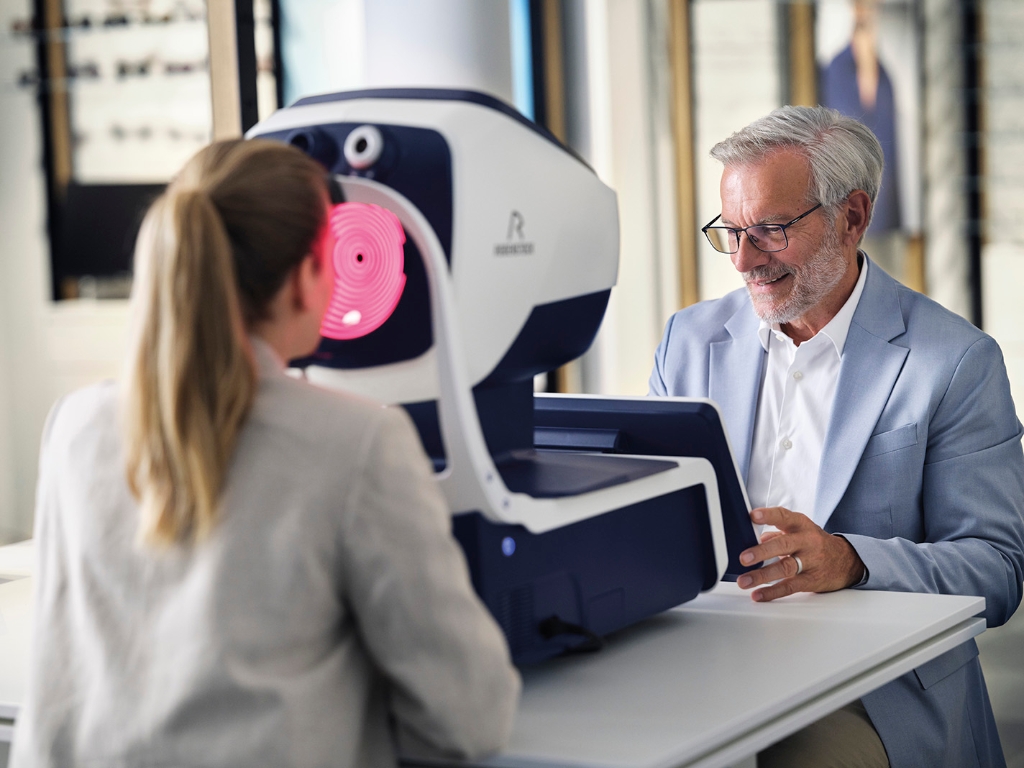
One reason we achieve such impressive results today is due to significant improvements in lens technology. At Eyes by Design, we utilise the Rodenstock DNEye Scanner and ImpressionIST technology to capture detailed measurements of your eyes and how your glasses fit in front of them, enabling us to design lenses tailored specifically for you. I liken it to a bespoke suit versus something off the shelf, particularly beneficial for advanced designs like multifocals and occupational lenses. You can learn more about this process on our biometric lenses page.
Common Questions About Eyewear Needs
Why can’t one pair of glasses meet all my needs?
Different activities impose varying demands on your eyes. Glasses designed for reading may not be suitable for driving, and a general multifocal lens might not provide the most comfortable experience for prolonged screen use. While one pair may suffice for some, often two or three task-specific options yield a noticeably improved outcome.
Do I require separate glasses for computer use?
Not necessarily, but many individuals benefit from occupational (office) lenses for extended periods of screen work. These lenses offer a wider and more comfortable field of vision for intermediate to near distances than a standard multifocal, reducing the need to lift your chin and lean forward, which can lead to headaches and neck strain.
Are multifocals suitable for driving?
While multifocals can work for everyday driving, for long distances or high-glare conditions, many people find dedicated polarised sunglasses significantly more comfortable. Glare and variable lighting present unique challenges for your vision that a single all-purpose lens may not effectively accommodate.
Am I being pressured to purchase extra glasses?
No, it’s about having the appropriate tool for each task, similar to how a tradesperson owns multiple tools. Sometimes one pair is genuinely sufficient. The goal is always to achieve the best outcome for how you use your eyes, not just the quantity of pairs.
Eyewear Designed to Support Your Lifestyle
Ultimately, this discussion isn’t solely about glasses; it’s about enhancing your quality of life. It’s about working comfortably, enjoying your hobbies, driving with confidence, reading effortlessly, and having the energy left for your loved ones. If your current glasses are not meeting the demands of your lifestyle, it’s worth having a thorough discussion about your daily visual needs. If you’re located on the Central Coast, visit us at Eyes by Design in Kincumber. You can book an appointment or give us a call at (02) 4369 8169.
Original Article First Published At: Why One Pair of Glasses Isn’t Always Enough



It’s a fascinating analogy you made between glasses and shoes—both serve specific functions, yet we often overlook the need for variety in our vision just as we do in our footwear. A well-fitted pair of running shoes may not provide comfort for a night out, just as reading glasses might not serve our needs while driving.