
Numerous older homes in Melbourne’s western suburbs still feature their original meter boards and switchboards. It is not unusual to find asbestos backing boards in these old meter boxes throughout the region. The Victorian Asbestos Hub recommends minimising any disturbance to materials suspected of containing asbestos, as actions like cutting, drilling, sanding, or breaking them can release harmful fibres into the atmosphere. Planning is essential before replacing an old switchboard, as removing the panel entails taking it off the wall and necessitates careful preparation prior to commencing any electrical work.
This comprehensive guide outlines how to identify whether your switchboard may have an asbestos backing, explains why visual inspection alone is insufficient for confirmation, informs you about who is authorised to remove it in Victoria, and details the entire process of replacing an asbestos switchboard, from initial inspection through to the installation of the new board.
- If your home was built or renovated before 1990, the Victorian Government’s Asbestos Hub indicates it is likely to contain asbestos.
- Older switchboard and meter panels were frequently constructed using a composite of asbestos and resin or asbestos and pitch board, which typically appears dark brown or black.
- Laboratory testing of a sample is the only definitive method to confirm the presence of asbestos. Mere visual examination of the panel is inadequate.
- Asbestos removal must be conducted by a licensed asbestos removalist, as electricians are generally not authorised to perform this task.
- Once the asbestos panel is removed, a licensed electrician will install the new switchboard and issue a Certificate of Electrical Safety.
What Is the Likelihood of Encountering an Asbestos Switchboard in Older Melbourne Residences?
Asbestos switchboards are prevalent in homes of a certain age. The Victorian Asbestos Hub's information on asbestos locations indicates that if your home or building was constructed or renovated prior to 1990, it likely contains asbestos. The same resource mentions electrical cupboards as common areas where asbestos is found, along with roof sheets, eaves, and wall linings hidden behind bathroom tiles.
According to the national Asbestos Product Guide concerning electrical fuse and meter board backing, most of these panels were installed before 1990, with meter boxes noted as their primary residential application.
Our switchboard upgrades page corroborates this information for local residences. Asbestos backing boards were routinely employed in meter boxes of homes built before the mid-1980s, making them a common feature in Melbourne’s western suburbs.
How Can You Determine if Your Switchboard Has an Asbestos Backing Board?
You can identify indications of an asbestos switchboard from a safe distance, but you cannot confirm its presence visually. The Asbestos Product Guide describes these old panels as typically dark brown or black, featuring a rough, fibrous or wood-like surface, and sometimes emitting a strong tar odour. These boards were made from a composite of asbestos and resin or asbestos and coal tar pitch.
Indicators suggesting the presence of an older, potentially asbestos-backed board include:
- A dark brown or black backing panel located behind the meter and fuses
- Ceramic fuses or rewirable wire fuses in place of circuit breakers
- Absence of safety switches on the board
- An older electromechanical meter, which the Asbestos Product Guide notes may have a front cover sealed with asbestos compounds
- Brown or black Bakelite fittings, which the Asbestos Product Guide indicates were often manufactured with asbestos content
The Asbestos Product Guide also lists various brand names commonly associated with these boards, including Zelemite, Lebah, Miscolite, Ausbestos, Dilex, New Dilex, and Ringgrip. The brand name may appear on the back of the panel, which is inaccessible without removing the board from the wall.
Do not attempt to open the board, scratch the panel, or inspect the back of it. A switchboard is live electrical equipment, and the Asbestos Product Guide cautions that meter boxes fitted with these panels may contain friable asbestos dust and debris within. If your board features ceramic fuses and lacks safety switches, you can learn more about the implications in our guide to switchboards without safety switches.
Is It Possible to Confirm the Presence of Asbestos in a Switchboard Through Visual Inspection Alone?
No, it is not possible. The Victorian Asbestos Hub’s guide to identifying asbestos safely states that only a NATA accredited laboratory can definitively confirm whether a material contains asbestos. A dark panel with a fibrous texture is a strong indicator, but visual inspection alone is not sufficient for confirmation.
The Asbestos Hub identifies the professionals qualified to assess suspected materials, including asbestos surveyors, hazardous materials consultants, occupational hygienists, and certain building surveyors trained in asbestos identification. If asbestos is confirmed and the material will be disturbed during planned work, the Asbestos Hub advises engaging a licensed asbestos removalist.
Alternatively, you may choose to treat the panel as containing asbestos from the outset. The Victorian Asbestos Hub’s guidance for builders and trades suggests that if a building was constructed or renovated before 1990, tradespeople should assume the presence of asbestos until proven otherwise. once you hire someone to work on your home, it becomes their workplace, and they are obligated to identify any asbestos likely to be disturbed.
Who Is Authorised to Remove an Asbestos Switchboard Panel in Victoria?
Only a licensed asbestos removalist is permitted to remove the asbestos panel. The Victorian Asbestos Hub’s information for homeowners and renovators clearly states that builders, electricians, and plumbers typically lack the necessary licences for asbestos removal, and the law places strict limitations on their capabilities.
The Asbestos Hub explains that friable asbestos requires a Class A licensed removalist for removal, while non-friable asbestos can be removed by either a Class A or Class B licensed removalist.
The safe removal steps outlined by the Asbestos Hub detail the responsibilities of the removalist:
- Notification of WorkSafe is required before removal commences
- The work area must be cordoned off, signposted, and neighbouring properties notified
- The removalist employs wet methods, containment strategies, and protective equipment to prevent fibre release
- An independent asbestos surveyor inspects the area post-removal
- A clearance certificate is provided to confirm the area is safe for reoccupation
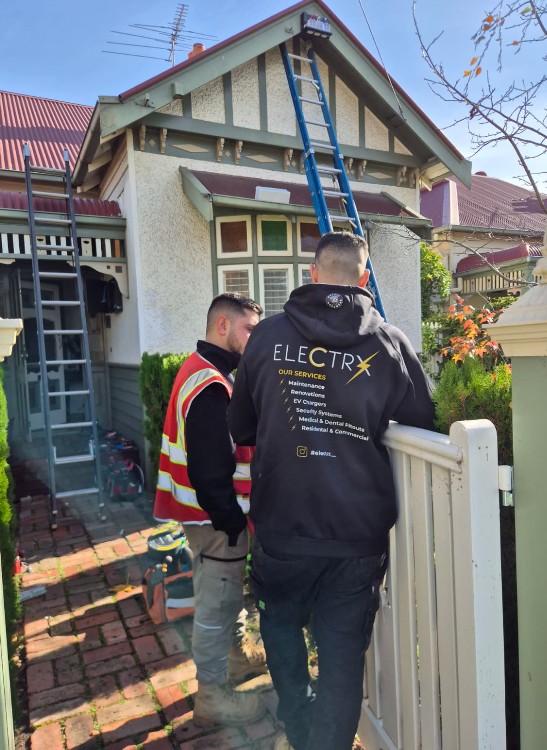
Electrx is a licensed electrical contractor, not an asbestos removalist. Our switchboard team collaborates with certified asbestos removal partners, and we proceed with the installation of the new fire-rated, compliant switchboard once the asbestos panel has been removed.
What Are the Step-by-Step Procedures for Replacing an Asbestos Switchboard?
Replacing an asbestos switchboard involves two distinct types of work: the removal of asbestos by a licensed removalist and the electrical work performed by a licensed electrician. Here’s an overview of how the switchboard replacement process typically unfolds for a residence in Melbourne’s western suburbs.
Step 1: Inspection of the Switchboard by an Electrician
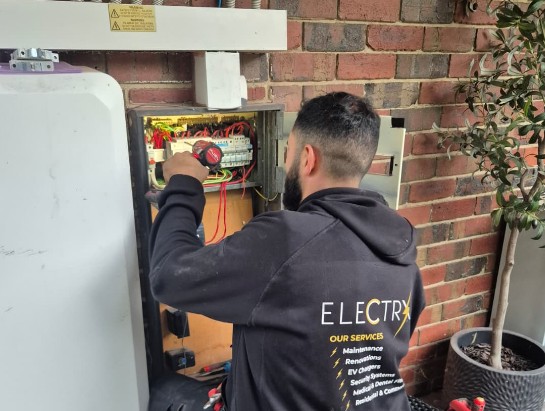
A licensed electrician will inspect the board, including the meter panel, fuses or breakers, and the wiring supplying power to it. Our switchboard team identifies any suspect asbestos backing during this initial assessment and advises you on subsequent steps. The electrician will also determine the requirements for the new board, such as installing safety switches on every circuit and ensuring there is capacity for any additional circuits you may plan to add.
Step 2: Testing the Panel or Assuming Asbestos is Present
If there is uncertainty regarding the backing board, the next step is to either conduct a sample test by a NATA accredited laboratory or decide to treat the panel as containing asbestos. In either case, no one should drill or cut the panel until this decision is made.
Step 3: Removal of the Asbestos Panel by a Licensed Removalist
The licensed removalist will take away the asbestos panel in accordance with their licensing obligations and adhere to WorkSafe notification, containment, and disposal protocols. The Asbestos Hub specifies that the removalist is responsible for the lawful disposal of all asbestos waste, and asbestos must never be disposed of in a skip or household bin.
Step 4: Installation of the New Switchboard by the Electrician
Once the old panel has been removed, the electrician will install the new switchboard. In compliance with AS/NZS 3000, the Wiring Rules, a compliant upgrade will include safety switch protection for power and lighting circuits, circuit breakers that correspond to the cables, clear labelling, and appropriate earthing and bonding. Our switchboard upgrade costs guide provides details on what factors affect the price of the electrical work.
Step 5: Issuance of a Certificate of Electrical Safety
Energy Safe Victoria describes the Certificate of Electrical Safety as a legal document issued by a Registered Electrical Contractor or licensed electrician that records the electrical work performed. The contractor must provide a copy to the customer and to Energy Safe. Electrx holds Registered Electrical Contractor licence 31135 with Energy Safe Victoria.
What Should You Do If You Cannot Replace the Asbestos Switchboard Immediately?
There are instances when homeowners require additional time to plan or budget for the switchboard replacement. The Victorian Asbestos Hub’s guidance on managing asbestos materials suggests that removal should always be the primary objective, as asbestos materials gradually deteriorate over time, even if left undisturbed.
While you are waiting, the Asbestos Hub recommends the following precautions:
- Avoid drilling, cutting, sanding, or scrubbing the panel, and do not use high-pressure water on it
- Keep furniture, equipment, and foot traffic away from the meter box to prevent accidental contact with the panel
- Avoid painting or sealing over the panel, as this conceals the issue and complicates future removal
- Periodically inspect the panel for signs of cracking, weathering, or water damage
- Inform tradespeople, contractors, and tenants about the presence of asbestos before they commence any work
The Asbestos Hub further notes that removal becomes increasingly urgent if the material is damaged or cracked, or if renovation or maintenance work will disturb it. Installing solar panels, an EV charger, or a three-phase supply typically requires work at the switchboard, so incorporate the asbestos panel into your project planning from the outset.
When Is Immediate Replacement of an Old Asbestos Switchboard Necessary?
An old switchboard requires urgent attention if you observe burn marks or discolouration on the board, fuses that frequently blow, or a board that trips when multiple appliances are in use simultaneously. These issues represent electrical faults in their own right, regardless of whether the backing panel contains asbestos.
Receiving a defect notice from Powercor may also indicate that your meter box is outdated. Our guide to the Powercor electrical defect notice explains the implications of such a notice and outlines the necessary actions to take. If you have purchased an older home, an electrical safety check provides a written assessment of the switchboard and wiring condition. Homes with old cotton-covered wiring often require more than just a new board, so consult our guide on cotton wiring in older residences and our house rewiring page for further information.
Schedule a Switchboard Inspection for Your Older Home with Electrx Electricians
Based in Brooklyn, Electrx Electricians serve Melbourne’s western suburbs, extending from the CBD to Sunbury. If your home features an old dark meter panel and ceramic fuses, we will conduct a thorough inspection of the switchboard, identify any potential asbestos backing, and outline the subsequent steps in collaboration with our certified asbestos removal partners prior to installing your new board.
Contact us at 0447 139 493 or reach out to Electrx Electricians to schedule a switchboard inspection. You can also explore further details regarding our switchboard upgrades across Melbourne’s western suburbs.
Common Questions Regarding Asbestos Switchboards
How Can I Determine If My Switchboard Contains Asbestos?
A strong indication of asbestos presence is a dark brown or black backing panel with a rough fibrous texture in homes built or renovated before 1990. The only definitive method for confirmation is through laboratory testing of a sample conducted by a NATA accredited laboratory. Consult a qualified asbestos assessor or operate under the assumption that the panel contains asbestos.
Is an Asbestos Switchboard Hazardous?
The Victorian Asbestos Hub advises minimising any disturbance of materials suspected to contain asbestos, as actions such as cutting, drilling, sanding, or breaking them can release fibres into the air. The Asbestos Product Guide also cautions that meter boxes with these panels may harbour friable asbestos dust internally, so do not attempt to open the board or touch the panel yourself.
Can an Electrician Remove an Asbestos Switchboard Backing Board?
Typically, no. The Victorian Asbestos Hub clarifies that builders, electricians, and plumbers usually lack the necessary licences for asbestos removal. A licensed asbestos removalist is responsible for removing the asbestos panel, while a licensed electrician subsequently installs the new switchboard. Electrx collaborates with certified asbestos removal partners for this segment of the switchboard replacement.
Is It Possible to Retain My Old Switchboard If It Has an Asbestos Backing?
The Asbestos Hub emphasises that removal is always the objective. While the interim steps provide time, they do not ensure safety. Avoid painting or sealing over the panel, regularly inspect it for cracks or signs of weathering, and plan for its replacement before undertaking any solar, EV charger installation, or renovation work at the board.
Will I Receive a Certificate After My Switchboard Is Replaced?
Yes, you will receive two certificates. Following the removal of the asbestos panel, the Asbestos Hub states that you will obtain a clearance certificate confirming the area is safe to reoccupy. After the installation of the new switchboard, the electrician will provide a Certificate of Electrical Safety, which Energy Safe Victoria describes as a legal document documenting the electrical work performed.
Original Article First Published At: Asbestos in Your Switchboard: How to Tell and What Replacing It Involves in Melbourne | Electrx Electricians