

Determining the appropriate size of concrete pump hinges on two main factors: the distance the concrete must travel and any obstacles that may impede access. For the majority of residential concrete pours in Newcastle, Maitland, and the Hunter region, a line pump or a small pump is typically sufficient. when the pour location is situated above a house, fence, or pool, or when the truck cannot get close enough, a boom pump is essential for reaching over these barriers.
Here's how to identify the best pump for your site.

How do Line Pumps Differ from Boom Pumps?
A line pump transports concrete through a series of steel and rubber hoses that are laid along the ground from the truck to the pour site. This system allows for flexibility, as the line can navigate around corners, through garages, down the side of houses, and even over fences manually. Line pumps are ideal for driveways, pathways, shed slabs, and most residential projects where access is reasonable.
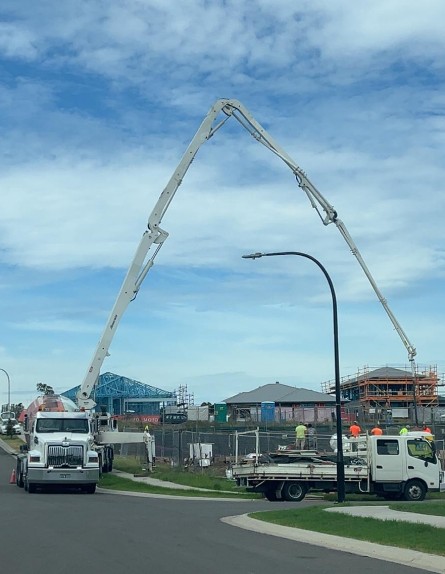
Conversely, a boom pump employs a telescoping arm (the boom) attached to the truck to deliver concrete from an elevated position. The operator can manoeuvre the end hose to the precise location using a remote control. A boom pump is necessary when a line cannot be run effectively, whether due to height, distance, or obstructions.
For more details on what each type of pump is specifically designed for, visit our line pump hire and boom pump hire pages.
When is a Line Pump or Small Pump the Best Choice?
Line pumps are suited for the majority of residential jobs. If the truck can park within a reasonable distance from the pouring site and hoses can be laid on the ground to the pour area, a line pump can perform the task efficiently without incurring the additional costs associated with a boom pump.
A small pump, often referred to as a mini pump, is designed for tight access situations. If a person can walk through the gap, it is likely that the hose can reach the site as well. This makes small pumps ideal for narrow side passages, courtyards, rear property slabs, and any situation where a full-sized truck cannot fit. For more information on the capabilities of small pumps, check our small concrete pump hire page.
Choose a line pump or small pump when:
- The truck can park reasonably close to the site
- You can run hoses along the ground or around the building
- The pour is at or near ground level (e.g., slab, driveway, path, footings, shed)
- Access is narrow but walkable (in the case of a small pump)
When Should You Opt for a Boom Pump, and What is its Reach?
A boom pump is necessary when the line pump cannot access the pour location due to height, distance, or obstacles. The boom’s ability to reach above and over allows the truck to remain parked on the street or driveway while the concrete is delivered precisely where it’s needed.
Boom pumps are available in various size classes based on their reach. Typically, these sizes range from approximately 20 metres to 28, 32, 36 metres, and beyond. Larger numbers indicate greater vertical and horizontal reach, but they also require bigger trucks that need more space for setup and operation. The ideal choice is always the smallest boom that can clear your obstacle from a safe parking location.
Boom reach can be divided into vertical (height) and horizontal (distance), with the two dimensions affecting each other. A boom extended horizontally will not reach its maximum height. The actual reach achieved will depend on the truck's setup position and what needs to be cleared, so it’s advisable to discuss your site specifics before confirming a booking. Always verify the reach of the specific pump for your job instead of relying solely on general size classifications.
Select a boom pump when:
- The pour is elevated (e.g., suspended slab, second storey, raised deck)
- The concrete must clear a structure, such as a house, fence, pool, or landscaping features
- The truck cannot get close enough to run a line
- The pour is large enough that placing from above is more efficient
If you’re uncertain about which size will suit your site, let us know where the truck can park and where the concrete needs to be placed, and we can typically provide guidance.
Does the Size of the Job Affect the Pump You Require?
Both volume and access are critical factors in selecting the appropriate pump. A small footing pour and a large commercial slab may both be achievable with the same pump. for larger pours, it is beneficial to use a pump that maintains a consistent flow. This ensures that the concrete sets evenly and that your crew is not left waiting.
For standard residential projects such as driveways, shed slabs, or footings, either a line pump or a small pump will suffice. In contrast, for high-volume applications like large house slabs, commercial flooring, or civil works, a boom pump or a higher-output line pump is recommended to expedite the concrete delivery process, allowing your team to finish before it starts to set. If you have an estimate of your volume, share the cubic metres along with your access details, and we will help you select the right pump.
Frequently Asked Questions
What Size Concrete Pump is Needed for a Residential Driveway?
For most residential driveways in Newcastle, Maitland, and the Hunter region, a line pump or a small pump is the ideal choice. Since a driveway involves a ground-level pour, the concrete only needs to travel along the ground from the truck to the slab, which is precisely what a line pump is designed to do. If the truck can park on the street or driveway and hoses can be run to the pour, a boom pump is unnecessary both in terms of reach and cost. In cases of limited access, such as narrow side passages or courtyards that a full truck cannot reach, a small pump can effectively manage the same task in a compact form. The key consideration is access rather than merely the term “driveway.” Provide us with details on where the truck can park and where the concrete needs to go, and we’ll confirm the proper size before you proceed with your booking.
What is the Maximum Reach of a Concrete Boom Pump?
Boom pumps are classified by size based on their reach, typically ranging from about 20 metres to 28, 32, 36 metres, and larger. The reach is divided into vertical (height) and horizontal (distance), and these two aspects are interdependent; a boom extended horizontally may not reach maximum height simultaneously. The actual reach available will depend on the truck's parking position and the obstacles it must clear, making the stated metre figure a guideline rather than a definitive measurement for your site. The best choice is the smallest boom that can clear your obstruction from a safe setup position, as greater reach requires larger trucks needing more space. Always confirm the specific pump's reach relative to your site rather than relying on general size classifications. Share your access details with us, and we will provide appropriate recommendations.
How Do Line Pumps and Boom Pumps Differ?
A line pump delivers concrete through hoses placed along the ground from the truck to the pour site, allowing for flexibility to navigate corners, side passages, and over fences manually. This type of pump is commonly used for driveways, paths, footings, and shed slabs with reasonable access. In contrast, a boom pump uses a remote-controlled folding arm on the truck to place concrete from an elevated position. This type is necessary when a line cannot be run due to height, distance, or obstructions. In summary, use a line pump for ground-level pours with accessible routes, and a boom pump for situations that require height, distance, or clearance from obstacles. If you're uncertain, provide details about your site, and we will help identify the right pump for your needs.
Can a Small Concrete Pump Access Tight Areas?
Yes, a small pump, also known as a mini pump, is designed specifically for tight access situations. The general guideline is that if a person can walk through an opening, the hose can usually reach it as well. This makes small pumps suitable for narrow side passages, courtyards, rear property slabs, and any locations where a full-sized truck cannot fit. Small pumps operate a more compact hose system compared to boom pumps, making manoeuvring around confined spaces much easier. They are still capable of handling common residential tasks such as footings, paths, small slabs, and shed bases. the output is lower; small pumps deliver concrete at a steadier, slower pace, which is effective for residential volumes but may be less efficient for larger pours. If your site presents accessibility challenges, a small pump is often the best solution. More information on small pump capabilities can be found on our small pump hire page.
Do I Need a Larger Pump for a Significant Concrete Pour?
Not necessarily, but it's crucial to choose a pump that maintains a steady flow. For high-volume pours, such as large house slabs, commercial flooring, and civil works, a boom pump or a higher-output line pump is advisable as it delivers concrete more quickly. This efficiency is important for enabling your concreters to place and finish the concrete before it begins to set. A small or standard line pump is typically adequate for residential volumes like driveways, footings, and shed slabs. The decision should be based on both cubic metres and access, rather than volume alone. If you already have an estimate for the concrete needed, provide that figure along with details on where the truck can park and the pour location, and we will help match the pump to your requirements to ensure a smooth operation without delays.
Request a Quote for Your Concrete Pour
The most efficient way to determine the right pump size is to provide us with two key pieces of information: the location where the truck can park and the intended destination for the concrete. From there, we will align the pump to your site and volume requirements, whether that involves a line pump, small pump, or boom pump.
We offer hire services across Newcastle, Maitland, and the broader Hunter region on a scheduled basis.
Contact us at 0419 252 930 for prompt assistance in identifying the right pump for your project.
Original Article First Published At: What Size Concrete Pump Do I Need? Boom Reach + Line Pump Guide


Your breakdown of the differences between line pumps and boom pumps is quite insightful, particularly for those of us involved in residential projects in areas like Newcastle and Maitland. The practical considerations you outlined are crucial, especially when navigating the often unique layouts of residential properties.