

If you find yourself hovering over a fresh spill on your fabric lounge, contemplating whether to use dish soap, wet wipes, or that Scotchgard spray lurking under the sink, the truth is: none of those options are advisable.
Using the wrong cleaner can set stains permanently and strip away the protective coating beneath. Instead of rubbing, remember to blot. Use cold water and a clean white cloth. If the spill is anything other than water, it’s best to contact a fabric cleaning specialist within 24 hours.
When an accident occurs, pause for a moment before reaching for the kitchen cupboard. With 40 years of experience in fabric cleaning, we've learned that the initial action taken within the first 60 seconds can determine whether a stain becomes permanent.
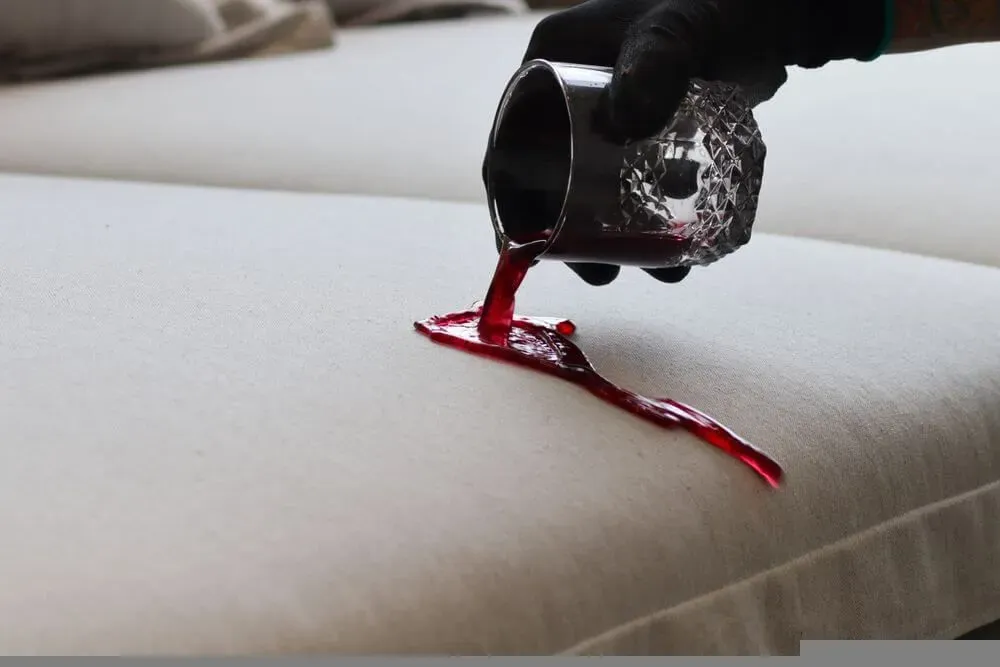
Understanding Why Household Cleaners Can Worsen Stains on Upholstery
Household cleaners are formulated for hard surfaces and skin, not for upholstery fibres. The wrong pH level, lingering surfactant residue, soap rings, and stripped protective coatings can all contribute to multiple issues at once.
A fabric lounge is not made from a single material. It consists of a face cloth, a backing, often a foam core, and potentially a protective layer if treated. Using the wrong cleaner can result in four significant problems:
- Incorrect pH levels. Many kitchen cleaners are alkaline, while upholstery fabrics prefer a neutral to slightly acidic environment. The wrong pH can shift dyes and dull the fibres.
- Residual surfactants. Soap does not rinse out completely from upholstery. The leftover residue attracts dust and dirt, resulting in a darker patch where cleaning occurred compared to untreated areas.
- Soap rings. These can form around the edges of the wet patch. Once dried, they become stubborn and can sometimes be more noticeable than the original stain.
- Stripped protection. If your lounge was treated with fabric protection at purchase, harsh cleaning products can lift it, allowing spills to penetrate the fibres instead of beading on the surface.
This is why a stain that seemed manageable on Saturday afternoon can turn into a permanent blemish by Sunday morning.
Common Household Products That Can Damage Your Lounge
The following items are frequently used but can ruin your lounge: dish soap (causes surfactant rings), baby wipes (leave residue), white vinegar (may pull colour from natural fibres), Scotchgard sprays used on wet stains (seal stains in), and hot water (sets protein stains).
Here’s a ranked list of the most commonly used offenders:
- Dish soap. Creates a surfactant ring that cannot be rinsed out without professional extraction. Soap is suitable for skin, not upholstery.
- Baby wipes. Marketed as gentle, but they contain preservatives, fragrances, and emulsifiers. These leave behind residue that attracts grime.
- White vinegar. Safe for some fabrics, but disastrous for others. On dyed natural fibres, it can leach colour and leave a lighter halo.
- Scotchgard-style “spot clean” aerosols applied to wet stains. These are protective products, not cleaners. Applying them to a fresh spill can seal the stain into the fabric.
- Hot water. Heat can set protein stains (like food, blood, or dairy) permanently. Always use cold water.
Essential Actions to Take Within the First 60 Seconds of a Spill
Blot the area without rubbing. Use only cold water. Work from the outer edge of the spill towards the centre. Multiple gentle passes are more effective than a single vigorous scrub. Stop as soon as the area is damp and contact us if the spill involves anything other than water.
The first minute is critical. Follow these steps in order:
- Blot, don’t rub. Press a clean, dry, white cloth or paper towel onto the spill. Lift the cloth, moving to a clean section each time. Repeat until you’ve lifted the majority of the spill.
- Switch to cold water after lifting the bulk of the spill. Dampen a fresh white cloth lightly—not soaking—and continue blotting.
- Work from the outside in. This technique prevents the spill from spreading and creating a larger stain.
- Use multiple light passes. Ten gentle blots are far better than one aggressive scrub. Scrubbing can distort the fabric weave and push the stain deeper.
- Stop while it’s still damp and call us. If the spill involves anything more than water, avoid further action. Prolonged treatment of an unknown stain with an unfamiliar cloth increases the risk of setting the stain.
Identifying When DIY Methods Are Sufficient and When to Seek Professional Help
For crumbs and dry dirt, vacuuming is sufficient. For water spills on protected fabric, blot dry. For food, sauce, oil, or makeup spills, blot and contact us within 24 hours. For coloured spills (such as wine, coffee, blood, or ink), blot and reach out immediately.
- Food crumbs, dry dirt, pet hair: Vacuum using an upholstery attachment. DIY is perfectly acceptable.
- Water spills on protected fabric: Blot dry with a white cloth. DIY is fine.
- Food spills, sauces, oils, makeup: Blot what you can and then call us within 24 hours.
- Coloured stains — wine, coffee, blood, ink, tea: Blot without applying any other products and contact us immediately. These stains set quickly, and DIY often worsens the situation.
The Distinct Advantages of Professional Cleaning Over Spot Cleaning
Professional cleaning involves controlled extraction (which leaves no residue), fibre-specific cleaning solutions, pH-matched products, and the reapplication of protective coatings during the same visit. None of this can be achieved with a standard spray bottle from the supermarket.
When we clean a lounge, we perform four essential actions that cannot be replicated at home:
- Controlled extraction. We apply a precise amount of cleaning solution and extract nearly all of it back out. This process leaves no residue, avoids soap rings, and prevents slow drying that can lead to watermarks.
- Fabric-specific chemistry. We first identify the fibre type—natural, synthetic, blend, velvet, or linen—and match the cleaner accordingly. The same product may not be suitable for half of these materials.
- pH-matched cleaners. Our products are neutral or slightly acidic, specifically designed for upholstery rather than kitchen surfaces.
- Protection reapplied when necessary. If we clean a treated lounge, we can reapply Wundaguard fabric protection during the same visit, ensuring you remain covered for future spills.
This distinction can mean the difference between a stain disappearing and becoming a permanent feature.
Maintaining Wundaguard Protection on Your Fabric
The five-year warranty remains valid as long as the furniture is professionally cleaned by Wundaguard (or our designated agents) every 18 months. Using harsh DIY cleaners between professional services can strip the coating and void your warranty.
Wundaguard fabric protection comes with a five-year warranty, provided the furniture is cleaned professionally at 18-month intervals. This maintenance schedule is crucial for keeping both the protection and warranty active.
Using inappropriate cleaners between services can void the warranty. Strong detergents, supermarket carpet shampoos, and “miracle” spot sprays can strip the protective coating. Once it’s gone, the fabric loses its protective barrier, and future stain claims will not be honoured.
If you purchased your lounge from Lounges Plus, Known For Lounges, or Strictly Comfort, and Wundaguard protection was applied at the time of sale, the same warranty conditions apply. Schedule your service directly with us to keep your warranty active.
Introducing the Wundaguard Spot Cleaning Range
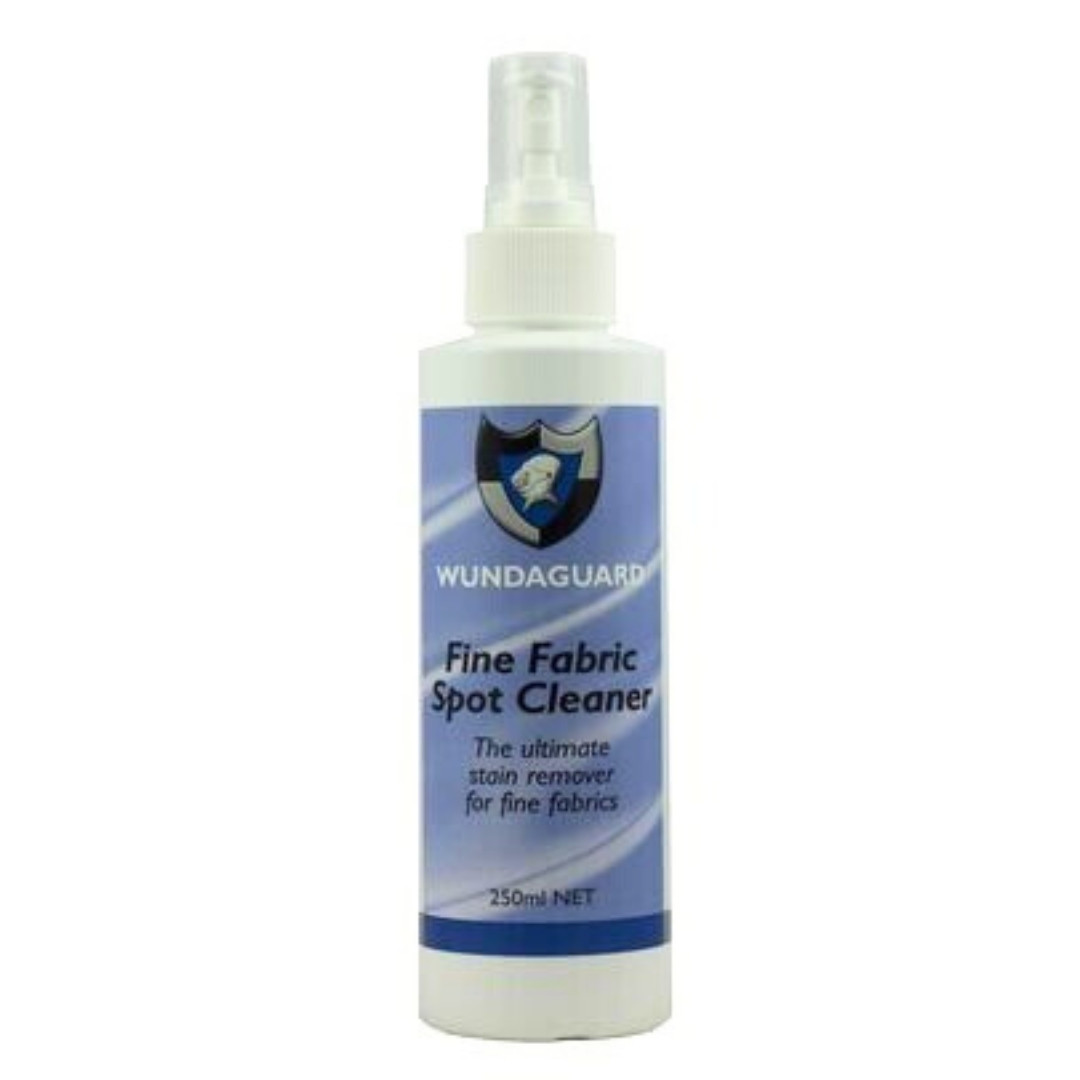
For standard upholstery, we recommend the Wundaguard Fabric Spot Cleaner ($39). For velvet, linen, or fine-weave fabrics, the Wundaguard Fine Fabric Spot Cleaner (250mL) is designed to prevent stripping Wundaguard protection.
For routine spot maintenance between professional cleanings, we offer two specially formulated spot cleaners based on your fabric type:
- Wundaguard Fabric Spot Cleaner — $39. Ideal for standard upholstery, fabric lounges, and everyday fabric chairs. Available at Strictly Comfort and through our online store. This product is pH-matched to our protection system, leaves no surfactant residue, and will not strip the coating from treated fabrics.
- Wundaguard Fine Fabric Spot Cleaner (250mL). Suitable for delicate fabrics such as velvet, linen, viscose blends, and fine-weave upholstery. Formulated specifically to lift stains without disturbing the fabric or pile. If your lounge is made of velvet, linen, or labelled as “fine fabric/delicate clean,” this is the essential product to keep on hand. Available at wundaguard.com.au/store/.
Both products are the only spot cleaners we recommend for use on a Wundaguard-protected lounge without risking warranty voiding.
For any stain larger than a small spot or if you’re uncertain about how to proceed, please stop and contact us.
Frequently Asked Questions
Is it safe to use a steam cleaner on my couch?
Typically, no. Domestic steam cleaners can push water deep into the foam and backing without effectively extracting it. This leaves the lounge wet for extended periods, increasing the risk of mould, and the heat can permanently set protein stains.
Are wet wipes safe to use on fabric?
While wet wipes are gentle on skin, they are not suitable for fabric. They leave behind fragrances, emulsifiers, and preservatives that attract dirt and may create darker patches where wiped.
How long can I wait before a stain becomes permanent?
For most coloured stains—such as wine, coffee, and blood—you have about 24 hours before they set significantly. Oil-based stains can tolerate a bit longer, but they become harder to remove with each passing day. Acting sooner is always better.
Will my couch be damaged if I’ve used dish soap once?
It’s unlikely to be ruined, but the soap residue needs to be removed. Schedule a professional cleaning to ensure proper extraction before it attracts dirt and creates a permanent darker patch.
Does Wundaguard cover damage caused by incorrect cleaning products?
The warranty guarantees protection performance when the fabric is maintained according to our 18-month service schedule. Damage caused by harsh DIY cleaners is not covered, which is precisely why we created this article.
Which spot cleaner should I use: standard or fine fabric?
If your lounge features standard upholstery (most fabric couches), the standard $39 Fabric Spot Cleaner is appropriate. For fabrics like velvet, linen, viscose blends, or anything described as fine weave, opt for the Fine Fabric Spot Cleaner instead. It has a different formulation designed for delicate fibres.
When This Article May Not Apply to You
- If you have leather, vinyl, or hard-surface furniture, this article is not applicable. Please contact us for advice.
- If you intend to continue using supermarket spot cleaners or carpet shampoos on a Wundaguard-protected lounge, be aware that these will void the warranty. We strongly advise against this practice.
- If you are looking for a one-off discount upholstery clean without aftercare, we may not be the right choice. We are not the cheapest option in town; we are the trusted team for post-delivery care for brands like Freedom Furniture, Lounges Plus, and Strictly Comfort.
Contact Wundaguard Today
With 40 years of experience in protecting Australian furniture, we offer upholstery cleaning services in Sydney and nationwide fabric protection.
Upholstery cleaning starts at $33 per seat. Fabric protection begins at $44 per seat.
Phone: 1300 360 824
Online: contact form
If you purchased your lounge from Lounges Plus, Known For Lounges, or Strictly Comfort, please mention Wundaguard during your next service to maintain your warranty.
Don’t reach for the cupboard; reach for the phone instead.
Original Article First Published At: Upholstery Cleaning From $33/Seat — Why DIY Spot Cleaning Often Makes Stains Worse

Your insights on handling spills on fabric lounges really resonate with the delicate balance we often have to strike between immediate action and careful consideration. I’ve found myself in similar situations, armed with a variety of cleaning products that I’ve convinced myself could work miracles. It can be so tempting to reach for that trusty dish soap or even the wet wipes, especially when you’re in a rush or feeling anxious about the potential damage. However, the reminder that these commonplace solutions can potentially exacerbate the problem is crucial.
I really appreciate this perspective on upholstery care. It’s so easy to panic when a spill happens and reach for whatever is on hand—I’ve definitely been guilty of that myself! I remember a time when I treated a wine stain with a kitchen cleaner, thinking I was being efficient, only to create an even bigger mess. Your emphasis on the importance of blotted action and call for a specialist resonates with me; it’s a reminder that sometimes less is more.
You raise an essential point about the misconception surrounding household cleaners and their use on upholstery. In my experience, many people, myself included, often default to kitchen products out of habit or convenience, believing that if something is effective on hard surfaces, it should work just as well on fabric. However, your insight about the importance of pH levels and the specific formulation of cleaners truly highlights the complexity of proper upholstery care.