

Upgrading to a smart toilet may seem as simple as replacing your old toilet with a new one. there are three essential factors to consider: your waste pipe must align with the new pan, the water pressure needs to meet the wash function requirements, and adequate power supply is crucial. Verify these aspects before making your purchase to ensure a seamless transition.
Here’s what you should assess before buying a smart toilet.
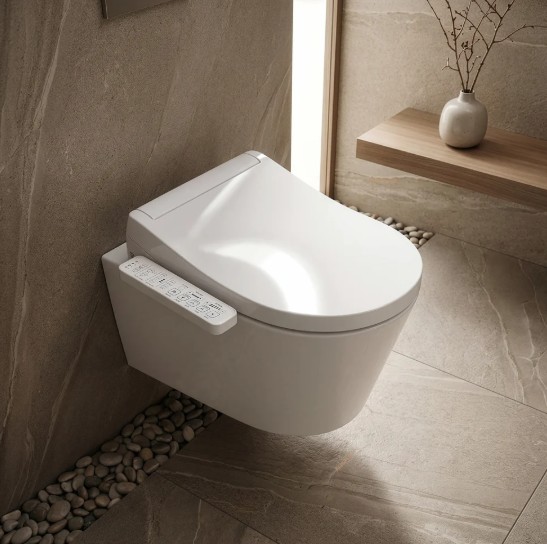
Understanding the Set Out: Aligning Your Toilet Waste with a Smart Toilet
The set out refers to the distance from the finished wall to the centre of your waste pipe. Each toilet has specific installation instructions detailing the required set out distance.
These values can vary between models, so it’s vital to refer to the specifications for the exact toilet you intend to purchase. For instance, Argent’s specification sheet for the Evoke wall-faced smart toilet indicates an S trap set out of 130 mm.
This means a toilet suitable for one bathroom may not be appropriate for another, even if the waste pipes appear similar. Measure from the finished wall (which includes the tiles, not just the frame behind) to the centre of your waste pipe. Then, compare this measurement with the installation guidelines of the specific model you are considering, rather than a similar model from the same series. If your toilet’s waste line connects to the wall instead of the floor (a P trap), ensure you also check the height specified by the manufacturer for the outlet.
It’s also necessary to evaluate the cistern. Both smart toilets referenced in this guide require an in-wall cistern: Argent’s Evoke specifications list an in-wall smart cistern as essential, while Kohler’s installation drawing for the Veil intelligent toilet shows an in-wall cistern mounted to the floor and studs. This may involve opening up the wall, so confirm whether the model you prefer includes its own cistern or requires one to be installed.
Wall-faced and back-to-wall designs conceal the trap and connections, offering a neat appearance. this means precise measurements are crucial before installation, as adjustments cannot be easily made afterward.
Assessing Water Pressure: Ensuring Your Smart Toilet Functions Effectively
The wash function operates using your water supply, and each manufacturer specifies the necessary pressure range for their toilets. For example, the Kohler Veil drawing indicates a water supply pressure range of a minimum of 70 kPa to a maximum of 500 kPa. It’s essential to install the toilet according to AS/NZS 3500.1, the plumbing and drainage standard.
The upper limit aligns with regulations. The Plumbing Code of Australia (NCC Volume Three, Part B1) stipulates a maximum static pressure of 500 kPa at discharge points within a building.
Low water pressure is a more common concern. If the pressure at your toilet is below the minimum specified by the manufacturer, it will not operate effectively. Indicators that your pressure may be inadequate include:
- Showers and taps deliver weak flows, particularly when other taps are in use.
- Your current toilet cistern takes an extended time to refill.
- Bathrooms on the upper level experience noticeably lower pressure than those on the ground floor.
Avoid making assumptions about your water pressure. A plumber can measure the supply pressure before you make a purchase, providing you with a clear indication of whether the model you’re interested in is compatible with your home. While checking the manufacturer’s specifications, also note the recommended locations for the water connection and stop tap, as they may differ from your existing setup.
Power Requirements for Smart Toilets: Engaging a Licensed Electrician
Smart toilets operate on mains power, and if there isn’t a suitable power supply nearby, one will need to be installed.
Manufacturers specify their power requirements:
- Kohler’s Veil drawing requests a dedicated 10 amp minimum supply at 220 to 240 volts, complete with earth leakage protection (an ELCB or GFCI).
- Argent’s Evoke specifications call for an electrical rough-in on an isolated 10 amp circuit.
- Verotti’s installation guidelines for its intelligent toilet state that electrical components must be safeguarded by a 10 amp RCD and switch, both situated outside the bathroom, with connections made inside an IPX4 or superior junction box, adhering to AS/NZS 3000 wiring rules.
In New South Wales, this work must be carried out by a licensed electrician. The NSW Government’s home electrical safety page clarifies that all electrical installation tasks should be performed by a qualified electrician. If you are not qualified, do not attempt to install, replace, or relocate power points. Blue Rhino handles the plumbing aspects of the installation, while a licensed electrician will manage the electrical work.
Plan the installation sequence carefully. Generally, the electrical work needs to be completed before the new toilet is installed. With wall-faced or back-to-wall pans, the power entry might end up behind or beside the toilet. Ensure that both the electrician and plumber are following the same manufacturer’s specifications.
Preparing for Floor and Wall Repairs When Replacing Your Old Toilet
Removing an old toilet might reveal issues that have been concealed for years. Here are some potential challenges to consider:
- Tiles that were cut to accommodate the old pan, which may not be covered by a differently shaped smart toilet.
- Old screw holes in the floor from the previous toilet installation.
- Discoloured or stained grout or tiles around the old footprint.
- Marks or holes on the wall if the old toilet had a separate or elevated cistern.
Compare the footprint of the new toilet with the old one based on the manufacturer’s drawings before making a purchase. If tiles require patching, check to see if you have spare tiles available. Finding a match for older tiles can be challenging, and a visible patch can complicate what seems like a straightforward swap.
Deciding Between Retrofitting or Renovating: Transitioning to a Smart Toilet as Part of a Bathroom Upgrade
If your bathroom is relatively new with a compatible set out, good water pressure, and an easily accessible power point, a smart toilet with its own cistern can be installed without complications.
Alternatively, consider a smaller initial upgrade. A bidet seat can be fitted onto your existing toilet, providing a wash function without the need to replace the pan, provided your toilet is compatible. You can determine whether a bidet seat will fit your toilet before making a decision.
The upgrade becomes necessary when:
- The waste set out is incompatible with any model you prefer, necessitating repositioning of the pipe.
- The wall needs to be opened to accommodate an in-wall cistern or to provide power, which may lead to mismatched tiles.
- You were planning to renovate the bathroom in the near future.
If two or more of these scenarios apply, it may be wise to integrate the smart toilet into a broader bathroom renovation, allowing for the floor, walls, and plumbing to be addressed simultaneously. Blue Rhino specializes in plumbing and bathroom renovations, enabling you to plan the toilet installation alongside overall room improvements.
If you have a specific brand in mind, our page on Toto toilets provides installation guidance, while our bidet installation page covers seat and bidet options.
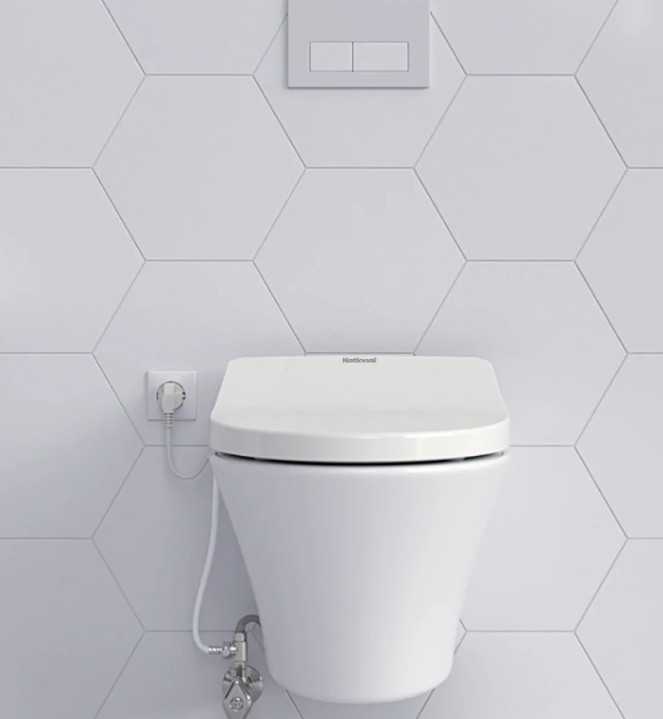
Essential Checklist for Buying a Smart Toilet
Bring this checklist with you when shopping for a smart toilet and share it with your installer:
- Measure the set out from the finished wall to the centre of the waste pipe, noting if it is an S trap (floor) or P trap (wall).
- Obtain the installation instructions for the specific model and ensure its set out aligns with yours.
- Find the manufacturer’s water pressure requirements and have the pressure at your toilet assessed.
- Confirm whether the model necessitates an in-wall cistern, and identify where the manufacturer recommends positioning the water connection and power entry.
- Schedule a licensed electrician to install the required power point or dedicated circuit.
- Compare the footprint of the new toilet with the old one, and check for spare tiles.
- Consider if a bidet seat on your current toilet would meet your needs.
Frequently Asked Questions About Smart Toilets
Is a power point required for a smart toilet?
Yes, smart toilets operate on mains power, and manufacturers specify the necessary requirements. Kohler’s Veil drawing requests a dedicated 10 amp supply with earth leakage protection, while Argent’s Evoke specifications ask for an isolated 10 amp circuit. The NSW Government mandates that all electrical installation work be conducted by a licensed electrician, so ensure to include one in your planning.
Will a smart toilet fit in the space where my old toilet was?
That depends on your set out, which measures the distance from the finished wall to the centre of the waste pipe, as well as the cistern arrangement. Argent specifies a 130 mm set out for its Evoke wall-faced smart toilet, and both smart toilets mentioned in this guide require an in-wall cistern, necessitating wall modification. Measure your existing setup and consult the specific model’s installation instructions before making a purchase.
What water pressure is necessary for a smart toilet?
Each manufacturer provides a specified pressure range. Kohler indicates a requirement of 70 kPa to 500 kPa for its Veil intelligent toilet, while the Plumbing Code of Australia limits static pressure inside a building to 500 kPa. If your taps and showers exhibit weak flow, have the pressure evaluated prior to purchasing to ensure the toilet operates within the intended range.
Can I retain my existing toilet and simply add a bidet seat?
In many instances, you can, provided your toilet is compatible. A bidet seat replaces the existing seat and introduces a wash function without needing to buy a new toilet. This setup still requires a water connection, and an electric seat necessitates nearby power. Our guide on assessing bidet seat compatibility with your toilet outlines the necessary checks to make before purchasing.
Consult with Us Before Investing in a Smart Toilet
If you're considering a smart toilet, reach out to Blue Rhino Plumbing prior to making a purchase. Located around Ryde and servicing Sydney, we can assess your set out and water pressure, helping you determine whether it’s a straightforward swap or the first step in a larger bathroom renovation.
Original Article First Published At: Switching to a Smart Toilet: What Changes in Your Bathroom Before It Works