

If your electric hot water tank in your Illawarra residence is nearing the end of its life, you might be considering the advantages of heat pump versus solar hot water systems. While both options involve a higher initial investment compared to a standard electric tank, they typically offer more affordable running costs. The ideal choice depends on your roof configuration, available outdoor space, and your household's hot water usage patterns throughout the day.
CS Plumbing Services provides expert installation of both heat pumps and solar hot water systems across Wollongong and the Illawarra region. Owner Sandro Contarin has held a NSW plumbing licence since 1992. This guide will explore how each system operates, identify which is best suited to different home setups, and outline the key factors we consider before making a recommendation.
- A heat pump extracts warmth from the air to heat water, eliminating the need for roof space.
- Solar hot water systems require a sunny, north-facing roof with minimal shading, especially during winter months.
- Households that predominantly use hot water in the early morning may depend more on a solar booster.
- Factors such as noise levels, installation location, and the existing hot water system influence the best choice for your home.
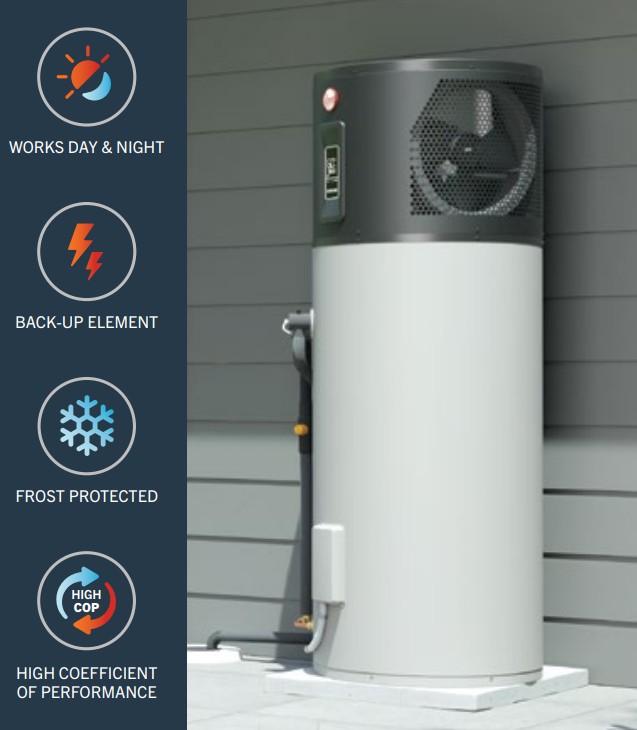
Understanding the Operation of a Heat Pump Hot Water System
A heat pump operates by using electricity to transfer heat from the surrounding air into the water stored in its tank. This method is more energy-efficient than directly heating water with an electric element. According to the Australian Government’s energy.gov.au, heat pumps utilise only 30% of the energy required by traditional electric hot water systems.
Heat pumps are generally available in two configurations. An integrated unit combines the compressor with the tank, resembling a standard electric tank and connecting in a similar manner. A split unit separates the compressor and fan into an outdoor unit, with the tank located elsewhere. The Australian Government's Your Home guide indicates that these two components typically need to be within 10 to 15 metres of each other.
Many heat pumps include a boost element that directly heats the water during extremely cold weather or when there is a high demand for hot water. Frequent use of this element can increase running costs. More details about the systems we install can be found on our heat pump hot water installation page.
How Does a Solar Hot Water System Function?
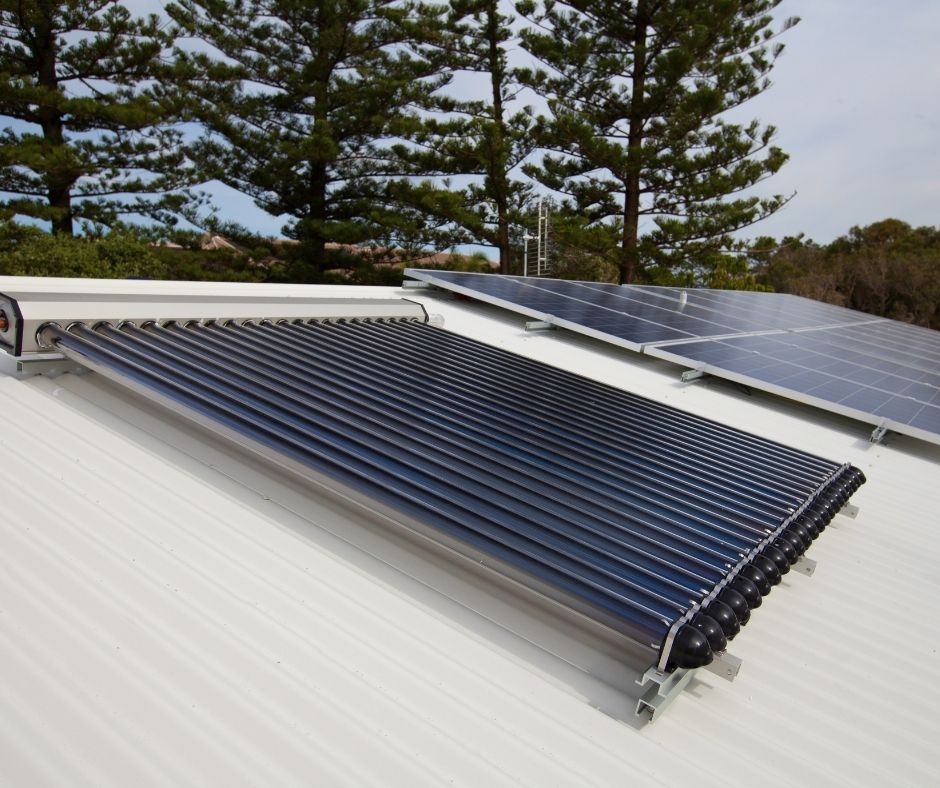
A solar hot water system captures sunlight through collectors or evacuated tubes installed on the roof, transferring heat into an insulated storage tank. The Your Home guide notes that, depending on the climate, a solar hot water system can supply up to 90% of a household's hot water needs.
There are two primary configurations for solar hot water systems. A roof-mounted system keeps both the tank and collectors on the roof, while a split system places the collectors on the roof and the tank at ground level. This design alleviates weight on the roof and provides easier access to the tank. We install and service both configurations, and the best choice hinges on your roof structure, tank accessibility, and personal preference.
We also incorporate an electric or gas booster into the solar systems we install. This booster ensures hot water availability on cloudy days or during periods when the household demand exceeds the solar heating capacity. Our solar hot water installation page details our offerings for new installations, replacements, and servicing.
Comparing Energy Efficiency: Heat Pump vs Solar Hot Water
Both heat pumps and solar hot water systems significantly reduce energy consumption compared to standard electric tanks. Your Home describes both options as much more efficient than other alternatives. The choice between the two largely depends on the specifics of your home rather than the technology itself. Solar systems excel in sunny conditions, while heat pumps function optimally in warmer, humid air.
Your Home evaluates heat pump efficiency using a coefficient of performance (COP), which measures the heat output relative to electricity consumption. Heat pumps typically achieve a COP of around 3 to 5, whereas a new electric storage tank stands at approximately 0.95. It is crucial to note that efficiency can vary based on air and water temperatures, meaning brochure figures are only indicative.
As highlighted by energy.gov.au, not all heat pump models are suitable for areas where winter temperatures frequently drop below 5°C. If your home experiences such conditions, selecting a heat pump designed for colder climates is essential.
Identifying the Ideal Conditions for Solar Hot Water in Illawarra Homes
Solar hot water systems are best suited for homes with a north-facing roof that enjoys ample sunlight and limited shading from trees or buildings. According to Your Home, collectors can perform efficiently even if oriented up to 45 degrees from true north, but winter shading is particularly detrimental since the sun is lower in the sky.
The timing of hot water usage also plays a crucial role. Water stored in a solar tank tends to cool overnight, so households that primarily shower in the early morning may need to rely on the booster to heat water before the sun can do its job. Your Home cautions that this reliance may increase energy costs and suggests implementing a timer or app control for the booster to optimise usage.
Before recommending a solar hot water system, we assess your roof orientation, water usage habits, and existing energy sources in your home.
Identifying the Ideal Conditions for Heat Pumps in Illawarra Homes
Heat pumps are particularly advantageous for homes with shaded roofs, those facing in less-than-ideal directions, or roofs already occupied by solar panels, as they require no roof-mounted collectors. They are also a straightforward replacement for older electric tanks, as integrated heat pumps connect similarly to standard electric systems, according to Your Home.
If your home is equipped with rooftop solar panels, a heat pump can complement them effectively. Many heat pumps feature timers that allow you to heat water during daylight hours when excess solar power is available. Your Home mentions that a heat pump powered by solar energy can deliver benefits similar to those of a solar hot water system, often at a lower installation and operational cost.
Proper airflow is vital for a heat pump, which draws in air and expels it back out. an enclosed cupboard is unsuitable; most heat pumps are installed outdoors or in well-ventilated garages or utility spaces. If your current hot water system is situated in a confined area, we will discuss the options with you before providing a quote.
Comparing Noise Levels: Is a Heat Pump Louder Than Solar Hot Water?
Heat pumps produce some noise, necessitating careful consideration of their installation location compared to solar collectors. Energy.gov.au notes that the compressor can generate noticeable sound. Your Home adds that in an integrated unit, the fan is positioned high up, which can amplify noise transmission over fences, potentially disturbing neighbours or occupants in nearby bedrooms.
Opting for a split heat pump can mitigate noise issues, as the outdoor unit is positioned lower and can be located away from bedrooms and boundary fences. Your Home observes that placing the outdoor unit of a split system in a warmer environment can enhance its efficiency.
Exploring Heat Pump vs Gas Hot Water Options
Some residents in the Illawarra are comparing heat pumps to gas hot water systems instead of solar options. Energy.gov.au categorises gas water heaters as having medium to high purchase, installation, and operating costs. It highlights that gas storage systems are particularly inefficient, especially in colder climates. Your Home assigns gas systems a coefficient of performance ranging from 0.75 to 0.96, compared to around 3 to 5 for heat pumps.
Transitioning from a gas hot water system to a heat pump involves capping the existing gas connection and connecting the new system to your electrical supply. CS Plumbing Services manages the entire changeover process, including gas and plumbing, under a single licence. For those who prefer to remain with gas, our gas hot water page details the systems we install.
Factors We Evaluate Before Recommending a Heat Pump or Solar Hot Water System
Our recommendations are tailored to your household's needs and your property's characteristics, rather than merely relying on available stock. When we evaluate your home, we consider the following factors:
- The number of occupants and their hot water usage patterns.
- The orientation of your roof and its shading conditions.
- Whether you currently have rooftop solar panels.
- The feasible locations for installing the new system, ensuring adequate airflow for heat pumps.
- Whether your existing hot water system operates on a controlled load (off-peak) tariff.
The tariff consideration is important because, as noted by Your Home, certain heat pumps may not be compatible with controlled load circuits. If your current system uses off-peak power, we will discuss whether switching to a standard tariff would be more beneficial with the new system. rebates can impact the initial cost of both systems, and our heat pump installation page outlines the available schemes and how we apply them to your quote.
After assessing your home, we will provide a fixed quote before any work begins. There is no call-out fee for the assessment. To schedule a visit, call 0416 101 022 or send us your details.
Common Questions About Heat Pump vs Solar Hot Water Systems
Are heat pump hot water systems a worthwhile investment?
For many households, yes. Energy.gov.au indicates that while heat pumps require a substantial upfront investment, they are economical to operate, using only 30% of the energy of a conventional electric system. They are particularly suitable for homes lacking a sunny roof, though the installation location must provide good airflow and distance from bedrooms due to the compressor's noise.
Does solar hot water function on cloudy days?
Yes, it does, thanks to the booster. Your Home states that most solar hot water systems are equipped with either a gas or electric booster, which heats the water during cloudy conditions or when demand exceeds the sun's heating capacity. We incorporate a booster with the solar systems we install to ensure households have a reliable supply of hot water.
Can a heat pump utilise power from my rooftop solar panels?
Yes. According to Your Home, many heat pumps are designed with built-in timers that enable them to heat water during daylight hours when excess solar power is typically available. If the solar panels are not generating sufficient power during this period, the heat pump will draw energy from the grid.
Is it possible to keep my existing electric hot water tank?
In some cases, yes. Your Home explains that certain standard electric storage tanks can be connected to either a split heat pump or a split solar unit, and some heat pumps can be retrofitted to existing tanks. Inquire about your current tank's compatibility when we assess your home, and we will clarify if it can remain in use.
Which option is better for my Illawarra home: a heat pump or solar hot water?
The answer depends on your roof's exposure, your yard's layout, and your daily hot water consumption. Solar hot water systems are ideal for unshaded, north-facing roofs, while heat pumps are advantageous for shaded roofs, roofs already hosting solar panels, or straightforward replacements for electric tanks. CS Plumbing Services can evaluate your home and recommend the most suitable system.
Schedule Your Heat Pump or Solar Hot Water Assessment in the Illawarra
If your hot water system is ageing, it’s wise to select a replacement before it fails to avoid any rushed decisions. CS Plumbing Services offers installation of heat pump and solar hot water systems throughout Wollongong, Shellharbour, Kiama, and the broader Illawarra area. We will assess your roof, installation site, and your household's hot water usage, then provide a clear explanation of the recommended system and its rationale.
If your current system has already ceased functioning, our guide on non-heating hot water systems outlines the initial checks we perform. For comprehensive information on the types of systems we install, please visit our hot water page. To book your assessment, call 0416 101 022, and Sandro or a member of our team will arrange a convenient time to visit.
Sources: Australian Government, energy.gov.au, Hot water systems, retrieved 2026-10-30, https://www.energy.gov.au/households/hot-water-systems. Australian Government, Your Home, Hot water systems, retrieved 2026-10-30, https://www.yourhome.gov.au/energy/hot-water-systems.
Original Article First Published At: Heat Pump vs Solar Hot Water for Your Illawarra Home: How CS Plumbing Services Helps You Choose the Right System