
Have you ever found yourself in a situation where you notice a cockroach darting across your kitchen floor? Your immediate reaction might be to purchase a can of insect spray from Bunnings or Woolies on your next shopping trip. It seems like a cost-effective and convenient solution, especially since the label claims it can eliminate all pests in sight.
However, consider this: that $15 can of spray could be costing you more than you realise. Many DIY pest control products often fail to produce the desired results, and in numerous instances, they may exacerbate your pest problem rather than resolve it.
This guide will thoroughly explain why sprays from hardware stores fall short in effectiveness, what professional pest control entails, and how to determine which pest management option is suitable for your residence.

What Ingredients Are Found in DIY Pest Control Products?
Most pest sprays available at supermarkets and hardware stores contain similar active ingredients, primarily pyrethroids such as permethrin or cypermethrin. These compounds are synthetic derivations of natural insecticides and do have the capacity to kill insects upon contact.
The downside, however, is that these products are formulated at significantly lower concentrations compared to those used by professionals. While this makes them safe for general consumer application, it inherently limits their effectiveness in treating pest infestations.
Typically, DIY sprays are intended for immediate “knockdown,” meaning they kill visible insects you encounter at the moment. Unfortunately, they do not provide long-term control or address the source, such as the colony or nest where pests reproduce.
In addition to this, many retail pest control products are designed to be repellent-based. This approach does not eliminate pests but merely drives them to other locations in your home. That cockroach you treated in the kitchen? It might now be residing behind your bathroom vanity.
What Are the Key Issues with DIY Pest Sprays?
Limited Coverage for Various Pests
If you examine the labels on most DIY sprays, you'll find they typically target only one or two types of pests, such as cockroaches or ants. However, households often face multiple pest issues simultaneously.
In contrast, a professional general pest control treatment encompasses a wide array of pests, including cockroaches, ants, spiders, silverfish, fleas, and several others, all within a single service.
Temporary Protection with DIY Products
That can of spray may eliminate the visible bugs today, but what about next week? DIY products provide very minimal residual protection, often lasting just a few days or a couple of weeks at most.
On the other hand, professional treatments utilise commercial-grade formulations designed to last between 3 to 6 months, establishing a long-lasting barrier that continues to be effective long after the technician has left your property.
Challenges in Proper Application Techniques
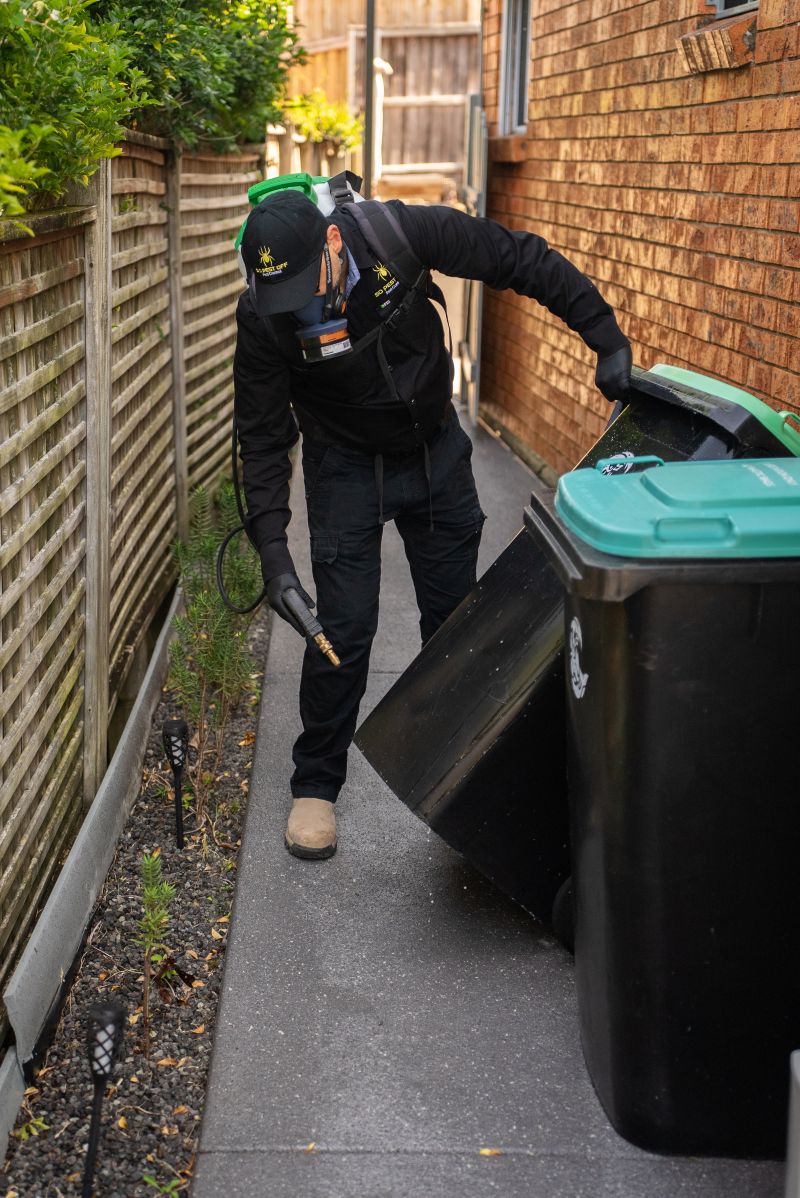
Understanding where to apply the spray is just as crucial as knowing what to apply. Pests have specific harbourage areas where they hide, breed, and move about. A licensed technician has the expertise to recognise pest behaviour and knows to treat areas such as inside wall cavities through weep holes, target cupboard hinges for German cockroaches, and form external barriers at entry points. Randomly spraying around your skirting boards simply will not yield the same effectiveness.
The Difference Between Repellent and Non-Repellent Products
This is a critical distinction. Most DIY products rely on repellent formulations, which means pests can detect the chemicals and tend to avoid them. While this sounds advantageous in theory, it merely relocates the pest problem.
In contrast, professional pest controllers use non-repellent formulations. These products are undetectable to pests, allowing them to walk through treated areas, pick up the chemical, and transport it back to their nests, effectively eradicating the entire colony instead of just the scouts you might see.
For a deeper understanding, refer to our guide discussing repellent versus non-repellent solutions.
What Are the Hidden Costs of Choosing DIY Pest Control?
Let's break down the numbers. A can of cockroach spray typically costs between $12 and $15, while ant spray adds another $10. When you factor in spider spray, surface sprays, flea bombs, and other products, you may find yourself spending $50 to $80 on various items, each designed to target a different pest.
Then, when the pest problem resurfaces in a few weeks, you find yourself purchasing more products.
Over a year, many homeowners unknowingly spend more on ineffective DIY products than what a single professional treatment would cost, yet they continue to grapple with pest issues.
Watch: Comparing DIY Pest Control with Professional Services
Why Is Professional Pest Control More Effective?
Access to Commercial-Grade Pest Control Products
Professional pest management technicians utilise products that are not available to the general public. These formulations are more concentrated, longer-lasting, and specifically designed for effective residential pest management.
Moreover, they apply these products using professional-grade equipment rather than simple aerosol cans, ensuring that treatments are precise and targeted exactly where they are needed most.
Experienced Technicians with Expertise in Pest Behaviour
A qualified pest technician goes beyond a quick spray-and-go approach. They carry out a thorough assessment of your property, identify pest activity and points of entry, and devise a treatment plan tailored to your specific situation.
They understand critical aspects of pest behaviour, such as how ants follow pheromone trails, how cockroaches seek out warm, humid locations near food and water, and how spiders set up in areas where their prey is plentiful. This knowledge is vital in distinguishing between a treatment that succeeds and one that fails.
Comprehensive Coverage Achieved in One Treatment
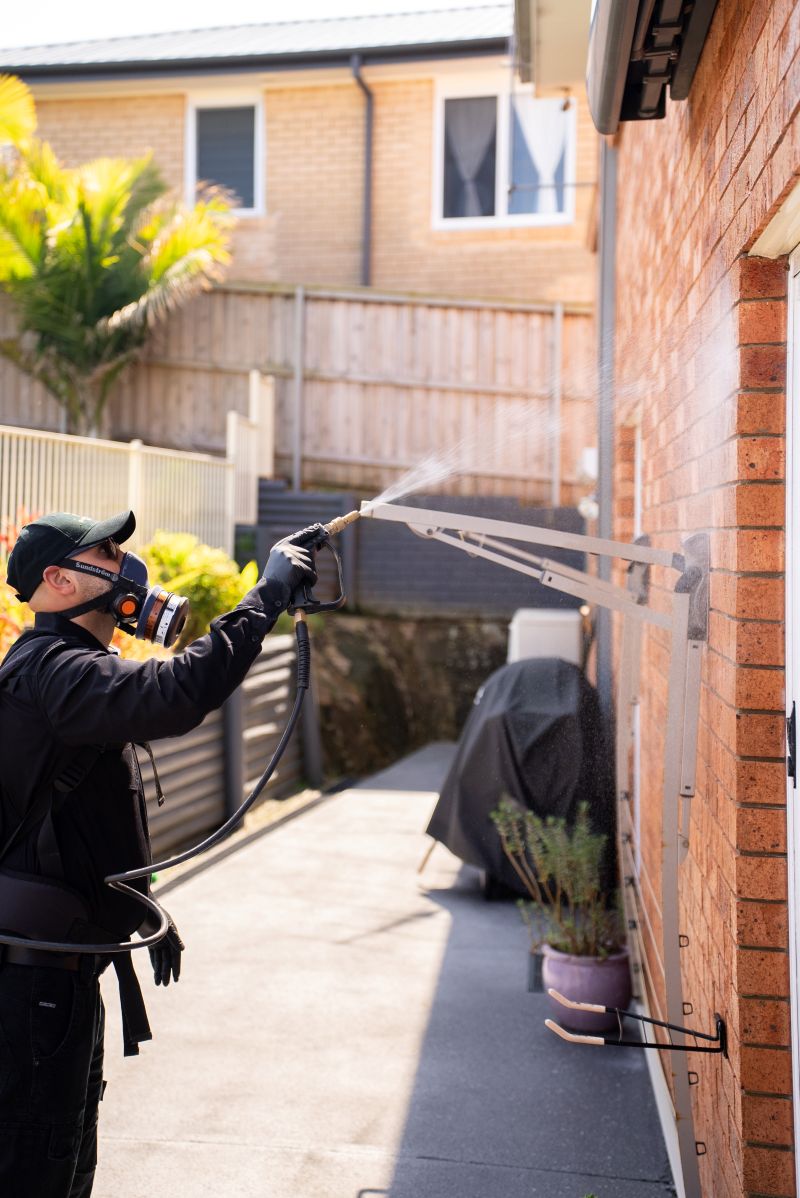
A professional general pest control service encompasses the entire property—both inside and outside. Internal treatments target areas such as skirting boards, cupboard hinges, cornices, and other significant locations. Meanwhile, external treatments establish a protective barrier around your home’s perimeter, including door frames, window frames, and under the eaves.
Enjoy Warranty Protection and Peace of Mind
When you purchase a can of insect spray, there is no warranty attached. If it fails to work, you bear the burden of the problem.
In contrast, professional pest control services come with guarantees. At So Pest Off, we offer a warranty on our general pest control services, ensuring you have peace of mind.
Is Professional Pest Control Safe for Children and Pets?
This is a prevalent concern that many of our clients express, and the answer is a resounding yes—professional pest control is safe for both your family and your pets.
All the products we utilise are AEPMA-approved and comply with Australian Standards. They are specifically formulated to be low in toxicity for humans and animals while remaining effective against pests.
After treatment, we simply request that children and pets avoid treated areas for about one hour while the product dries. Once dry, it is entirely safe.
Interestingly, some DIY products require longer ventilation periods and additional precautions compared to professional treatments, further emphasising the importance of leaving pest control to the experts.
Understanding the Key Takeaway
DIY pest control products often aim to provide a quick fix. They may seem inexpensive initially, but they fail to deliver enduring results, leading to ongoing costs over time.
By investing in professional pest control, you are securing proper protection for your home. You receive access to commercial-grade products, expert application, extensive coverage, and a warranty that provides additional assurance. For most households, a professional treatment every 6 to 12 months is sufficient to maintain a pest-free environment.
Stop squandering money on ineffective cans that do not resolve the issue. Ensure the job is done correctly the first time.
Schedule Your Professional Pest Control Treatment Today
Are you ready to eliminate pests for good? So Pest Off is a family-owned pest control company operating in Sydney’s Hills District and nearby areas. We provide honest advice, transparent pricing, and effective treatments that genuinely work.
Contact us: 0410 244 244
Find us on Google: So Pest Off on Google Maps
Explore our pricing: sopestoff.com.au/pricing
Frequently Asked Questions: Professional vs DIY Pest Control
Is DIY pest control as effective as professional treatment?
No, DIY products utilise lower concentrations, target limited types of pests, and provide only short-term results at best. Professional treatments employ commercial-grade products applied by licensed technicians, resulting in long-lasting and comprehensive protection.
How long does professional pest control last compared to DIY sprays?
Professional treatments generally offer protection lasting from 3 to 6 months, whereas DIY sprays may only be effective for a few days to a couple of weeks. This is why it is recommended to schedule regular professional treatments every 6 to 12 months.
Are professional pest control products safe for children and pets?
Absolutely. Professional products are AEPMA-approved and meet Australian Standards. Children and pets should stay off treated areas for about one hour while the product dries, after which it is completely safe.
Why do I still see pests after using DIY spray?
Most DIY sprays are based on repellent formulations, which means they merely push pests to different areas within your home instead of eradication. Professional treatments utilise non-repellent solutions that pests unknowingly carry back to their nests, eliminating entire colonies.
How much does professional pest control cost compared to DIY?
While a single can of spray is priced at $12-15, many homeowners end up spending $50-80 or more annually on various ineffective DIY products. A professional general pest control treatment offers better value with long-lasting results and warranty coverage.
What pests does a general pest control treatment cover?
A professional general pest control service addresses multiple pests, including cockroaches, ants, spiders, silverfish, fleas, flies, and wasps, all within one treatment. In contrast, DIY products usually focus on just one or two pest types per product.
DIY Pest Control vs Professional: Why Hardware Store Sprays Don't Work


This discussion on DIY versus professional pest control strikes a chord with my recent experiences. As someone who has navigated the labyrinth of pest management in urban living—forever battling a particularly stubborn ant problem last summer—I can attest to the allure of the quick and easy fix that those spray cans promise. However, your analysis of the limitations inherent in these DIY products reminds me of the broader implications when we choose convenience over expertise.
Your insights on the limitations of DIY pest control really resonate with me. I’ve had my own share of frustrations with those off-the-shelf sprays. I remember a time when I spotted a cockroach and rushed to grab a popular insecticide. It seemed effective at first, but shortly after, I noticed the little critters had become more prevalent. It was almost as if they developed a resistance!
It’s interesting to think about the psychology behind our choices when it comes to pest control. I can totally relate to that rush to grab a can of spray when faced with an unwanted visitor like a cockroach. In those moments of panic, the convenience of a quick fix can seem appealing. However, your post sheds light on a critical point that many of us overlook: the potential long-term consequences of these quick solutions.
It’s interesting how often we resort to those quick-fix solutions without fully grasping their limitations. I had a similar experience in my kitchen a few months back. I noticed a few ants marching in, and instead of calling a professional, I grabbed a popular ant spray. The immediate satisfaction of seeing the spray work quickly was short-lived—the ants returned, and in greater numbers!