

As a general guideline, a typical residential driveway or house slab is generally poured at approximately 25 MPa (N25), while footings are frequently specified at 32 MPa (N32). the ideal mix is determined by your concrete supplier and engineer based on the specific requirements of your project, rather than relying on a rule of thumb. We pump whatever mix you order; this guide aims to help you understand what to request.
Here’s a detailed overview of how mix strength functions and which mix is suitable for various pours.
What is the Significance of MPa in Concrete Mix?
MPa stands for megapascals, representing the compressive strength that the concrete is engineered to achieve, typically assessed after 28 days. A higher MPa indicates a stronger and more resilient mix. This strength is denoted by grades such as N20, N25, or N32, where the number reflects the strength in MPa: N25 signifies 25 MPa, N32 signifies 32 MPa, and so forth.
While strength is crucial, it is not the sole factor to consider. It serves as the primary figure your supplier and engineer refer to when specifying a mix suitable for the load and environmental conditions. For instance, footings that support a house require more strength than a garden path. Selecting the correct grade involves matching the concrete to the task at hand: strong enough to endure, yet not overspending on unnecessary strength.
What Concrete Mix is Best for a Driveway?
For a standard residential driveway, the typical choice is around 25 MPa (N25), adhering to a minimum recommended strength of approximately 25 MPa as per Australian standards, with a slab thickness generally beginning at 100mm. A driveway supports vehicles, necessitating more strength compared to a pathway but typically less than a structural footing.
This serves as a guideline rather than a specification for your property. If your driveway will accommodate heavier vehicles, such as a caravan, truck, or boat trailer, or if it is situated on reactive clay, your engineer may recommend a stronger mix or additional reinforcement. Always verify the required grade with your concrete supplier and engineer for your specific driveway before placing an order.
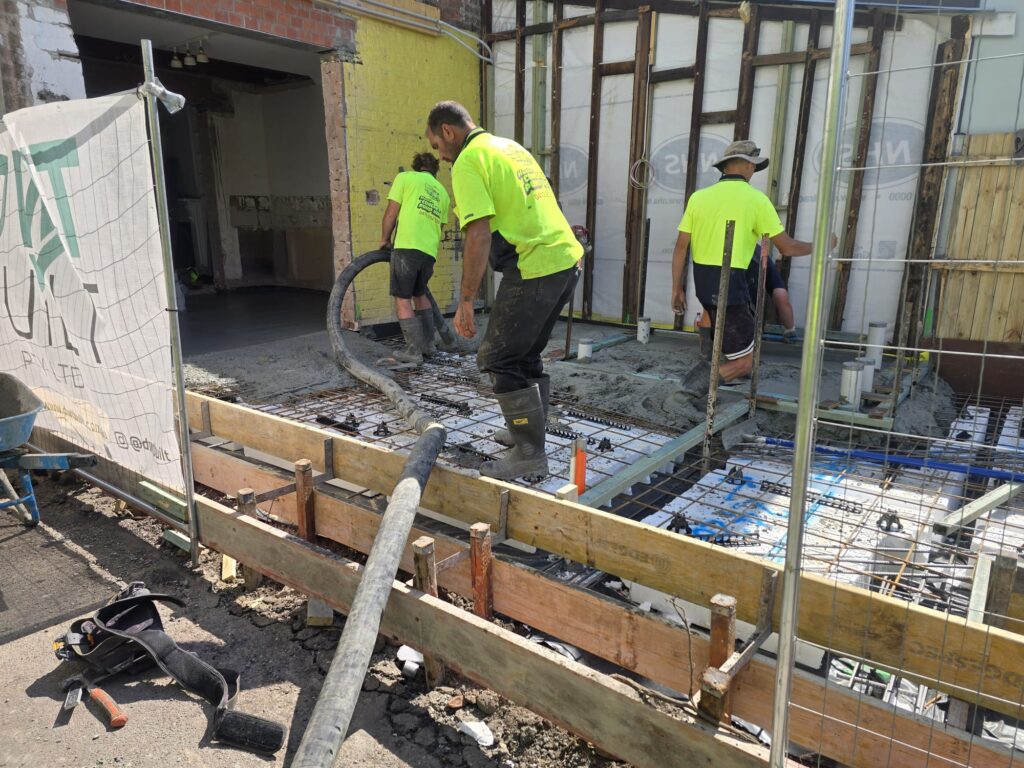
Since a driveway is a ground-level pour, a line pump or small pump can typically place it without complications.

What Concrete Mix is Required for a House Slab?
For a slab-on-ground residential structure (the type most homes rest upon), a common initial recommendation is around 25 MPa (N25). the slab is designed as a cohesive system under Australian Standard AS 2870 (residential slabs and footings), which considers soil classification, slab design, and reinforcement collectively. The mix strength is just one component; the engineer’s design integrates all these factors seamlessly.
This is why selecting a slab mix solely from a chart is not advisable. In regions with reactive clay soils, like Maitland and certain areas of the Hunter, soil classification significantly influences the design, and the engineer specifies the mix and reinforcement accordingly. Always order according to your engineer’s specifications, and confirm the grade with your supplier. For structural or suspended slabs, design adheres to AS 3600, and the strength is typically higher.
When pouring a large slab, selecting the right pump is crucial to ensure a consistent flow. Consider boom pump hire for high-volume or hard-to-access slabs.
What Mix is Needed for Footings?
Footings are generally specified at 32 MPa (N32). Australian Standard AS 3600 often mandates a minimum of around 32 MPa for exposed and structural footings because footings support the structure’s load into the ground and are in direct contact with soil and moisture. They endure more stress compared to paths or basic slabs, necessitating a stronger grade.
As always, this serves as a guideline. Your engineer determines the footing mix for your specific construction project, and for structural jobs, this figure is derived from the plans, not from general information. If your footings are part of a slab system, they will fall under the same AS 2870 design as the slab itself. Follow the plans and confirm with your supplier.
How Does the Mix Impact Pumpability?
Most standard mixes are easily pumpable. The critical factor for pumping is ensuring the mix is workable and consistent: it should have the appropriate slump, be well mixed, and not overly stiff. Your supplier will configure the mix to be pumpable when you inform them that it will be pumped, so always mention this when placing your order. A mix designed for a chute may differ from one designed for pumping.
Some decorative and specialty mixes (such as exposed aggregate, coloured, polished, or larger-aggregate blends) can still be pumped. it’s advisable to flag these when booking to allow for proper planning. If you have a decorative or unique mix, provide us with the details, and we will advise on its pumpability and the most suitable pump.
Frequently Asked Questions
Which Concrete Mix is Suitable for a Driveway in Australia?
For a standard residential driveway, a mix strength of around 25 MPa (N25) is typically recommended, with this strength often cited as the minimum requirement and a slab thickness usually starting at 100mm. A driveway must support vehicles, thus requiring more strength than a pathway but generally less than a structural footing. This figure serves as a guideline rather than a definitive specification for your site. If you expect heavier vehicles like caravans or boat trailers, or your driveway is on reactive clay soil, consult your engineer for a stronger mix or added reinforcement. Always verify the required grade with your concrete supplier and engineer before placing an order. When booking the pump, specify the mix so that the supplier can batch it to be pumpable, and we’ll match a line or small pump to your access needs.
What Strength of Concrete is Utilised for Footings?
Footings are generally specified at approximately 32 MPa (N32). Australian Standard AS 3600 is often referenced for a minimum compressive strength of around 32 MPa for exposed and structural footings, as footings transfer the load of the building into the ground and are in contact with soil and moisture. they experience more stress than slabs or paths and are typically of a stronger grade. Nonetheless, the precise figure for your project is derived from your engineer’s plans, not from general recommendations. If your footings are part of a slab system, they will be governed by the same residential slab design (AS 2870) as the slab. Order precisely what the plans stipulate and confirm the grade with your concrete supplier. We can pump any mix you order, just inform us that it will be pumped to ensure it’s appropriately batched.
What Does MPa Represent in Concrete?
MPa signifies megapascals, which is the unit of measurement for the compressive strength that concrete is designed to achieve, usually assessed at 28 days. A higher MPa signifies a stronger and more durable mix. You will often encounter it denoted as grades like N20, N25, or N32, where the number indicates the strength in MPa: N25 represents 25 MPa, N32 represents 32 MPa, and so forth. It serves as the primary figure your concrete supplier and engineer use to align the mix with the load and conditions. A footing supporting a house requires more strength than a garden path. While strength is an essential factor (alongside slump, aggregate, and reinforcement), it is the number you will receive when placing your order. Selecting the correct grade ensures the concrete is strong enough to endure while avoiding unnecessary expenditures on strength that is not required for the task.
Is Every Concrete Mix Pumpable?
Most standard mixes pump without issues. The critical aspect is that the mix must be workable and consistent, maintaining the right slump, being well mixed, and not overly stiff. It’s essential to inform your concrete supplier that the mix will be pumped at the time of ordering, as a mix prepared for a chute may not be designed the same way as one for pumping. Decorative and specialty mixes (like exposed aggregate, coloured, polished, or those with larger aggregates) can generally still be pumped, but it's advisable to mention these when booking so we can appropriately plan for the right pump and method. If you have an unusual or decorative mix, provide us with the details, and we’ll inform you about its pumpability. Across Newcastle, Maitland, and the Hunter, we consistently pump both residential and commercial mixes.
Who Determines the Necessary Concrete Mix?
The decision regarding the mix lies with your concrete supplier and engineer, not the pump company. For structural projects, the engineer specifies the grade, slump, and reinforcement on the plans, adhering to the relevant Australian Standards (AS 2870 for residential slabs and footings, AS 3600 for structural concrete). The supplier then prepares the concrete according to those specifications. The guideline figures you may encounter, such as roughly 25 MPa for driveways and house slabs and around 32 MPa for footings, are starting points, not replacements for the plans. Factors like soil type, load, exposure, and design influence the final decision, which is why reactive clay in Maitland and the Hunter often necessitates a stronger or differently reinforced mix. Order according to your plans, confirm with your supplier, and inform us that it is a pump job to ensure the mix is optimised for flow.
Arrange Your Concrete Pour Effortlessly
After confirming the mix with your supplier and engineer, we will manage the delivery, whether for a driveway, slab, or footings. Provide us with the volume, mix details, and access information, and we’ll select the right pump for the job.
We offer services across Newcastle, Maitland, and the broader Hunter region on a booked and planned basis. Call 0419 252 930 for a quote.
Original Article First Published At: Concrete Mix Selector: Which Mix for Slabs, Driveways and Footings