

After 26 years of experience in repairing showers across Sydney, I frequently encounter a question at least once a week: “Is it possible to just regrout instead of renovating the entire bathroom?” Most of the time, the answer is yes. there are instances where the answer is no. This decision hinges on the specific issues affecting your bathroom rather than merely on your desired aesthetic outcome.
This article does not advocate for regrouting as being superior to renovation. It explores the circumstances under which each option is appropriate, the costs involved, and what you can realistically expect for your investment.
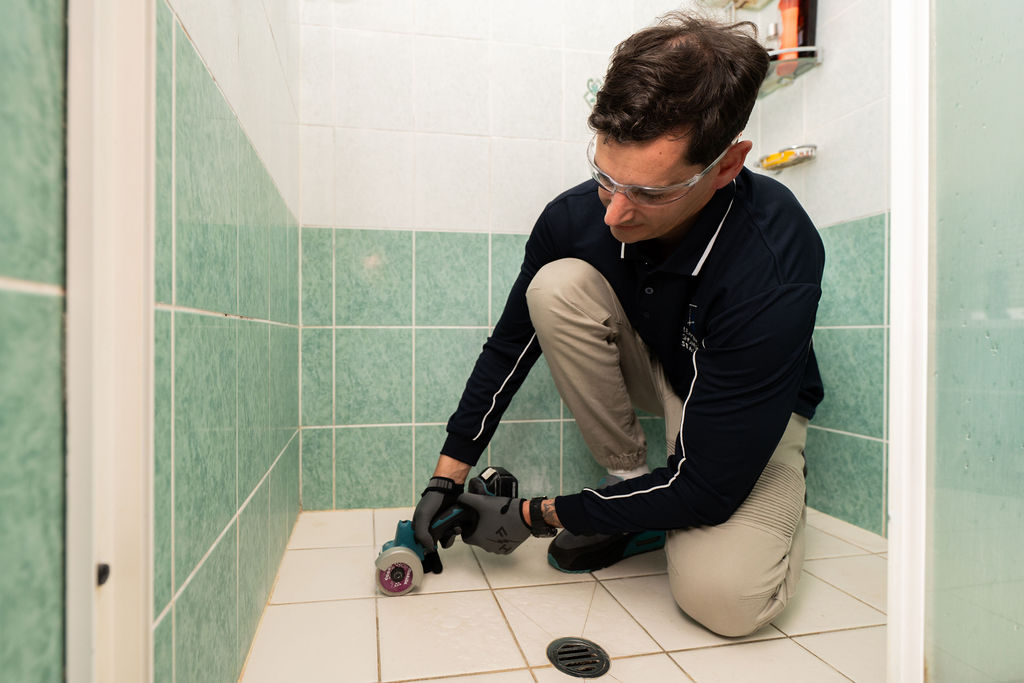
Understanding the Basics of Regrouting
Regrouting is indeed a viable budget-friendly option for bathroom maintenance, but it only makes sense if your tiles are still in good shape. In Sydney, the cost for a professional shower regrout typically ranges from $1,400 to $2,500 for an average residential bathroom and can be completed within a day. In contrast, a full bathroom renovation can set you back between $25,000 and $50,000 or more, taking 2 to 4 weeks to finish. Regrouting addresses issues such as leaks, mould, deteriorated grout, and ineffective silicone—essentially the reasons you are seeking a solution. It does not alter the tiles, layout, or fixtures. If your goal is to achieve a completely different bathroom, then a renovation is necessary. if you simply want to restore a waterproof, mould-free bathroom that retains its current look, regrouting is the way to go.
Guidance for Homeowners: Should You Regrout or Renovate?
For homeowners who have been contemplating the cracked grout and mouldy silicone for several months, here’s a decision-making process we follow during the quoting stage:
If the tiles are secure—meaning they do not move when pressed, exhibit no regular cracking patterns, and the wall behind them feels solid—regrouting can effectively resolve the issue at hand (failed grout and silicone). This service provides a waterproof shower, eliminates mould, and offers the option of a fresh grout colour if desired, all completed in a single day for $1,400 to $2,500.
Conversely, if the tiles are loose or show a cracking pattern, if the wall feels spongy when pressed, or if there is visible water damage on the opposite side of the wall, then regrouting would merely be a temporary fix for a structural issue. In such cases, we will inform you during the quote and decline the job. You will need a builder, not us.
It’s important to be candid: many “should I renovate?” discussions stem from the misconception that failing grout necessitates a complete bathroom overhaul. In fact, around 70% of the time, you do not need a full renovation. The remaining 30% may warrant it.
Considerations for Landlords and Property Investors
For landlords, regrouting is nearly always the best choice between tenancies. Here’s why:
- Only 24 hours out of service, as opposed to 2 to 4 weeks. This minimises vacancy gaps.
- Costs between $1,400 and $2,500, compared to over $25,000 for a full renovation. This maintains your capitalisation rate.
- Tax-deductible as a repair rather than a capital improvement (consult your accountant—regrouting restores an existing asset rather than creating a new one).
- Includes a 10-year warranty on the grout and a 5-year warranty on workmanship, ensuring it won’t need redoing within one tenant’s lease cycle.
When to avoid regrouting a rental: if the bathroom is so outdated that it negatively impacts rental potential. Sometimes, a complete renovation can increase rent by $30 to $50 per week, paying for itself within 8 to 15 years. Evaluate the potential rent uplift before settling for the less expensive option.
Preparing to Sell: Is Regrouting Beneficial?
If you’re in a rush to prepare for a sale, regrouting is an excellent decision. Fresh white grout in a 20-year-old shower signals that the space is well-maintained to prospective buyers. Tiles that have been in place for 15 years but feature new grout appear to have been updated recently. We often receive requests for sale preparation jobs across the Eastern Suburbs and North Shore.
It’s important to note what regrouting cannot accomplish: it won’t persuade a buyer looking for a brand-new bathroom that they are purchasing one. If the tiles seem outdated and the buyer demographic is high-end, the bathroom will likely need replacing rather than a simple refresh.
A practical test: would your real estate agent describe the bathroom as “original” or “tired” in their listing? If so, regrouting alone won’t change that perception. If they would label it as “well-presented,” then regrouting will help maintain that positive image.
Regrouting Costs in 2026: What to Expect
The typical cost for regrouting a residential shower ranges from $1,400 to $2,500. Several factors influence this price:
- Shower size. Standard 1.5m × 1.5m enclosures are on the lower end of the scale. Walk-in showers, dual showerheads, and larger enclosures can push costs higher.
- Condition of tiles. Solid tiles with standard cement grout are quicker to work with. Cracked grout that’s adhered to the substrate takes longer to remove cleanly.
- Inclusion of silicone resealing. Silicone work on corners and floor-to-wall transitions is crucial for waterproofing. Most leak-related jobs require both regrouting and resealing; aesthetic updates may only need regrouting.
- Current state of grout. Cement-based grout that has degraded can be removed cleanly, while stubborn epoxy in tight joints may add 30 to 60 minutes to the job.
For context, a full bathroom renovation in 2026 starts around $25,000 for a small bathroom with minimal layout changes. A mid-range renovation that includes tile replacement, a new vanity, and proper waterproofing generally falls between $35,000 and $50,000. For heritage or larger bathrooms with custom fittings, costs can easily exceed $60,000. Keep in mind that product costs have surged by 30% globally over the past 18 months due to supply chain complications—be cautious of outdated online figures.
The precise cost for your shower will be provided during the onsite quote, which takes about 30 minutes and is free of charge.
What You Can Expect from a Regrout
Within 24 hours after completion, you will benefit from the following:
- New premium epoxy grout. We generally use Ardex EG15 for most jobs. This product is water-resistant, mould-resistant, and lasts between 10 to 15 years.
- Sealed silicone joints. These include corners, floor-to-wall transitions, and the area around the shower base. Most cases of “tile leaks” occur not through the tiles themselves but through ineffective silicone in these transition points.
- A fully waterproof shower once again.
- Thoroughly cleaned tile surfaces. The regrouting process eliminates soap scum and built-up residue that typical household cleaners cannot tackle.
- No mould. The epoxy used is resistant to mould in the long term, and the cleaning process removes any existing mould.
What you will not receive: a different shower, a changed layout, new tiles, new fixtures, or a larger enclosure. It’s crucial to emphasise this, as misunderstandings often arise here. Regrouting is a process of restoration, not transformation.
When Regrouting Won’t Resolve the Issue
It’s important to note that we sometimes decline jobs. This isn’t due to a lack of desire for work; rather, taking on a job where the underlying issue isn’t related to grout leads to a failed regrout within 12 months, rendering our 10-year warranty meaningless.
Here are the signs that will lead us to walk away:
- Loose tiles when pressed. This indicates that the adhesive layer has failed. Regrouting around loose tiles is merely a temporary fix—they need to be re-laid first.
- Cracking grout in a regular linear pattern. This usually suggests structural movement in the floor or walls rather than a grout issue. New grout will crack in the same manner within months.
- Active water damage visible in the next room or the ceiling below. If the leak has persisted long enough to cause damage to framing or plaster, someone needs to open the wall, repair the underlying problem, and ensure proper waterproofing before any regrouting can occur.
- Damaged or shifting shower base. Cracks, sloping floors, or movement beneath the tiles mean the base requires replacement rather than a workaround.
- Pinhole leaks from behind-the-tile plumbing. We can identify this pattern during the quote—if water appears in locations that do not correspond with grout lines, the issue lies with the plumbing.
If any of these issues are present, we will inform you directly during the quote. We prefer to forgo a job rather than conduct work that is destined to fail.
Weighing the Pros and Cons: DIY vs Hiring a Professional for Regrouting
You certainly have the option to tackle this as a DIY project. Here’s what it entails.
Materials are quite affordable, costing under $200—epoxy grout ranges from $80 to $120 depending on the brand and colour, silicone sealant is around $25, plus you’ll need masking tape and drop sheets. Acquiring the materials is straightforward.
Regarding tools, an oscillating multi-tool with a grout-removal blade is the most effective choice. Manual grout saws are less efficient, requiring 4 to 6 hours for a job that we can complete in 2 hours. Hiring one costs $150 or more for a weekend, while purchasing one outright will set you back $250 to $400.
Common pitfalls of DIY projects, ranked by frequency, include:
- Incorrect epoxy mixing. The resin-to-hardener ratio is critical. Too much resin means it won’t cure properly, while too much hardener causes it to set too quickly. Your first attempt will serve as the practice patch, and unfortunately, that practice patch is permanent.
- Improper silicone cutting in corners. It may appear simple on YouTube, but a crooked silicone bead on a feature shower wall is something you’ll see every morning for the next decade.
- Only removing the top layer of grout. New grout won’t adhere correctly to old grout. This leads to a failed job in about 18 months.
- Poor dust management. Removing grout creates significant dust. It’s essential to cover the entire bathroom with plastic, seal the door, and wear a P2 mask. Many skip this step and end up with dust throughout every room in the house.
If you are handy, patient, and working on a secondary bathroom where timing is flexible, DIY can be a feasible option. if it’s your primary bathroom and you cannot afford to have it out of service for a long weekend, or if it’s a rental that requires warranty coverage, the professional cost ($1,400 to $2,500) is often more economical when you factor in tool hire, your time, and the risk of having to redo the job.
Expected Longevity of a Regrout
With proper epoxy grout and thorough preparation, you can expect a lifespan of 10 to 15 years. if either factor is neglected, longevity can drop to under 3 years.
For comparison:
- Cement-based grout (commonly found in older Sydney bathrooms): Typically lasts 5 to 7 years before showing signs of mould, staining, or erosion. Cement absorbs water, and each shower introduces moisture into the joint, leading to gradual breakdown.
- Poorly executed regrout (using incorrect products, rushed preparation, or superficial removal): Lasts only 18 months to 3 years before returning to its previous state.
We use Ardex EG15 epoxy and ensure that our installation is accredited by Ardex Academy. Our work adheres to AS3740-2010, the Australian Standard for waterproofing domestic wet areas. This is the reason our 10-year grout warranty is a sound financial commitment.
Duration of Shower Unavailability
Expect one day on-site and a 24-hour curing period. If the job is done on a Wednesday, you can shower again by Thursday evening.
The rest of the bathroom remains functional during our work—your toilet and basin will still be available, with no need for plumbing isolation. We focus solely on the shower enclosure, not the entire room.
For comparison, complete bathroom renovations require 2 to 4 weeks of the entire space being out of commission. For a busy household with only one bathroom, this factor alone can heavily influence your decision.
Is Regrouting Considered a Renovation?
That depends on your definition.
If by “renovation” you mean “fixing existing issues, refreshing the bathroom’s appearance, stopping leaks, and eliminating mould,” then yes, regrouting is the budget-friendly version of that.
If “renovation” refers to “changing the bathroom with different tiles, layouts, and fixtures,” then no. Regrouting is a restorative process, not a transformative one.
To be clear: regrouting is the appropriate solution when the bathroom is structurally sound, requiring only replacement of grout and silicone. The significant difference between a $1,500 restoration and a $35,000 renovation prompts most homeowners to seek clarity on which route to take before making a decision.
If you’re uncertain, the onsite quote will clarify everything within 30 minutes.
Common Queries Answered
How can I tell if my shower needs regrouting or a complete renovation?
Press the tiles. If they are firm, regrouting will resolve the issues. If they wobble, if the wall feels soft, or if cracks are present in a regular pattern, you may require a renovation. We assess all these factors during the quoting process.
Is it possible to choose a different colour for my new grout?
Absolutely. Epoxy grout is available in white, grey, charcoal, beige, and various colour-matched options. This is one of the few ways that regrouting alters the appearance of the shower without changing the tiles.
What distinguishes regrouting from resealing?
Regrouting involves replacing the cement or epoxy between the tiles, whereas resealing pertains to silicone work—such as corners, floor-wall transitions, and around the base. Typically, most leak repairs require both services, which is why we usually provide quotes for both together.
Will regrouting resolve my shower’s leak?
If the leak originates from failed grout or silicone, then yes. If it is due to a cracked tile, damaged shower base, or plumbing issues behind the wall, then no. We diagnose these problems during the quoting phase.
How soon can I use the shower after regrouting?
You can resume using it after 24 hours, as epoxy needs that time to cure fully. After that, it’s good to go for normal use.
Can regrouting permanently eliminate mould?
Epoxy does not absorb water like cement does, which effectively prevents mould growth in the grout lines over the long term. mould present on silicone, behind walls, or seeping up through the floor indicates different issues. We will point out any of these problems during the quote.
Do you provide a warranty?
Yes, we offer a 10-year warranty on the grout and a 5-year warranty on workmanship. We are fully insured and hold NSW Contractor Licence 89111C.
Leaking Showers Sealed proudly serves the Hills District, North Shore, Eastern Suburbs, Northern Beaches, Western Sydney, and Inner West of Sydney. We are a family-run business with over 26 years of experience. Our work is Ardex Academy accredited and complies with AS3740-2010. We have received 135+ five-star reviews on Google.
For a free onsite quote, call 1300 815 512.
By Andreas Jagle: Owner of Leaking Showers Sealed. NSW Contractor Licence 89111C, Ardex Academy accredited, with work compliant with AS3740-2010. The insights shared here are based on our extensive experience across Sydney’s Hills District, North Shore, Eastern Suburbs, Northern Beaches, and Inner West.
Original Article First Published At: Is Regrouting a Shower a Way to Do a Budget Renovation?



It’s fascinating to see such a nuanced approach to regrouting and bathroom renovations. Your insights make it clear that it’s not just about aesthetics; the underlying condition of the tiles and the overall structure of the bathroom plays a significant role in deciding the right path forward.
First off, let me just take a moment to applaud the bravery it takes to dive deep into the murky waters of bathroom renovations! I mean, discussing shower repairs and regrouting is practically akin to writing an Oscar-worthy screenplay, with drama, tension, and the potential for lifelong regrets (looking at you, mustard yellow tiles from 1994!).
I really appreciate your detailed exploration of the regrouting versus renovation debate! It’s such a common dilemma for homeowners, especially when you’re trying to balance aesthetic desires with budget considerations. It’s interesting how the condition of the existing tiles plays such a critical role in the decision-making process. I’ve always thought that when it comes to home improvement, there’s often an underlying tension between wanting to create a beautiful space and the practicalities of maintenance and cost.
This is such an insightful look at the regrouting versus renovation debate. I’ve faced a similar dilemma in my own home. Initially, I thought regrouting would be a quick fix, but after digging deeper into the condition of my tiles and the potential for hidden issues, I realized that it’s not just about aesthetics but also durability and health.