

The Critical Importance of Safety Switches in Your Home
When you lack safety switches (known as RCDs or Residual Current Devices), your residence is left vulnerable without any automatic defence against electric shock. In the unfortunate event of an electrical fault, the power will not disconnect swiftly enough to avert potential injury or catastrophic fire. In Victoria, safety switches are now a mandatory requirement for all final circuits in residential homes.
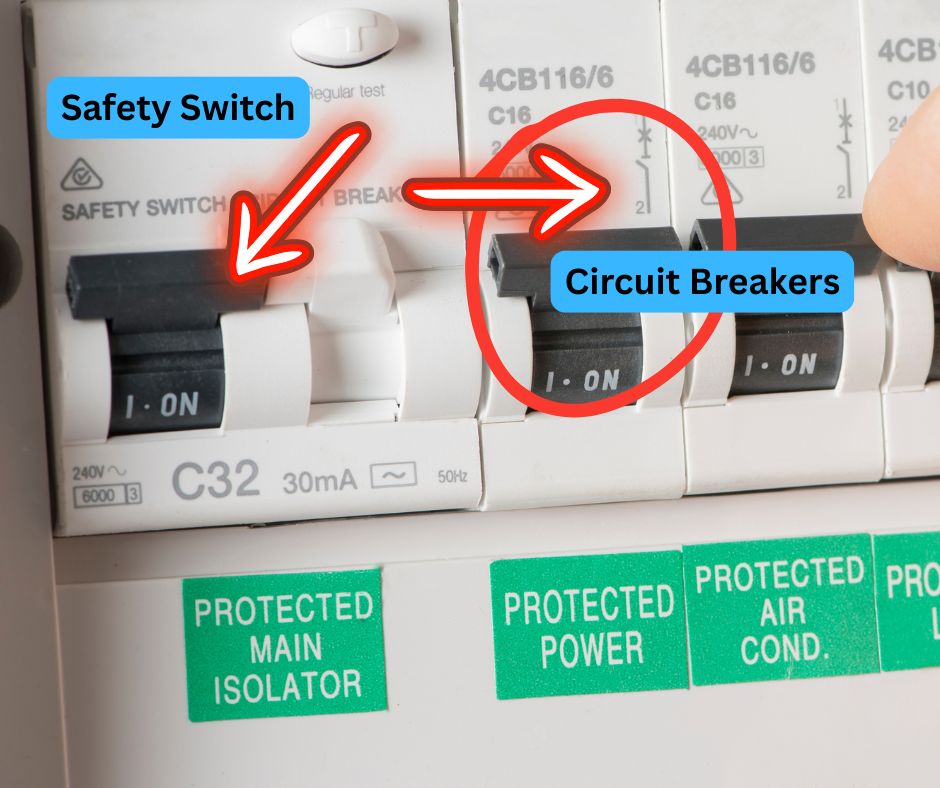
Understanding Switchboards and the Essential Role of Safety Switches
Safety switches play a vital role in your home's electrical system. If your switchboard is lacking these crucial devices, you are essentially placing your safety in the hands of chance. This issue is particularly prevalent in older homes located in areas such as Footscray, Braybrook, and Yarraville, where many older homeowners have not undertaken renovations or updates in decades. While a fuse box with ceramic fuses, cotton-wrapped wiring, or basic breakers may still function, it does not offer adequate protection for you or your family against electric shock.
It is imperative to understand the risks associated with outdated electrical systems.
1. Defining What a Safety Switch Is and Its Functionality
A safety switch, commonly referred to as a Residual Current Device (RCD), continuously monitors the flow of electricity in real time. In the event that it detects a leak in current—such as through a damaged wire or if a person comes into contact with electricity—it will disconnect the power within milliseconds. This rapid response is what makes safety switches life-saving devices. Unlike traditional breakers and fuses that trip due to overcurrent, safety switches trip in response to dangerous situations.
2. Simple Steps to Determine if Your Home Has Safety Switches
To ascertain whether your switchboard is equipped with safety switches, open the panel and look for specific labels such as:
- “Safety Switch”
- “RCD”
- A TEST button on the circuit breaker
If you do not see a test button on any of your breakers, or if your switchboard still features ceramic fuses instead, this indicates that you do not have RCD protection installed in your home. This aspect is covered in detail as part of our comprehensive Switchboard Upgrade Services.
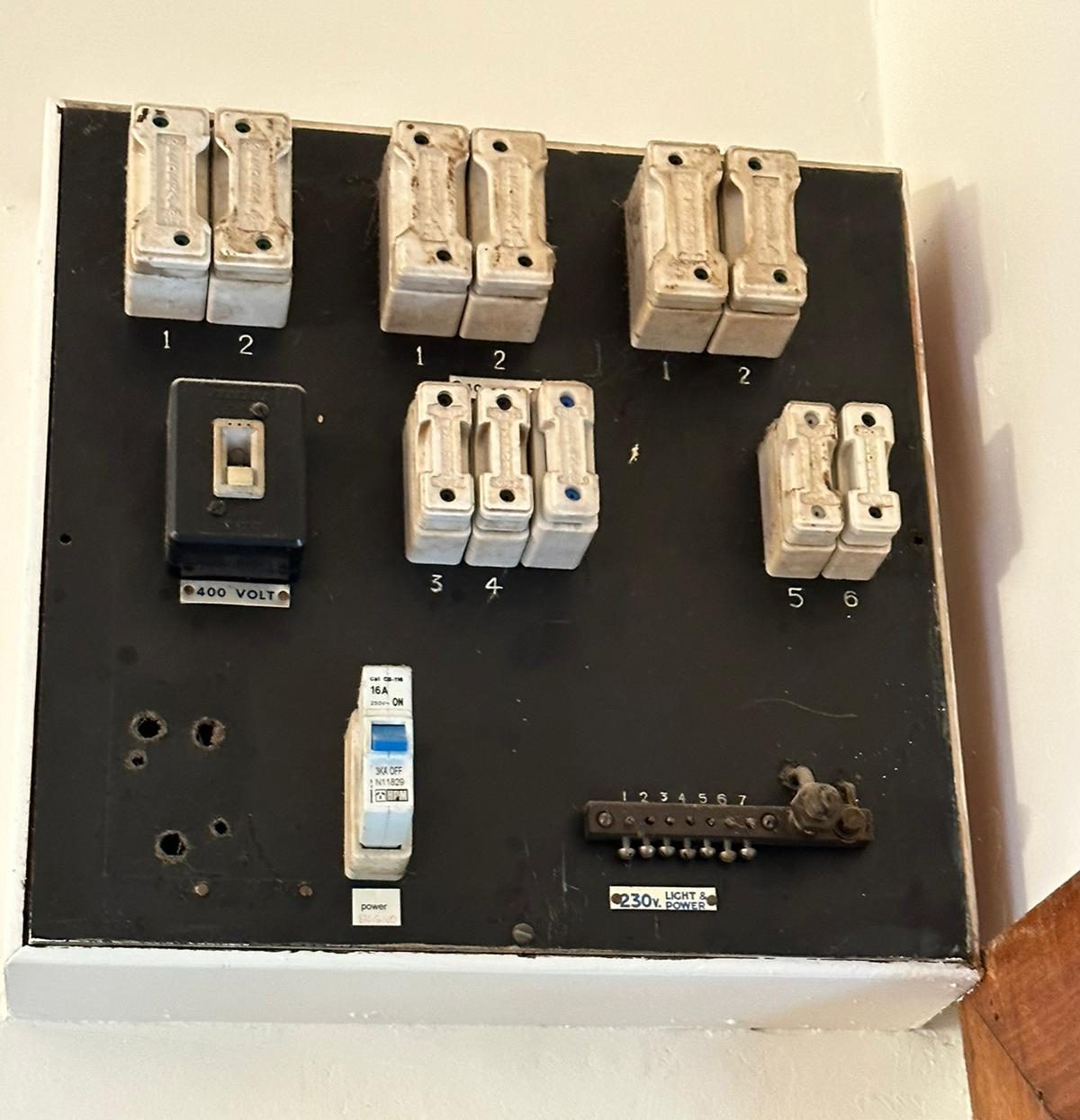
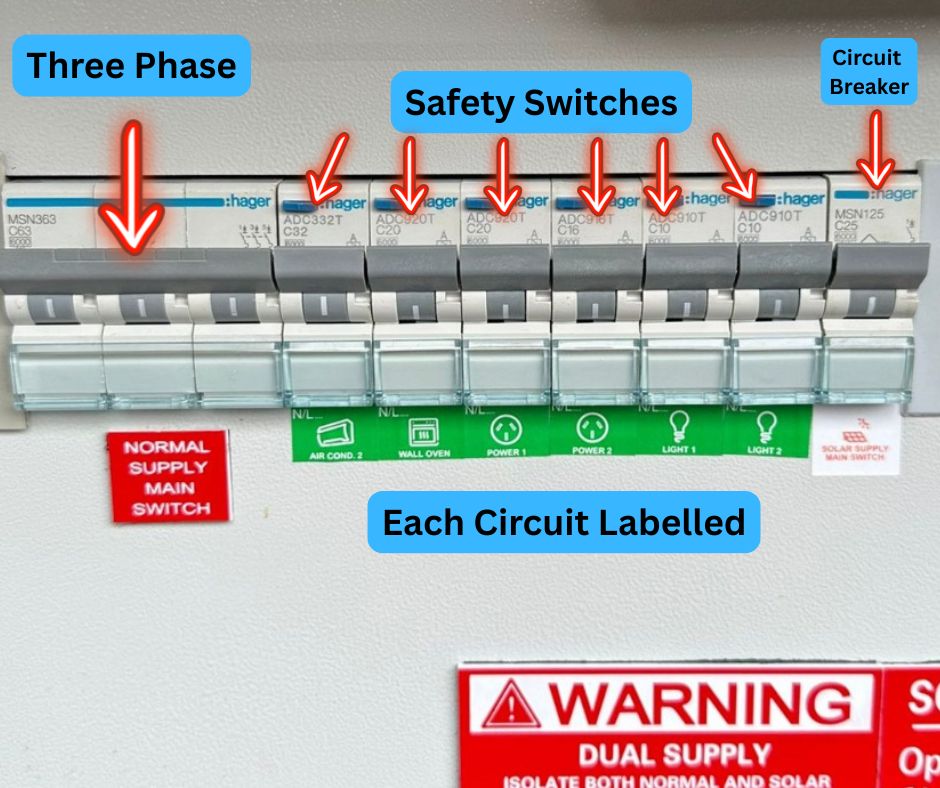
3. The Risks Associated with Not Having Safety Switches
Increased Risk of Electric Shock
Without an RCD, if a live wire comes into contact with an individual or a metal surface, the power remains on. This situation is perilous, as the fuse or breaker will not trip quickly enough to prevent a serious electric shock.
Lack of Protection Against Appliance Failures
Should an appliance such as a faulty toaster or washing machine begin to leak current, it poses a serious risk by energising nearby metal surfaces, potentially leading to serious injury. Thankfully, RCDs are designed to detect these types of faults immediately, providing critical protection.
Non-Compliance With Current Safety Standards
All homes that were either built or underwent renovations post-1991 in Victoria are mandated to have safety switches installed on power circuits. As of 2007, this requirement has also extended to lighting circuits. For further information, consult the Energy Safe Victoria guide.
4. Identifying Key Signs That Indicate Your Switchboard Is Outdated
- No “TEST” buttons present on breakers
- Ceramic fuses still in operation
- Power points emitting buzzing noises or feeling warm
- Only a single circuit servicing the entire house
- Lack of space for additional breakers
- Frequent flickering lights or circuit tripping when using appliances
If you are encountering any of these concerning issues, we encourage you to visit our switchboard service page. Our team can inspect your switchboard and provide you with a comprehensive quote on the spot.
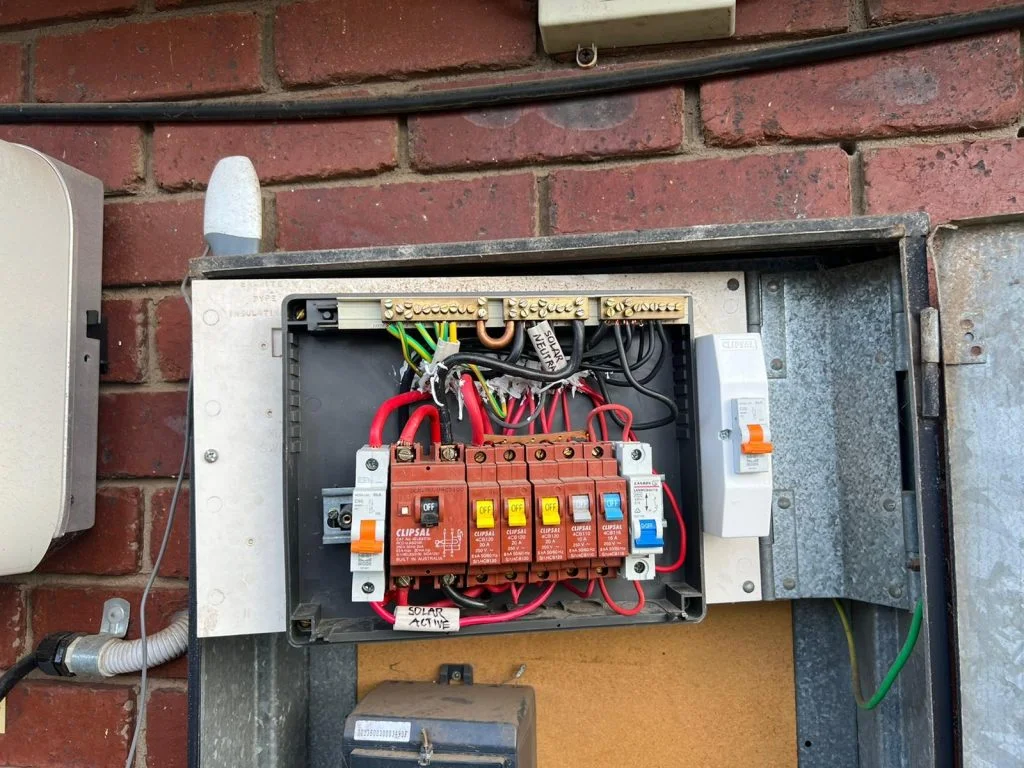
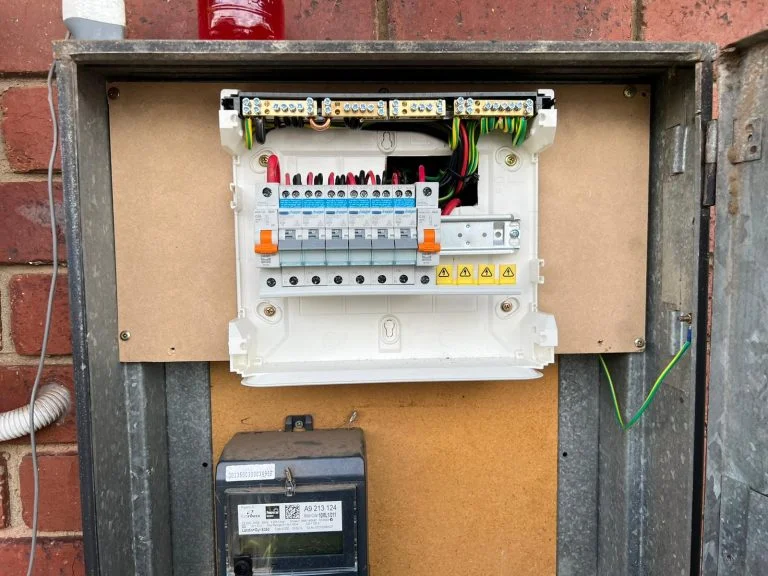
5. Our Comprehensive Approach to Switchboard Upgrades
During our upgrade process, we will:
- Conduct a thorough inspection of your current switchboard and circuits
- Remove outdated ceramic fuses or breakers
- Install combined RCBOs (which integrate both breaker and safety switch functionalities)
- Label each circuit clearly for easy identification
- Issue a Certificate of Electrical Safety upon completion
- Coordinate any necessary temporary power shutdowns to ensure safety
In addition, we can strategically split lighting and power across separate circuits, thereby enhancing both safety and system performance in your home.
6. Do You Need to Replace Your Entire Switchboard?
In most scenarios, the answer is yes. Adding safety switches to an older switchboard may not always be a practical or safe solution. We often recommend a complete replacement of the switchboard if:
- You are still using rewireable fuses
- There are visible signs of overheating or corrosion
- You are planning to add more circuits or appliances
- Your insurance provider stipulates it for coverage
Frequently Asked Questions About Safety Switches
Are safety switches legally mandated?
Yes, safety switches are a legal requirement for all newly constructed homes and major renovations. Older homes must have them installed when significant electrical work is undertaken.
How frequently should safety switches be tested for functionality?
It is recommended to test safety switches every three months. Simply press the TEST button to verify that it trips appropriately. If it fails to trip, it indicates a fault, and you should arrange for a replacement.
Can I retain my old fuse box and just add one RCD?
While it is technically feasible to do so, this approach is seldom recommended. Older fuse boards are not designed to provide adequate protection for contemporary electrical circuits.
Will my power be interrupted during the upgrade process?
Yes, there will be a temporary interruption. However, we strive to minimise downtime and will coordinate with your energy distributor to ensure a smooth transition.
Request a Quote Today!
Inquire About Our FREE Electrical Inspections

Get Your Switchboard Upgraded for Enhanced Safety
If your switchboard lacks safety switches, you are essentially operating your home without the necessary modern protections. A single fault could lead to serious electrical shock, fire hazards, or even worse outcomes.
We specialise in upgrading your switchboard swiftly and efficiently, ensuring compliance with safety standards and providing full certification so that your home meets contemporary safety expectations rather than outdated ones.
Discover our Switchboard Upgrade Services in Melbourne.
No Safety Switches on Your Switchboard? Here’s Why That’s Not Safe



Ah, the wonderful world of safety switches—truly the unsung heroes of our homes, right alongside the humble smoke alarm and that jar of ‘emergency’ pickles in the pantry that we never actually touch. It’s so easy to overlook them, much like how I forget to replace the batteries in my remote until I’m knee-deep in a nail-biting series finale and suddenly find myself wrestling with a flashlight like I’m preparing for a talent show!
It’s interesting to see the spotlight on safety switches, especially in light of how often electrical safety gets overlooked until an incident occurs. I grew up in a home that still had an old fuse box, and we only updated it after a minor shock incident. It makes me reflect on how unprepared many of us can be when it comes to our home safety, often prioritizing aesthetics or convenience over critical safety measures like RCDs.
This topic couldn’t be more timely, especially for those of us in older homes. I grew up in a house with a vintage fuse box, and it always made me uneasy thinking about how outdated the wiring was. When my parents finally made the switch to a modern switchboard with safety switches, it felt like a weight lifted off our shoulders. It’s amazing how something so seemingly simple can have such a profound impact on household safety.
Your exploration of the critical importance of safety switches in residential settings is both timely and essential, especially given the ongoing discussions around electrical safety in our increasingly technology-driven homes. The mention of RCDs (Residual Current Devices) truly underscores the significance of proactive measures we can take to ensure our family’s safety against the often-overlooked hazards of electrical faults.
It’s alarming to consider just how many homes still rely on outdated electrical systems, especially in communities with a rich history like Footscray and Yarraville. As a homeowner in a similar older neighborhood, I’ve seen firsthand how important it is to prioritize safety upgrades, particularly when it comes to electrical systems. A few years back, I had a close call with faulty wiring that really opened my eyes to the risks. Thankfully, we had a safety switch installed, which quickly cut the electricity and potentially averted a dangerous situation.
It’s interesting to think about how crucial safety switches are, especially in older homes that might not have kept pace with modern electrical standards. I recently helped a friend update their switchboard, and we were shocked to discover how outdated their wiring was. It really highlighted how much safety can be overlooked in everyday home maintenance.
You bring up a crucial topic that is often overlooked until it’s too late. The safety of our homes should always be a priority, yet many people take it for granted, not realizing the potential risks involved with outdated electrical systems. As I read your points about the importance of safety switches, it reminded me of how we often view safety in other aspects of our lives—like wearing seatbelts, using smoke detectors, or even ensuring our car has working brakes. Just as with those measures, having safety switches is an essential proactive step to prevent accidents before they happen.
You’ve really hit the nail on the head with your thoughts on safety. It’s interesting how we often prioritize safety measures in certain areas of our lives, like wearing seatbelts or having working smoke detectors, and yet can overlook other equally important aspects, such as our home’s electrical systems.
This is such an important topic, and it resonates with me personally. Growing up in an older home, I remember the palpable anxiety my parents felt every time they used certain appliances, always wondering if the electrical system was safe. It’s alarming how many people overlook the necessity of safety switches, especially in vintage houses that haven’t seen significant upgrades in years.
It’s interesting to hear how your experiences growing up in an older home shaped your perspective on electrical safety. Those feelings of anxiety your parents had are not uncommon. Many people living in vintage houses face similar concerns, especially since those homes can have such a rich history but also hidden risks.
It’s refreshing to see how many people resonate with the challenges and nuances of living in older homes. The history they carry can be such a double-edged sword, can’t it? I’ve often thought about how these houses tell stories—some lovely, some a bit more cautionary.
Your reflection on growing up in an older home hits home. It’s easy to brush aside electrical safety, especially when houses have so much history. But those nagging worries your parents felt are more common than people realize. A lot of folks might think a quick update here and there is enough, but the truth is many older homes have outdated wiring that can’t handle modern demand.