
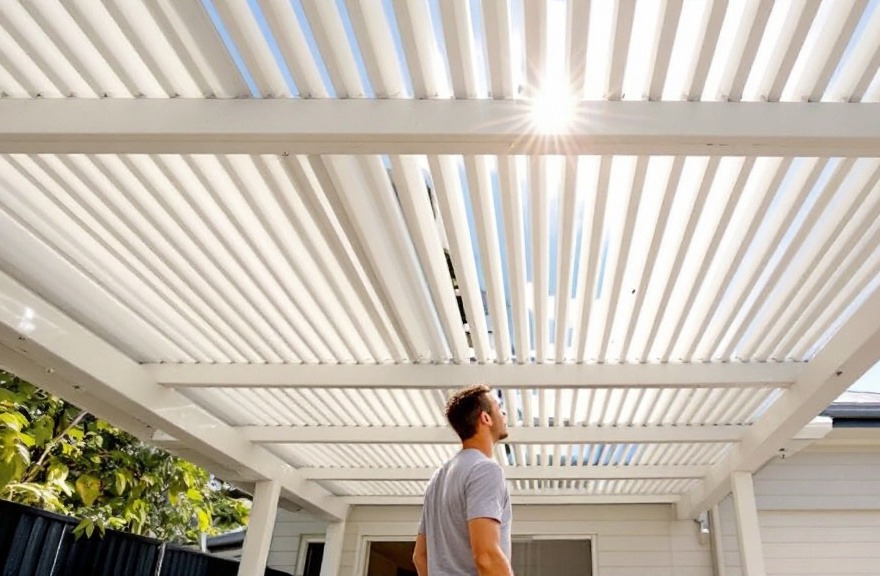
A louvred pergola features a roof constructed from adjustable blades that can rotate. When you open the blades, natural light and fresh air flood the space. Conversely, when closed, the blades interlock to block out sunlight and most rain. In Brisbane, where the weather can shift dramatically from bright sunshine to sudden storms, a louvred roof allows you to adapt your outdoor cover to suit the conditions.
A louvred roof may not be the ideal choice for every home. Here’s an overview of how a louvred pergola functions, where it fits best, and the essential questions to consider before making a decision.
Understanding the Mechanism of a Louvred Pergola Roof
The roof structure is composed of a framework that supports a series of blades. Each blade pivots at its ends, allowing the entire row to tilt in unison, similar to a horizontal window blind.
Blades can be adjusted in two ways:
- Manual operation: using a winder handle or a gear located on one of the posts for manual turning.
- Motorised operation: powered by a small motor integrated into the frame, operated via a wall switch or remote control.
When closed, the blades channel rainwater into a built-in gutter, which directs water down through a concealed downpipe, often located within a post. It’s essential to consider the size and slope of this gutter. An inadequately sized gutter or incorrect slope can lead to overflow during heavy rain, resulting in water pooling where you sit.
Materials and Design of Louvred Roof Blades
Inquire about the materials used for the blades and the frame. Powder-coated aluminium is a popular choice due to its lightweight nature, resistance to rot, and ability to maintain blade alignment. While timber offers an appealing aesthetic for a pergola, it is less suitable for movable blades because it expands and contracts with weather changes, potentially compromising the seal when closed.
The colour of the blades also impacts performance. Dark blades may look sleek but can become excessively hot in the afternoon sun, while lighter shades reflect more heat.
Optimal Scenarios for Installing a Louvred Pergola in Brisbane
A louvred pergola is particularly advantageous when you desire a versatile space that can adapt to changing weather throughout the year.
- West-facing patios: for outdoor areas that receive intense afternoon sun, you can close the blades to block the heat and reopen them once the sun sets.
- Adjacent to living spaces: if the pergola is positioned next to your home, open blades allow winter sunlight to brighten the interior, preventing dark rooms.
- Entertaining guests: with a louvred pergola, unexpected afternoon storms won’t force your gatherings indoors.
- Gardens: if you have potted plants or a vegetable garden nearby, you can adjust the blades to allow sunlight in during part of the day.
A louvred pergola may not be the best fit if you seek a permanent shade solution. For consistent coverage throughout the year with less maintenance, a fixed roof could be the better option. You can compare various roof styles on the patio and pergola designs page.
Choosing Between a Louvred Pergola and a Fixed Insulated Roof
Another popular option for covered outdoor areas is a fixed roof made from insulated panels. These panels effectively block heat and dampen rain noise, eliminating the need for adjustments. they provide consistent shade all year, which may not be desirable during winter months when sunlight is welcome. A louvred roof gives you flexibility on a daily basis. Some homeowners opt for a combination of both: a fixed roof nearest the house and a louvred section extending outwards.
Louvred Pergolas and Their Performance During Brisbane Storms
While closed blades can prevent rain from entering, they do not create a fully sealed roof. In windy, rain-driven conditions, it is possible for some water to seep through at the edges or where the blades meet. If you require complete dryness for outdoor furniture or kitchens, discuss this with your builder prior to installation.
Wind resistance is a critical consideration. A louvred roof must be designed to withstand the wind conditions specific to your location, just like any other roofing system. Consult your builder regarding:
- Wind rating: the rated wind resistance of the louvred roof system.
- Storm settings: guidance on whether the blades should remain open or closed during storm warnings.
- Footings: how the posts are anchored and how the frame connects to the house.
The manufacturer’s guidelines will outline the recommended actions for blade positioning during high winds, so keep this information accessible. The posts and their connections to the home support the entire structure and endure the effects of wind, making these details crucial to discuss before signing any contracts.
Understanding Council Approval for Your Louvred Pergola
As a louvred pergola includes a roof structure, it is essential to verify council approvals prior to construction. Approval requirements depend on various factors, including the size and height of the pergola, its proximity to property boundaries, and whether your property falls under a neighbourhood plan or overlays like traditional building character.
Visit Brisbane City Council’s residential projects page for information on checking your zoning and any overlays associated with your property using City Plan. For building approval, refer to the council’s extensions and renovations page and contact a licensed building certifier for specific advice. If your property is located in Redland City or Logan, reach out to the respective council for guidance.
Ensure your builder is licensed with the QBCC for the work. You can verify a licence number on the QBCC website prior to signing any agreements.
Electricity, Lighting, and Power Considerations for a Louvred Pergola
A motorised louvred roof requires electrical power at the frame. This also applies to any installed lights, ceiling fans, or heaters. It’s important to plan for these elements during the design phase, ensuring that cables can be routed through the posts and beams rather than being added later.
A qualified electrician will handle the wiring, which includes connecting power to the motor, any automatic rain sensors that can close the blades autonomously, and outdoor lighting fixtures.
If you prefer to avoid running electrical power to the structure, a manual winder is an effective option for smaller roofs, eliminating the need for motor maintenance.
Essential Maintenance Practices for Louvred Pergolas
Maintaining a louvred roof requires slightly more attention than a fixed roof, but the effort is minimal.
- Gutters: regularly remove debris, such as leaves, from the built-in gutter, particularly if there are overhanging trees. Clogged gutters are a common cause of leaks in louvred roofs.
- Blades: periodically rinse the blades to prevent dust and debris from obstructing their ability to close properly.
- Moving parts: exercise the blades occasionally to ensure they move freely, even during winter months, to prevent seizing.
- Proximity to the bay: if you reside near Moreton Bay, wash the frame more frequently to eliminate salt buildup.
Inquire about the warranty coverage and duration, specifically whether the motor is covered separately from the blades.
Factors Influencing the Cost of a Louvred Pergola
A louvred roof generally incurs a higher cost than a fixed pergola roof due to its moving blades, gutter system, and any motorised components. The overall price is influenced by several factors:
- Size: the total area of the roof and the number of blades required.
- Manual vs. motorised: a motorised system increases the cost, as does the inclusion of a rain sensor.
- Freestanding or attached: attaching the pergola to the house may require fewer posts but demands a secure connection to the existing structure.
- Footings and ground conditions: sloped or unstable ground necessitates additional work for proper post installation.
- Additional features: costs for integrated lights, fans, side screens, or blinds.
- Approval fees: costs associated with certifier fees and any council requirements for your property.
To obtain an estimate for your backyard, reach out for a complimentary quote. It is helpful to have a rough idea of size, the orientation of the area, and whether you prefer a motorised option.
Is Investing in a Louvred Pergola the Right Choice for Your Home?
If you want your outdoor area to adapt to summer heat, winter sun, and the occasional storm, a louvred pergola offers greater flexibility than a fixed roof. For those seeking straightforward, permanent coverage, a fixed patio roof is a simpler alternative. Consider how often you utilise the area and the conditions that drive you indoors, whether it be the sun or rain. This reflection will typically lead you to the most suitable roofing solution.
For more information, contact Pergolas Brisbane at (07) 3064 0661. Licence number QBCC 15154266.
Original Article First Published At: Louvred pergolas in Brisbane: how they work and when they suit