
Low-odour commercial painting allows businesses such as offices, clinics, aged care facilities, and retail shops to continue their operations while their walls receive a fresh coat of paint. The choice of paint system is crucial, but equally important are the preparation methods, the timing of each coat, and how the work is organised around the occupants in the building. This comprehensive guide details the impact of low-VOC paint on commercial sites, highlights its significance, and outlines how Norwest Painting Group efficiently manages painting in occupied buildings throughout Sydney and NSW.
Understanding Low-VOC Commercial Painting and Its Benefits
VOC, or volatile organic compounds, are chemicals found in many paint products, including thinners and varnishes, that can be released into the air as paint dries. According to the Australian Government’s National Pollutant Inventory, these VOCs can also be emitted from painted surfaces post-application. Low-VOC commercial painting employs specially formulated paint systems that minimise the release of these harmful compounds during application and drying.
For building managers, this translates to a significant reduction in paint odour within the painted areas and adjoining spaces. Our clients can return to their environment sooner, as staff, residents, and customers can comfortably use the space without the worry of lingering fumes.
The Importance of Low-Odour Paint in Occupied Commercial Spaces
Paint odours can accumulate within indoor environments. The National Pollutant Inventory highlights that VOCs can accumulate due to numerous sources and limited ventilation. Common effects of VOC exposure include irritation of the eyes, nose, and throat, as well as headaches.
To mitigate these issues, we integrate low-odour paint into our standard practice, especially in environments where people are present during the painting process. Key areas where this is crucial include:
- Offices where employees work in adjacent areas.
- Aged care facilities and retirement homes where residents are living on-site.
- Medical and veterinary clinics that continue to see patients during the repainting process.
- Shops, cafes, and hospitality venues that need to reopen promptly the following day.
Implementing Low-VOC Painting in Active Offices
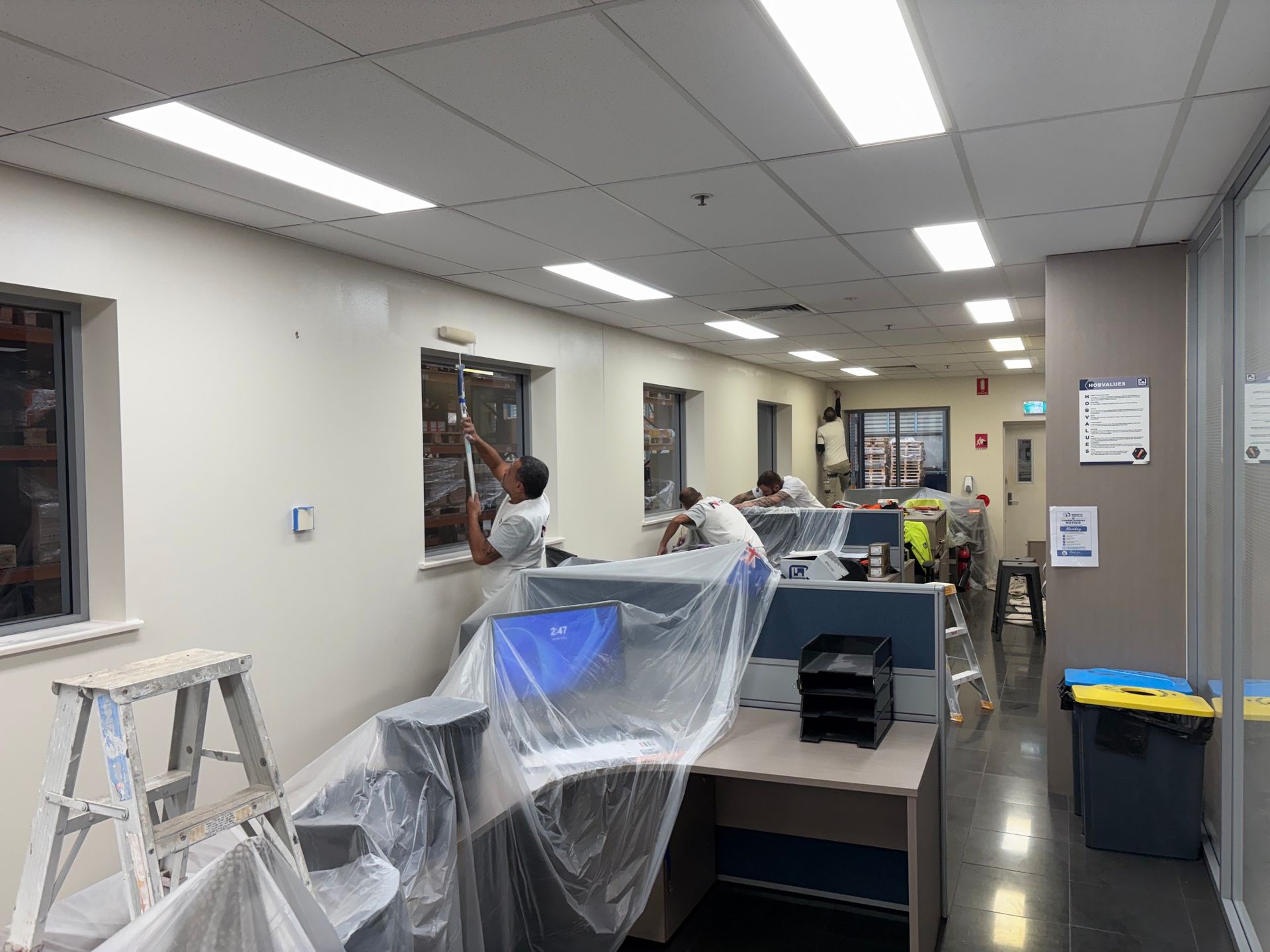
In Sydney, we utilise low-odour and low-toxicity paints for office projects, ensuring that staff can return to their workspaces without enduring unpleasant fumes. We can organise the office into designated zones or floors and carry out painting after hours, allowing businesses to remain operational throughout the painting process.
Our team schedules painting during evenings, weekends, or even public holidays, ensuring that the office is refreshed and ready for use by Monday morning. We strictly adhere to the building’s access regulations, safety protocols, and tenant requirements.
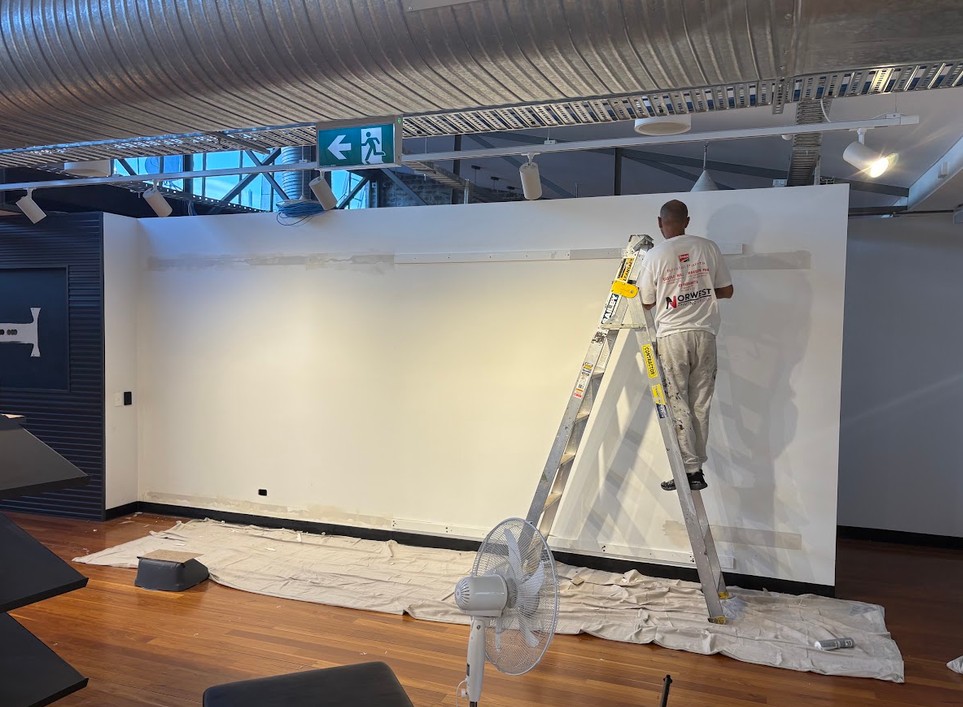
Office painting projects are often time-sensitive. For instance, one business in Norwest Business Park contacted us for an urgent repaint ahead of an end-of-lease inspection. The feature wall, which had been scuffed, required an exact colour match to satisfy handover standards. Our case study on this end-of-lease office repaint illustrates how we successfully managed the time constraints.
Low-Odour Painting Solutions for Aged Care and Healthcare Facilities
For aged care facilities, utilising low-odour and low-VOC products is standard practice rather than an optional service. Given that residents occupy the building, maintaining air quality is essential for the health and safety of residents, staff, and visitors during and after the painting process. Our painting services for nursing homes are meticulously planned with this in mind.
Low-odour paint is one element of our strategy for painting occupied facilities. We divide the area into zones or wings and work around everyday activities, such as meals and care routines, ensuring that daily operations continue seamlessly. We coordinate closely with facility managers, builders, and care staff. Where required, police checks are conducted, and each zone is carefully cleaned, inspected, and returned to service before moving on to the next area.
This same strategy applies to medical and veterinary clinics. For example, at Greencross Vets locations in Tuggerah and Wyoming, our team painted during overnight hours and on weekends, allowing the clinics to continue providing essential services during the day. You can read about the preparation process and the exterior colour changes in our case study on the Greencross Vets clinic repaint.
Overnight Commercial Painting for Retail and Hospitality Venues
For retail shops and hospitality venues, the timing of painting is as crucial as the paint used. When painting occurs overnight, the space is vacant, allowing for uninterrupted application of each coat. Cafes, restaurants, and bars can undergo repainting overnight and be ready to operate the following day.
At the Petbarn store in Singleton, the business needed to remain fully operational during the day. Our team executed the painting through the night, ensuring the retail space was clean and ready for customers the next morning. This process was repeated nightly until the project was completed. The precise lines of the yellow feature walls against the white and grey background had to align perfectly with the brand colours. You can find photos in the Petbarn store repaint case study.
We offer after-hours, overnight, and weekend painting by appointment. For further details on how to book a night or weekend slot, please refer to our 24-hour painting page.
Our Strategic Approach to Low-Odour Commercial Painting
Every commercial repaint in an occupied building begins with a thorough site visit. We assess the building, examine the surfaces, and consider how the space is utilised. This enables us to devise a plan that outlines the stages, paint system, and working hours. A typical strategy for an occupied building includes the following steps:
- Dividing the building into zones, floors, or wings and establishing the order of work.
- Selecting the appropriate primer, undercoat, and finish for each surface, using reputable brands such as Dulux and Taubmans, prioritising low-VOC products in occupied areas.
- Implementing protective measures for the areas in use and minimising noise and odour throughout each stage.
- Preparing surfaces properly by patching and sanding prior to any paint application.
- Cleaning, inspecting, and handing back each zone before progressing to the next one.
Proper preparation is essential for a low-odour job. Low-odour paint cannot replace the need for thorough patching, sanding, and priming, as the quality of the finish depends on the underlying surface. For strata and body corporate projects, we can also provide the paint specifications in writing for the committee or building manager.
Expert Licensed Commercial Painting Services Across Sydney and NSW
Norwest Painting Group boasts over 30 years of experience in residential, commercial, and industrial painting. We are licensed in NSW (393197C) and Queensland (QBCC 15511709), fully insured, and comply with WHS requirements, providing site documentation upon request. we are Supply Nation certified.
Located in Baulkham Hills in Sydney’s Hills District, we serve clients across NSW. Our successful projects include the Petbarn repaint in Singleton and the Greencross clinics on the Central Coast. For a comprehensive overview of our commercial painting services, including shopfronts, offices, warehouses, and strata buildings, please visit our commercial painting in Sydney page.
Frequently Asked Questions About Low-VOC Commercial Painting
Is it possible to perform low-VOC commercial painting while staff are present in the building?
Yes. We strategically stage the work, protect the areas in use, and utilise low-VOC products to keep odour to a minimum. In offices, we can work on one zone or floor at a time and conduct painting after hours in occupied areas, allowing the business to operate without interruption.
Is low-odour paint standard practice in aged care facilities?
Yes. We use low-odour, low-VOC products as standard in aged care settings, ensuring the safety and comfort of residents, staff, and visitors during and after the painting process.
Can we schedule low-odour commercial painting for nights or weekends?
Yes. We offer after-hours, overnight, and weekend painting by appointment. Our team is available to take calls from 6am to 8pm Monday to Saturday and from 8am to 8pm on Sunday, making it easy to arrange a suitable time for your site.
Request a Low-Odour Commercial Painting Quote from Norwest Painting Group
If your office, facility, clinic, or shop requires repainting while remaining operational, please provide details about the building, the areas in use, and your availability. We will visit the site, strategise the zones and paint system, and present you with a comprehensive fixed-price quote. Contact Norwest Painting Group at 0415 851 969 or submit an enquiry through our contact page.
Source: Australian Government, Department of Climate Change, Energy, the Environment and Water, National Pollutant Inventory, “Total volatile organic compounds” substance fact sheet, retrieved 2026-09-30, https://www.dcceew.gov.au/environment/protection/npi/substances/total-volatile-organic-compounds
Original Article First Published At: Low-Odour, Low-VOC Commercial Painting in Sydney: Painting Offices, Aged Care Facilities and Shops While They Stay Open