

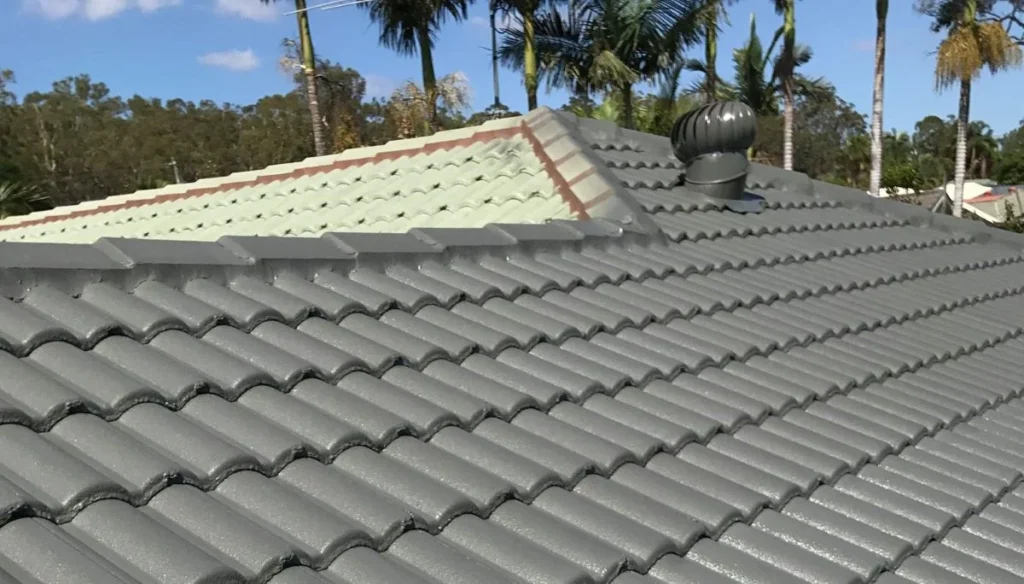
Roof repointing involves replacing the pointing along the ridge and hip capping of a tile roof. The pointing is the visible finishing layer that sits along the edges of each ridge cap, where it meets the roof tiles. It is applied over the bedding, which is the foundational layer placed underneath the ridge cap. When the pointing becomes cracked, crumbled, or detaches from the tiles, the repointing process removes the loose material and adds a new layer of pointing compound, restoring the integrity of the ridge line.
At Easy Cut Painting Services, we provide expert tile roof repointing as part of our comprehensive roof restoration services. This includes replacing and repairing damaged tiles and applying UV-stable roof coatings. Our business, operated by Nasser Khadivi, has been serving Sydney homes since 2000.
We are licensed by NSW Fair Trading as a painting contractor (licence number 105492C) and are proud members of Master Painters Australia. This guide details the function of pointing on tile roofs, the indicators that your ridge capping requires repointing, and the steps involved in the repointing process, helping you understand what to look for before scheduling an inspection.
- Pointing serves as the visible finishing layer on the edges of ridge and hip caps, placed over the bedding layer.
- Signs of cracked, crumbling, or gapped pointing along the ridge line indicate the need for repointing.
- In cases where the bedding under a ridge cap is compromised, the ridge cap must be rebedded prior to applying new pointing.
- Flexible pointing compounds are designed to adapt to roof movement without cracking, contrasting with rigid cement mortar.
- Easy Cut conducts a thorough roof inspection before providing a quote, with repointing available as part of a complete roof restoration.
Understanding Roof Repointing: What Is It?
On a tile roof, ridge caps extend along the roof's peak, while hip caps run down the sloped edges where two roof planes converge. Each cap is secured on a bed of material, and the joint between the cap and the roof tiles is finished with pointing. Roof repointing refers to replenishing this finishing layer when the existing pointing has deteriorated.
Pointing does more than enhance the appearance of the ridge line. According to Selleys, the manufacturer of the Point Works range of flexible pointing compounds, their product acts as an adhesive mechanical fastener for hip and ridge tiles. Monier similarly describes its flexible pointing as an adhesive fastener for both concrete and terracotta hip and ridge tiles. Essentially, when these compounds are utilised, the pointing plays a crucial role in securing the ridge capping in place.
Understanding Bedding and Pointing on a Tile Roof: What Sets Them Apart?
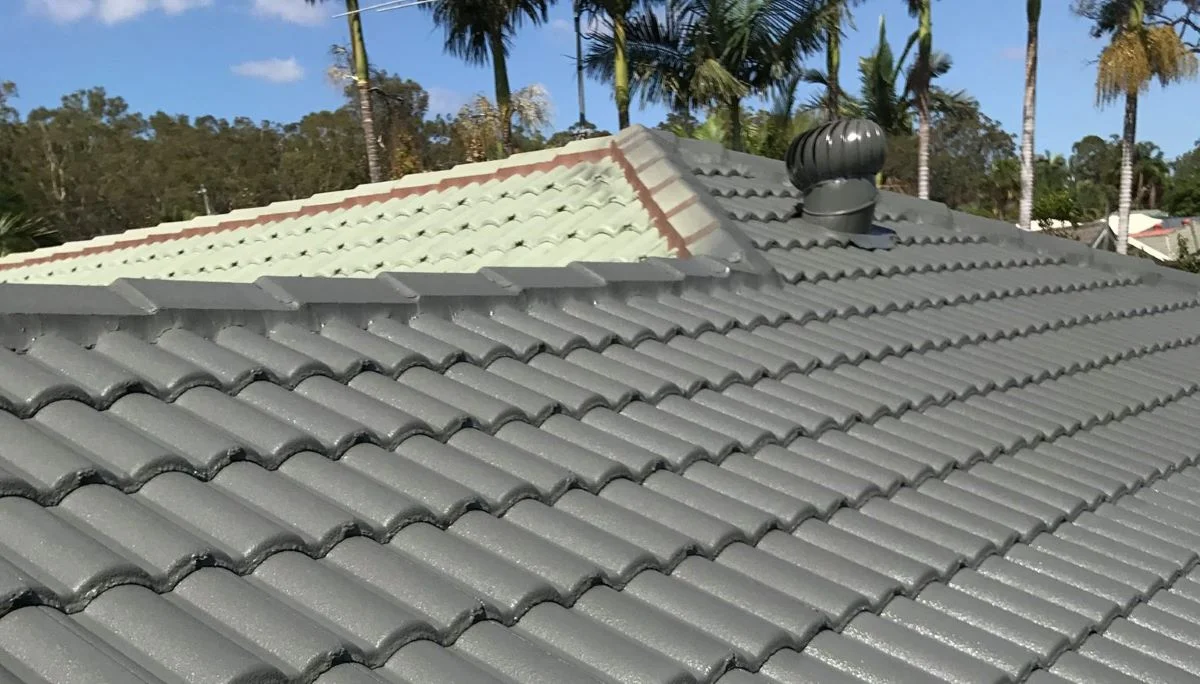
Bedding and pointing constitute two distinct layers of a roofing system. Bedding is applied first, serving as the foundational layer beneath the ridge cap. Once the bedding has cured, the pointing is applied on top. The Selleys data sheet clearly outlines this sequence: bedding requires a curing period of at least 12 hours at temperatures of 15°C or higher, or at least 24 hours at temperatures between 10°C and 15°C, before pointing can commence. the bedding must be free from defects and should be finished at least 3 mm below the edge of the ridge tiles.
This distinction is crucial in determining whether a roof requires only repointing or if rebedding is also necessary. If the bedding under the ridge capping remains intact, the old pointing can be removed and a new layer applied. if the bedding has deteriorated, merely adding new pointing will not resolve the underlying issues; therefore, rebedding is essential. At Easy Cut, we include rebedding of ridge capping in our service whenever the bedding is found to be compromised, and we determine the appropriate action during the inspection.
What Factors Lead to Cracking in Ridge Cap Pointing?
A roof experiences movement over time. Monier explains that flexible pointing differs from traditional cement mortar pointing, which is inherently brittle. Flexible pointing maintains a level of elasticity after curing, allowing it to adapt to the roof's movement without cracking or separating. In contrast, rigid cement mortar lacks this flexibility, making it susceptible to cracking or detaching when the roof shifts.
The environmental conditions at the time of application also play a significant role. Selleys cautions against applying its compound when the surface temperature is 10°C or below, or if rain is expected within two hours. scheduling for repointing must consider weather conditions.
Identifying Signs That Your Tile Roof Requires Repointing
Many indicators that a tile roof needs repointing can be observed from the ground or from an upper-floor window with a view of the roof. Here are the key signs to watch for:
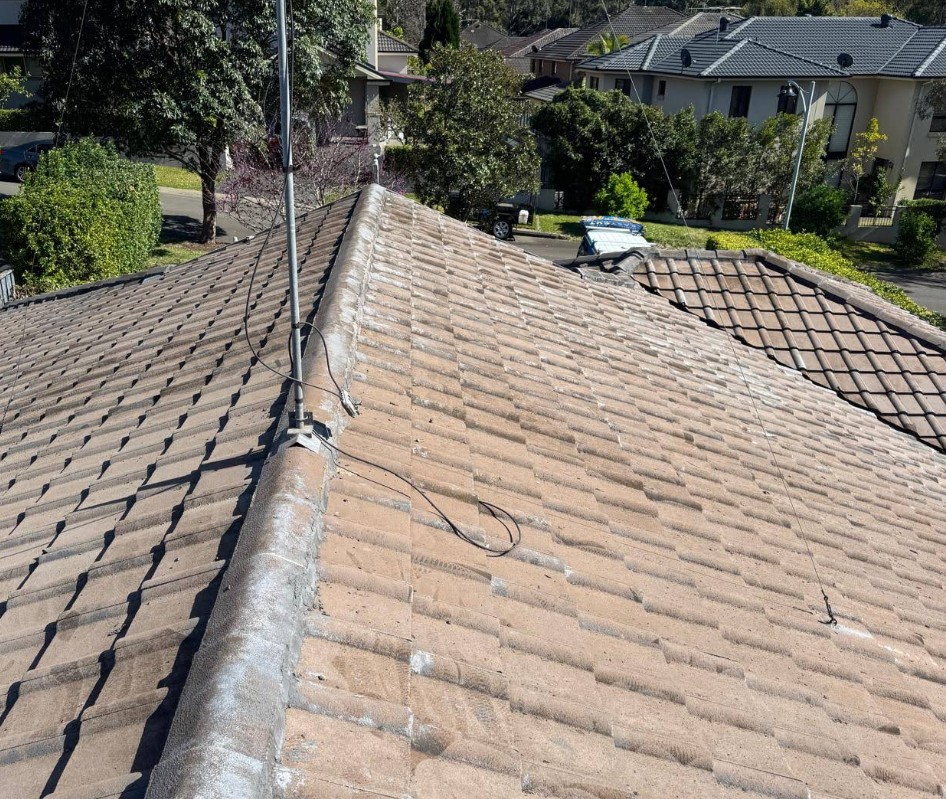
- Visible cracks along the pointing of the ridge or hip capping.
- Crumbling pointing that has deteriorated, creating gaps between the ridge caps and the roof tiles.
- Fragments of broken pointing found on the roof tiles or accumulating in the gutters.
- A ridge cap that appears misaligned with adjacent caps.
Cracked or deteriorating mortar surrounding the ridge capping is a primary concern we investigate during roof assessments for restoration. Other factors we assess include faded or chalky tiles, moss and lichen growth, and coatings that have begun to peel. If you notice any of these signs, please inform us of your observations when you schedule a booking. The inspection will determine if the ridges require repointing, rebedding, or tile replacement.
Step-by-Step Process of Roof Repointing
The application of pointing compounds follows specific guidelines set by the manufacturer, and installers are expected to adhere to Australian Standards. Below are the sequential steps involved in the repointing process, derived from the Selleys Point Works Gen II data sheet:
- Inspect the ridge and hip lines to assess the condition of the bedding beneath.
- Remove cracked and loose pointing to ensure surfaces are clean, without any residual powdery bedding mortar on the edges of the ridge tiles.
- Rebed any ridge caps where the bedding has deteriorated, allowing the new bedding to cure before proceeding with pointing.
- Apply the flexible pointing compound with a trowel, achieving a thickness of 3 to 5 mm, ensuring full contact with the roof tile and the underside of the ridge tile.
- Incorporate weep holes in the ridges, as mandated by the Selleys data sheet, either during the application or upon completion of the pointing.
- Clean each hip and ridge as the pointing work concludes, preventing excess compound from setting on the roof tiles.
If any cracked or broken tiles are discovered during the inspection, they can be replaced as part of the overall roofing work, ensuring the ridge lines and surrounding tiles are restored simultaneously.
Integrating Roof Repointing into a Complete Roof Restoration
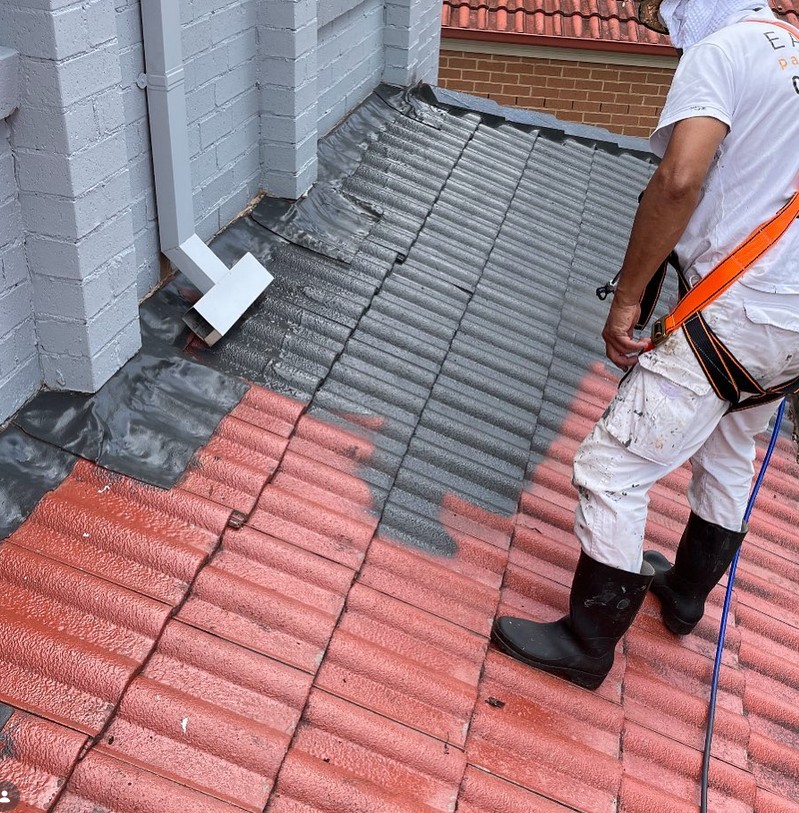
Some tile roofs require only repointing of the ridges, while others may exhibit faded tiles, moss and lichen growth, porous tiles that absorb moisture, or an outdated coating. For these roofs, repointing is just one step in a comprehensive roof restoration. During a full restoration, we clean the roof, treat biological growth, repair mortar and cracked tiles as necessary, seal the tiles, and apply a flexible membrane topcoat designed specifically for roof tiles. The mortar and tile repairs are completed prior to sealing and coating, ensuring the final finish is applied to a roof with intact ridges and no broken tiles.
If you are considering whether your roof requires repainting or a full restoration, our guide on the importance of hiring qualified painters for roof painting and restoration clarifies the distinctions between the two services and highlights common pitfalls.
Factors Influencing the Cost of Roof Repointing
The cost associated with roof repointing varies based on the specific roof being assessed, which is why we provide quotes following an inspection rather than before. The following elements influence the final quote:
- The total length of ridge and hip capping that requires repointing.
- The condition of the bedding—whether it is intact or if the ridge caps also need rebedding.
- The number of cracked or broken tiles that require replacement.
- The roof's pitch, height, and accessibility.
- Whether the repointing is performed independently or as part of a complete roof restoration that includes cleaning, sealing, and coating.
When you reach out, Nasser typically visits the property personally. He evaluates the condition of the ridges, bedding, and tiles, measures the necessary work, and then provides a detailed, itemised quote outlining the tasks involved.
Common Questions About Roof Repointing
What distinguishes rebedding from repointing a roof?
Rebedding refers to the replacement of the bedding layer that supports the ridge cap. Repointing, on the other hand, involves renewing the pointing, which is the finishing layer applied over the bedding at the edges of the ridge cap. A roof with sound bedding may only require repointing, whereas a roof with damaged or loose bedding will necessitate rebedding prior to applying new pointing.
Is it possible to repoint a tile roof without rebedding?
Yes, if the underlying bedding remains in good condition. The Selleys data sheet for its flexible pointing specifies that the bedding must be free of holes and defects before the pointing is applied. Should the inspection reveal that the bedding is compromised, the affected ridge caps will first require rebedding.
Is flexible pointing superior to cement mortar for roof repointing?
Monier describes traditional cement mortar pointing as inherently brittle, while its flexible pointing retains sufficient flexibility after curing to accommodate roof movement without cracking or breaking away. Both Monier and Selleys classify their flexible pointing compounds as adhesive mechanical fasteners for hip and ridge tiles.
Do both concrete and terracotta tile roofs require repointing?
Both concrete and terracotta tile roofs feature ridge and hip capping finished with pointing, making either type susceptible to the need for repointing when the pointing fails. Monier produces its flexible pointing for use with both concrete and terracotta hip and ridge tiles, available in colours that match each type.
Can roof repointing be performed in cold or wet weather?
Pointing compounds have specific temperature and weather conditions for application. Selleys advises against the use of its flexible pointing when the surface temperature is 10°C or lower or when rain is expected within two hours. curing takes longer in cold and wet conditions, so repointing is ideally scheduled for a dry day.
Schedule Your Roof Repointing Inspection with Easy Cut Painting Services
If the pointing on your ridge capping has cracked, crumbled, or created gaps, contact Nasser at Easy Cut Painting Services on 0416 283 735, or submit an enquiry through our contact page.
Share your observations about the roof and its location, and we will arrange a time to inspect the ridges, bedding, and tiles. Based in Castle Hill, we service homes throughout the Hills District and greater Sydney area.
After our inspection, we will discuss whether your roof requires repointing, rebedding, tile replacement, or a complete restoration, and provide you with a detailed itemised quote for the work.
Sources: Monier, Roof tile accessories, Monier Flexible Pointing (monier.com.au/roof-tiles/accessories, retrieved 2026-10-30). Selleys, Point Works Gen II Technical Data Sheet, version 1.2 (selleys.com.au, retrieved 2026-10-30).
Original Article First Published At: Comprehensive Guide to Roof Repointing: What It Is, When Your Tile Roof Needs It, and the Process Involved