

A leaking shower behind the wall typically occurs when water infiltrates through compromised grout and silicone, subsequently tracking behind the tiles. The most common areas for leaks include the joint where the wall tiles meet the floor, internal corners, and joints within tiled recesses. Fortunately, a regrout and reseal can remedy these issues without removing any tiles. In rarer instances, leaks may stem from a pipe within the wall, necessitating a plumber's expertise, or from a failed waterproofing membrane behind the tiles, which requires tile removal.
This guide will help you identify the source of the leak and the appropriate professional to address each cause.
- Typical source: Water seeps in through the grout and silicone, primarily at the junction between the wall and floor, internal corners, and tiled recesses.
- Signs of a leak: Dampness often manifests outside the shower as bubbling paint, swollen skirting boards or door frames, a persistent musty odour, or stains on the ceiling below, which can be located some distance from the original water entry point.
- Quick assessment: Turn off the shower for a few days and document the damp patch daily; if it continues to expand while the shower remains dry, this indicates a potential pipe leak.
- Who to call: For failed grout and silicone, a regrout and reseal is necessary. A plumber is needed for leaking pipes, drains, or taps, while a licensed waterproofer and tiler are required for failed membranes. A glazier will assist with leaking screen frames.
- Time and warranty: Completing a full shower seal typically takes 4 to 5 hours, accompanied by a 10-year Ardex product warranty and a 7-year workmanship warranty.
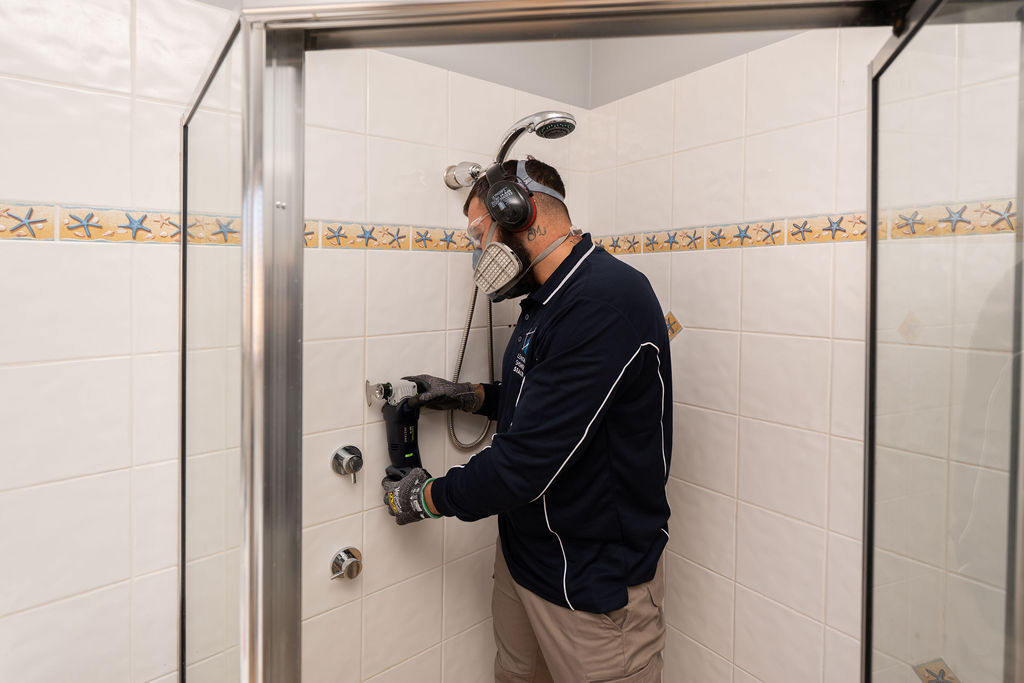
Common Origins of Leaks Behind Shower Walls
The visible damp patch may be far from the actual source of the leak. Water that penetrates through a cracked grout line or a lifting silicone bead can travel along behind the tiles before becoming noticeable, meaning the joint requiring inspection might not be the closest one to the stain.
The following joints are frequently responsible for allowing water to infiltrate behind a shower wall:
- The junction between the wall and floor: This area endures the most water exposure and building movement, making it the most common failure point due to regular scrubbing.
- Internal corners: As buildings settle, corner joints shift, often resulting in cracked silicone where two tiled walls converge.
- Around taps, mixers, and shower heads: A failed seal around these fittings allows water to seep behind and into the wall.
- Where wall tiles meet the shower screen: The joints around the screen can flex during use, causing silicone to gradually pull away.
- Grout lines on the wall and in tiled recesses: Grout is porous, and once it becomes cracked, crumbled, or soft, water is able to penetrate.
Identifying a Leak Behind Your Shower Wall
Leaking behind the wall is not generally visible from inside the shower, so inspect the surrounding room and the area on the opposite side. Indicators include bubbling or peeling paint, swollen skirting boards or door frames, persistent musty odours, or stains on the ceiling below. For a comprehensive overview of warning signs, refer to our article on identifying shower leaks and subsequent actions.
Once you identify the damp area, its location and the timing of its appearance can often indicate the underlying cause:
- Damp appearing at skirting level just outside the shower: This commonly indicates a failed seal at the junction between the wall and floor.
- Damp that emerges after someone showers and dries out in between: This often indicates issues with grout or silicone, particularly if the corners appear cracked, dark, or crumbly. A leak at the waste pipe can exhibit similar behaviour, as it typically only becomes apparent while water drains.
- A damp patch that continues to grow when the shower has not been used for several days: This suggests a potential water pipe leak within the wall, and a licensed plumber should investigate.
- Damp that continues to spread even after proper regrouting and resealing, assuming a pipe leak has been ruled out: This usually indicates a failure of the membrane behind the tiles.
Conducting a Simple Shower Leak Test Before Calling for Help
There is no need to cut into the wall to diagnose a leak. These assessments can be done at no cost over a few days.
- Document the damp patch with a photograph for future reference.
- If possible, refrain from using the shower for a few days and take daily photographs of the damp area. If the dampness increases while the shower remains off, it indicates a possible pipe leak, so consult a plumber before proceeding with any shower repairs.
- If the damp mark remains constant or dries out while the shower is off, examine the previously mentioned joints closely. Cracked, missing, or crumbling grout, along with silicone that appears blackened, lifted, or pulling away, will pinpoint the source of the leak. A mark that only appears after using the shower may still be due to grout, silicone, or the waste pipe.
- Share your photos of the damp patch and the shower with us for further insights.
If you are still uncertain whether the issue lies with the grout or plumbing, we can recommend a trusted plumber to conduct a dye or pressure test, which can help differentiate between the two issues, or we can arrange to inspect the shower ourselves.
Addressing Leaks Into the Ceiling or Below the Shower
In upstairs bathrooms, the initial indication of a leak often presents as stains, bubbling paint, or sagging ceilings in the room below. Similar to damp walls, a ceiling stain typically does not appear directly under the leaking joint and may be fed by a grout line several metres away.
The same testing procedures apply for ceiling leaks, so utilise the dry shower test mentioned earlier as a first step. If water is penetrating through the shower floor, refer to our article on regrouting and resealing shower floors for solutions.
If you notice staining near a downlight, light fixture, or power point, discontinue shower use immediately and contact a licensed electrician. The shower can be scheduled for repairs once the electrical concerns are resolved.
Identifying the Right Professional to Fix a Leak Behind the Shower Wall
Failed Grout and Silicone: Regrouting and Resealing
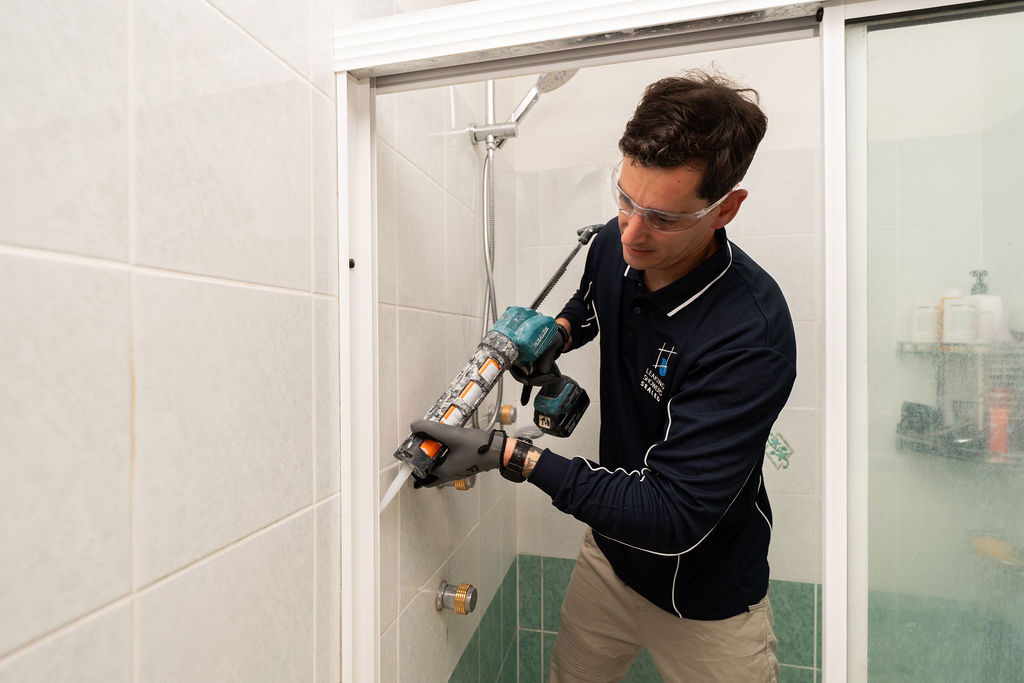
Most leaking shower walls we encounter are caused by failed grout and silicone. Our process for a complete shower seal involves removing all wall and floor grout, regrouting using Ardex epoxy grout, resealing internal corners and junctions with fresh silicone, and sealing tap flanges. The existing tiles remain intact. For a detailed description of this method, refer to our article on stopping a leaking shower without removing tiles, as well as our leaking shower repairs page.
Applying a new bead of silicone over an old one does not resolve the issue. Silicone cannot adhere properly to old silicone, soap residue, or mould, leading to future lifting and continued leakage. For more information on distinguishing a genuine shower reseal from a mere cover-up, see our related article.
Proper sealing also protects the wall behind it. When grout and silicone fail, water accumulates against the membrane, which can deteriorate at the corners and junctions. This is a primary reason to address leaks promptly. More information on the consequences of neglecting a leak can be found in our article on why you should never ignore a leaking shower.
Leaking Pipe, Drain, or Tap: Call a Plumber
If the leak originates from the pipes, drain, or taps, a licensed plumber must resolve the issue first. We collaborate with plumbers for these repairs, and the shower can be resealed once the plumbing concerns are addressed.
Failed Membrane Behind the Tiles: Engage a Licensed Waterproofer and Tiler
Typically, there is a waterproof membrane behind the tiles designed to catch any water that penetrates the surface. If this membrane has failed, it must be replaced by lifting the tiles, a task for a licensed waterproofer and tiler. Andreas’s licence includes waterproofing as well as bath and shower resealing, enabling us to identify the signs of a failed membrane. We will inform you before any costs are incurred for a reseal.
Leaking Shower Screen: Contact a Glazier
If water leaks from the silicone at the junction of the screen and tiles, replacing that silicone can often resolve minor leaks. if the screen frame itself is leaking, corroded, or improperly installed, it typically requires a glazier or shower screen specialist. We can facilitate the removal of the screen as part of a reseal and coordinate its replacement with a glazier.
Addressing Mould on Shower Grout Near a Leak
Persistent mould on grout and silicone often correlates with a leak behind the wall. While bleach and mould sprays may clean the surface, the mould resides within the grout, nourished by trapped water, leading to its recurrence. We remove the affected grout and replace it with epoxy grout, which does not absorb water as cement grout does. For a more detailed comparison, see our article on epoxy grout versus cement grout.
Managing Leaks Behind Shower Walls in Rentals and Homes for Sale
If you are renting and notice dampness on the wall behind the shower, inform your property manager promptly. A small leak at the grout or silicone is significantly easier to repair before water has the chance to spread over time. For landlords and property managers, the period between tenants is an ideal time to regrout, reseal, and deep clean the shower while the bathroom is unoccupied.
For real estate agents preparing a home for sale, regrouting, resealing, and deep cleaning the tiles and grout enhances the bathroom’s appeal. Since the old grout and silicone are replaced, the shower will pass inspection by potential buyers’ building inspectors, provided the leak originated at the grout and silicone. More information can be found on our page specifically for real estate agents and property managers.
Frequently Asked Questions About Shower Leaks Behind the Wall
Can a Leak Behind the Shower Wall Be Repaired Without Removing Tiles?
Yes, if the water is entering through the grout and silicone, which is the most frequent cause. We can regrout and reseal without removing the tiles. if the membrane behind the tiles has failed, tile removal is necessary.
Do Plumbers Repair Leaks Behind Shower Walls?
A plumber addresses leaks from pipes, drains, or taps located within the wall. If water seeps through the grout and silicone, the solution is a regrout and reseal instead.
How Long Does It Take to Repair a Shower Leaking Behind the Wall?
A complete shower seal typically takes about 4 to 5 hours on site, and the shower can be used again after 24 hours, once the epoxy grout and silicone have fully cured.
What Warranty Is Offered with the Repair?
Our regrout and reseal services come with a 10-year Ardex product warranty and a 7-year workmanship warranty. The warranty details will be included in your quote after we assess the shower to ensure proper sealing.
Request a Free Quote for a Shower Leak Behind the Wall
If you have noticed dampness on the wall behind your shower, a stain on the ceiling below, or if the grout and silicone have discoloured, please email photos of the floor, wall, and entire shower, along with the damp patch, to sales@leakingshowerssealed.com.au. We will respond within 24 hours. Alternatively, you can call us at 1300 815 512 or contact us to schedule a free quote. Provide details about the damp location and its appearance, and we will advise whether a shower reseal and regrout are suitable for your situation.
Leaking Showers Sealed has been specialising in regrouting and resealing showers in Sydney since 2016. Andreas, the business owner, holds NSW contractor licence 89111C, which can be verified on the NSW Fair Trading public register. We are Ardex Academy accredited and boast over 300 Google reviews across our three locations.
Original Article First Published At: Shower Leaking Behind the Wall? How to Tell, What Causes It and Who Fixes It