
Lopping involves cutting large branches indiscriminately, primarily to hastily reduce the size of a tree, often without considering the consequences of where the cuts are made. Topping refers to a similar practice applied to the top of the tree, aiming to lower its height. While both methods may seem quick and decisive in the moment, the real complications arise later.
Unlike skin, a tree does not heal wounds in the same way. Instead, it walls off the injury, developing new tissue around the damaged area while the affected wood remains. A clean cut in the appropriate location allows the tree to manage the healing process effectively. Conversely, a blunt cut through a large limb presents a significant challenge, often leading to decay. This decay is exacerbated by fungi and wood-boring insects that invade through the open wounds, spreading rot within the limb that remains hidden from view.
Regrowth presents another challenge. When a tree suddenly loses a significant portion of its canopy, it tends to produce a multitude of epicormic shoots—rapid, bushy growth that emerges from dormant buds beneath the bark. While this might appear as the tree's recovery, it is more accurately described as a panic response. These shoots are only weakly connected to the old wood, grow rapidly, and become heavy, all while sitting above a rotting wound. This combination can lead to the tree dropping limbs unexpectedly, often years later, during the first severe storm. In summary, lopping frequently results in a more hazardous tree than the one that existed prior, with the initial issues resurfacing within a few seasons.
Why Crowning Can Endanger Your Tree
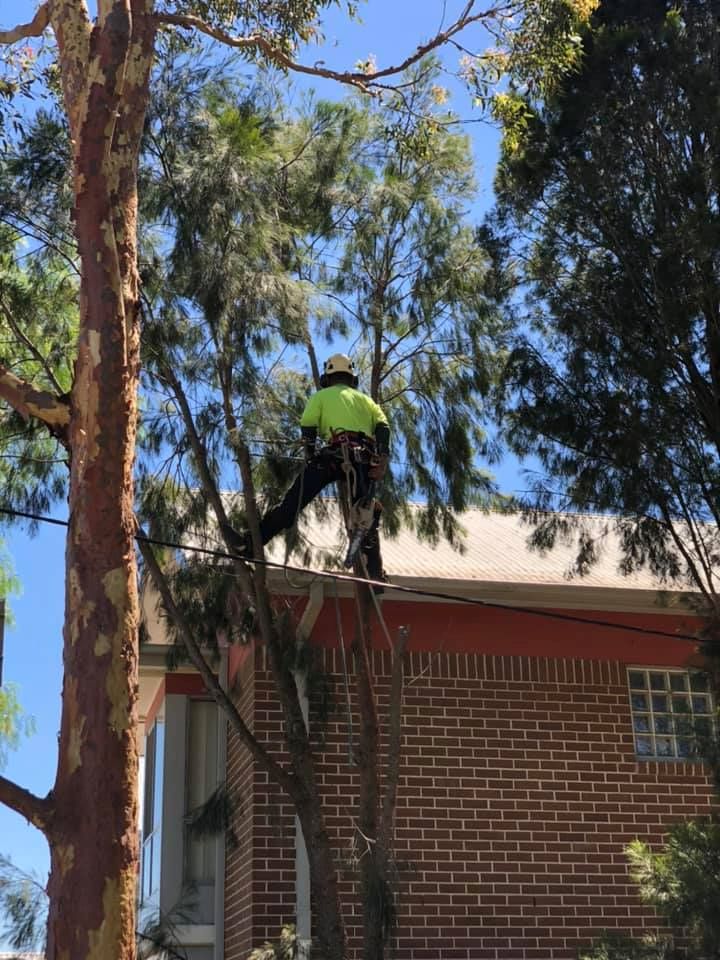
Crowning is a vague term that lacks a precise definition. It can mean anything from removing the top of a tree, lifting lower branches, or significantly cutting back the entire canopy. Two individuals may agree to crown a tree but have entirely different ideas of what the job entails, often leading to misunderstandings and poorly executed work.
When performed incorrectly, crowning is not merely an aesthetic issue; it can be lethal for the tree. Three key factors contribute to this risk. Firstly, the cuts are large and occur mid-limb, creating wounds that are too extensive for the tree to heal, allowing decay to invade. Secondly, the canopy serves as the tree’s food factory, and removing a substantial portion of it simultaneously hinders its ability to nourish itself and repair the damage. Lastly, the ensuing regrowth is weakly attached to decaying wood, resulting in a structure that is inferior to the original. A healthy tree may cope with this stress, but a eucalypt already experiencing drought stress might not survive. This is why we say it could kill the tree rather than it will.
The crown operations outlined in AS 4373-2007 include crown lifting, reduction pruning, and crown thinning. Each has a specific definition:
- Crown lifting: This involves removing lower branches to create clearance underneath for pathways, driveways, vehicles, or rooflines, while leaving the top of the tree untouched.
- Reduction pruning: This process shortens the outer branches back to a suitable lateral branch, allowing a new growing tip to take over. The tree maintains its natural shape, just in a smaller form. This is the proper solution for a tree that has outgrown its location.
- Crown thinning: This technique is discussed further below, as it is often confused with reduction pruning.
When someone offers to crown your tree, it’s essential to ask which of these three methods they intend to use and whether the cuts will land on a lateral branch or in an arbitrary location.
Understanding Crown Thinning and Its Importance for Newcastle Trees
Crown thinning is often misunderstood and deserves clarification. This technique involves the selective removal of certain smaller secondary branches, evenly distributed throughout the canopy, to reduce density without altering the tree’s height or overall shape. A properly thinned tree retains the same size and form as it did earlier that day, but with less foliage.
The primary aim of thinning is to improve wind resistance and light penetration. A dense canopy can act like a sail during storms, which is particularly relevant along our coast. By opening up the canopy, air can flow through the tree instead of pushing against it, reducing the load on branches and the root plate. improved light and air circulation can help mitigate some fungal issues beneath the canopy.
Thinning can become problematic if overdone. Removing too many branches can lead to a condition referred to as lion tailing, where bare inner branches are left with a tuft of foliage at the tips. This scenario shifts excessive weight to the ends of branches, counteracting the intended benefit of thinning. Thinning should be carried out with a gentle touch, evenly distributed throughout the tree, rather than stripping out the middle.
Defining Tree Pruning and The Importance of Cut Placement
Pruning is a broad term that encompasses various practices, but what distinguishes it from cutting is that every branch is removed for a specific reason, with each cut made in a deliberate location.
The ideal cut location is the branch collar, a slightly swollen ring of tissue where a branch connects to the trunk or a larger limb. This collar contains the essential tissue the tree uses to seal and close wounds. Cutting just outside the collar allows the tree to seal the cut effectively. If the cut is flush with the trunk, the collar is removed, leaving the tree without the means to heal, resulting in an open wound. Leaving a long stub means there is no living tissue to close the cut, causing the stub to die back and allowing decay to enter. the same branch and tree can yield three completely different outcomes based solely on the placement of the cut.
The recognised types of tree pruning each serve a distinct purpose:
- Deadwooding: This involves removing dead, dying, or broken branches. It is the least risky work on any tree and often the most valuable, as dead limbs are the ones that are most likely to fall.
- Formative pruning: This technique shapes a young tree early on, promoting the growth of a strong central leader rather than competing stems that will fail against each other as they mature.
- Structural pruning: This is similar to formative pruning but applied to semi-mature trees, correcting weak forks and crossing limbs before they become failure points.
- Selective pruning: Individual branches are removed for specific reasons, such as reducing weight over a roof or creating clearance from a structure.
- Remedial or restorative pruning: This approach rehabilitates trees that have already been damaged, including those that were previously cut poorly. A tree with a cluster of weak regrowth can often be restored over several years by thinning out the regrowth and allowing a few well-placed shoots to develop into robust limbs.
Why Newcastle Trees Are Adversely Affected by Lopping
The tree canopy in Newcastle heavily features species that do not respond well to blunt cutting, and each type fails in its own unique manner.
Spotted gums and eucalypts are prevalent throughout Newcastle's gardens and streets, already facing stress from hot summers, dry spells, and coastal storms. Inflicting acute injury on top of chronic stress can result in a eucalypt shedding limbs with little warning. A case study involving a lightning-struck spotted gum in Adamstown Heights illustrates the need for careful assessment rather than a hasty size reduction.
Brush box trees dominate the older suburbs and can grow to heights of twenty metres or more in suburban backyards, leading to the temptation to remove the top. this action typically results in multiple weakly attached regrowth leaders competing for dominance above a decaying column originating from the old cut. Angophoras, commonly known as Sydney red gums and found around Merewether, The Junction, and Bar Beach, are structurally complex trees with a naturally irregular form. Major work on these trees requires a thorough understanding of their load-bearing capacity. Camphor laurel is an exception: hard cutting tends to make it more vigorous, so cutting it back aggressively can create further issues.
For a comprehensive overview of which species create the most challenges locally, we have detailed the six trees that Newcastle arborists frequently remove.
Comparing Lopping, Crowning, Thinning, and Pruning
| Term | Description | Impact on the Tree |
| Lopping | Indiscriminate cutting of large branches to quickly reduce size | Results in open wounds, internal decay, and weakly attached epicormic regrowth |
| Topping | Removal of the top of the tree to decrease height | Similar effects as lopping, plus the loss of the tree's natural form |
| Crowning | A vague term that varies in meaning for different people | Depends entirely on the specific cuts made |
| Crown lifting | Removal of lower branches to create clearance beneath | Minor impact when cuts are made at the branch collar |
| Reduction pruning | Shortening outer branches back to a suitable lateral branch | Maintains the natural shape, results in a smaller tree with cuts that can heal |
| Crown thinning | Even removal of a portion of secondary branches throughout the canopy | Reduces wind load, increases light exposure, maintains size and shape |
| General Pruning | Selective removal with a defined purpose, cuts made at the branch collar | Allows the tree to seal wounds and continue growing |
Choosing Between a Lopper and a Qualified Arborist for Your Tree Care
For basic garden clean-ups, someone equipped with a chainsaw, a trailer, and a strong work ethic is often sufficient. Tasks such as cutting back an overgrown shrub, tidying a hedge, or clearing green waste following a windy weekend do not require arboriculture qualifications. Many individuals perform these jobs well and charge fairly.
The situation changes when two critical factors come into play. The first is the health of the tree; if you want it to thrive and remain healthy for the next decade, you need an expert. The second factor is the presence of structures nearby—such as fences, sheds, garages, or houses—where safety becomes paramount. This is where a qualified arborist really proves their worth, as the job shifts from simply cutting to managing the safe descent of several hundred kilograms of timber.
Before booking an arborist, be aware of three practical considerations that can often lead to misunderstandings:
- The title does not guarantee qualifications: Anyone can print words on a van, so the name alone is not informative. The recognised arboriculture qualification is AHC30820 Certificate III in Arboriculture, covering climbing, elevated work, and tree dismantling. Inquire about this qualification for a straightforward answer.
- Verify insurance rather than assuming it: Public liability insurance is not automatically assured by branding on a vehicle, particularly when dealing with trees positioned over buildings, where the risks are highest. Always ask for proof before work begins. Waratah is fully insured, and the crew consists of qualified arborists, so it’s reasonable to request the same assurance from anyone providing a quote.
- Clarify stump removal as part of the job: The individual removing the tree may not have a stump grinder, and if that’s the case, you’ll be left with the stump in your yard, necessitating a second professional to complete what you assumed was a single job. Make sure to settle this during the quoting process. Stump grinding is included in Waratah's services, ensuring the job is completed in one visit.
Essential Questions to Ask Before Pruning or Removing Your Tree
If you remember nothing else, keep these three questions in mind.
- What arboriculture qualifications do you hold?: A solid answer will specify an actual qualification, such as AHC30820 Certificate III in Arboriculture, without defensiveness. A good response will also detail the type of pruning being quoted: crown lifting, reduction pruning, crown thinning, or deadwooding. Vague responses about tidying up or just taking a bit off the top are telling.
- Can I see proof of public liability insurance before work commences?: Request a certificate of currency, and ensure you ask before anyone starts climbing the tree. A reputable business will readily provide this documentation.
- Do you grind the stump, or will I be left with it?: The answer should be a clear yes or no provided upfront, so you know whether you are scheduling one job or two.
If the tree in question belongs to a neighbour or its branches extend over the fence, ensure you have sorted out who has the authority to authorise the work before any action is taken. Our guide on neighbour tree disputes in NSW provides further information on this topic. check whether your local council protects the tree, as that protection applies regardless of the terminology used for the work.
When to Choose Tree Removal Over Pruning
Pruning is not always the solution, and denying this reality is unhelpful. Sometimes a tree is too far gone, too compromised, or simply situated in an inappropriate location. A qualified arborist should be able to clearly identify your situation. Indications that tree removal may be more appropriate than pruning include a substantial portion of the canopy being dead or diseased, significant internal decay or hollowing in the trunk, a recent worsening lean, and root damage that undermines stability. Storm damage warrants a separate assessment, as dangerous or storm-damaged trees require immediate attention.
Ultimately, the correct approach depends on the tree's species, condition, and its proximity to other structures. This is why an on-site evaluation is essential, allowing a professional to assess the tree and determine which of these four methods is applicable.
Common Questions About Lopping, Crowning, Thinning, and Pruning
What distinguishes tree lopping from tree pruning?
Lopping involves cutting large branches back indiscriminately to quickly reduce a tree’s size, often disregarding the location of the cut. In contrast, pruning refers to the careful removal of specific branches for defined reasons, with each cut made just outside the branch collar to enable the tree to seal the wound effectively. Although the same saw is used, the outcomes for the tree are vastly different.
Is tree lopping harmful to trees?
Typically, yes. Large, blunt cuts create wounds that the tree cannot seal properly, allowing decay fungi and wood-boring insects to invade, leading to internal rot. The tree's response is to produce numerous epicormic shoots that are weakly attached, grow rapidly, and become heavy. This type of cutting can make a tree more likely to shed limbs during a storm, rather than less.
Can crowning result in a tree's death?
It may, but it depends on the specific tree and the severity of the cuts. Removing a large portion of the canopy at once strips away the leaf area the tree relies on for nourishment, while the resulting large wounds are often too extensive to heal, allowing decay to enter. While a vigorous, healthy tree may withstand this stress, one already weakened by drought or poor soil may not.
What does it mean to crown a tree?
Crowning lacks a specific definition, which contributes to confusion. People may use the term to describe removing the top of the tree, lifting lower branches, or drastically cutting back the entire canopy. The clearly defined crown operations include crown lifting, reduction pruning, and crown thinning, making it important to clarify which method is being referenced.
What is crown thinning and when is it necessary for a tree?
Crown thinning is the deliberate removal of a portion of smaller secondary branches throughout the canopy to lower density without altering the tree’s height or outline. This process reduces wind load, which is particularly crucial along the coast, and allows more light and air to penetrate the canopy. If overdone, however, it can leave bare inner branches with foliage only at the tips, ultimately worsening the tree’s condition.
Should I hire an arborist or is a lopper sufficient?
For basic garden maintenance, hedge trimming, or clearing green waste, someone with a chainsaw and a trailer can be adequate. a qualified arborist is essential when the health of the tree is a concern or when nearby structures—like fences, sheds, garages, or houses—are at risk. This is where both timber control and proof of insurance become critical.
Is there an Australian standard for tree pruning?
Yes, AS 4373-2007, Pruning of Amenity Trees, was released in March 2007 and remains current. It addresses the removal of deadwood, crown lifting, formative pruning, reduction pruning (including line clearance), selective pruning, crown thinning, and remedial or restorative pruning. Practices like lopping and topping are not included in this standard.
Can a tree recover after being lopped?
It often can, but the recovery process can take years rather than weeks. The restorative approach involves gradually thinning out weak regrowth over multiple visits, allowing a few well-placed shoots to develop into sturdy limbs while monitoring the decay in old wounds. Some trees may be too compromised for effective recovery, a decision that must be made based on the specific tree.
Steven Brown is a qualified arborist and co-owner of Waratah Professional Tree Care, a family-run business serving the Newcastle and Hunter regions since 1998. For a pruning assessment or to receive a free quote, call (02) 4956 6602 or reach out online.
Original Article First Published At: What Tree Lopping Means and What It Does to a Tree