
Should You Hire a Line Pump or a Boom Pump?
Choosing between a line pump and a boom pump depends on your specific project requirements. Line pumps are ideal for residential applications and sites with limited access. On the other hand, boom pumps are better suited for larger concrete pours and projects that require extended reach. Assess your site access, the volume of concrete needed, and the urgency of the pour to make an informed decision.
Advantages of Line Pumps for Concrete Placement
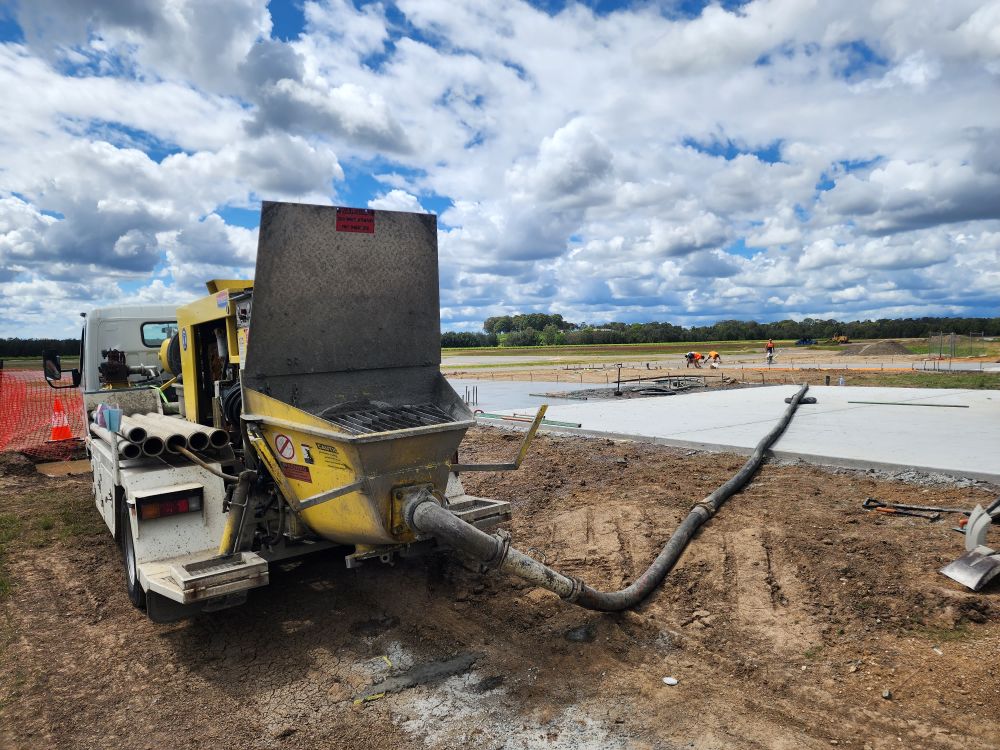
Line pumps operate by pushing concrete through a system of steel pipes or flexible hoses. They are the preferred choice for residential projects, narrow backyards, footpaths, and locations where access is restricted. Their compact design allows for quick setup, making them efficient for smaller pours. By using a line pump, your crew can avoid the labor-intensive task of moving concrete manually where boom trucks cannot reach.
Efficient Concrete Delivery in Confined Spaces
Line pumps excel in tight spaces, delivering concrete through flexible hoses. They are commonly used for residential slabs, footings, and smaller projects where boom trucks are impractical. These pumps are not only quick to set up but also more cost-effective to operate. They can easily navigate narrow driveways and confined streets, making them indispensable for many construction sites.
When Is a Boom Pump the Best Choice?
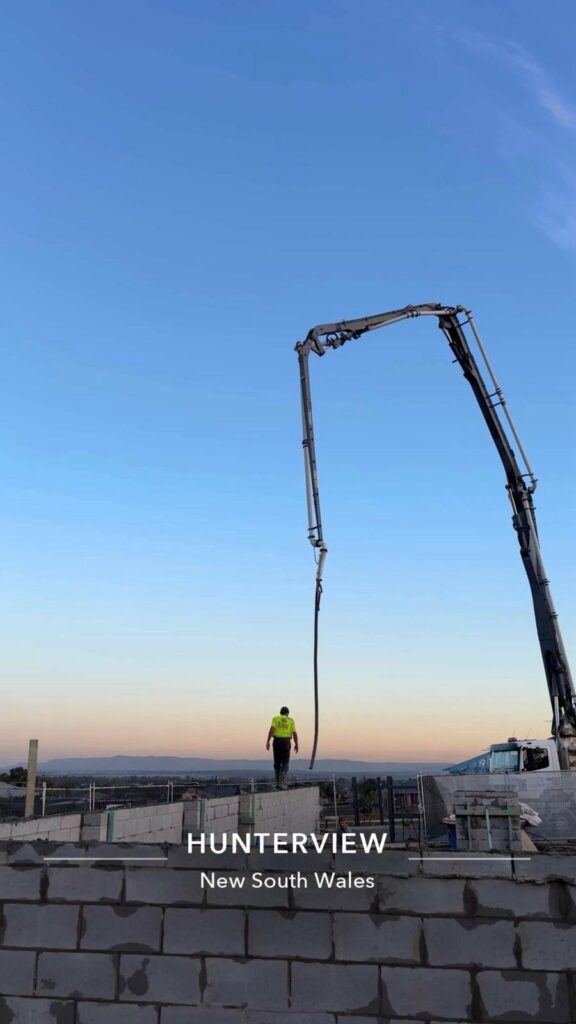
Boom pumps are mounted on trucks equipped with a telescoping arm that can extend over buildings, into foundations, or up into formwork. They are especially beneficial for commercial projects, large slabs, and high-volume pours, saving significant time during the placement process. The operator can control the concrete flow remotely, ensuring precise placement and minimising waste. For projects that require significant reach and volume, a boom pump is the optimal choice.
Selecting the Right Pump for Your Project
- For small or medium-sized pours: Opt for a line pump.
- For large slabs or commercial applications: Always choose a boom pump.
- When site access is limited: A line pump is ideal.
- When you need to reach over obstacles: A boom arm can accomplish this efficiently.
Make an Informed Decision with Hunter Concrete Pumps
Begin by evaluating your site conditions. If the access is restricted or the pour is small, a line pump will often be faster and more economical. For larger projects, such as multi-level buildings or substantial infrastructure work, a boom pump can place concrete more quickly and with less handling.
In the Hunter Valley and Newcastle regions, line pumps are frequently used for projects like driveways, footings, and pool installations. Boom pumps are preferred for tasks involving height or volume, such as bridge decks, multi-storey buildings, and industrial slabs. Unsure about which pump to choose? Contact us at 0419 252 930 and we’ll help you select the right pump for your job.
Original Article First Published At: Line Pump vs Boom Pump: Which One is Right for Your Construction Project