

Roof painting and restoration is a task where the disparity between a skilled painter and someone who takes shortcuts becomes evident within a year or two, sometimes even sooner. Roof surfaces endure more wear and tear than any wall inside your home. The preparation required to ensure paint adheres properly is substantial. If you neglect the prep work, choose the wrong primer, or apply too thin a coat, you’ll find yourself repainting well before the warranty period has elapsed.
With over 25 years of experience painting roofs across the Hills District, we understand what qualified painters do that cheaper quotes often overlook — and why it’s crucial for the longevity of your roof.
Understanding the Unique Challenges of Roof Painting
In brief: Roof surfaces are subjected to UV radiation, extreme heat fluctuations, leaf accumulation, moss and algae growth, and mechanical weathering from rain impact at a rate far exceeding that of any interior wall. The preparation necessary is significantly more elaborate, safety concerns differ, and the coating systems must be specifically tailored to the substrate.
A house in the Hills District built in the 1990s or 2000s is likely to feature either concrete roof tiles or Colorbond corrugated iron. Each type has its own specific preparation requirements:
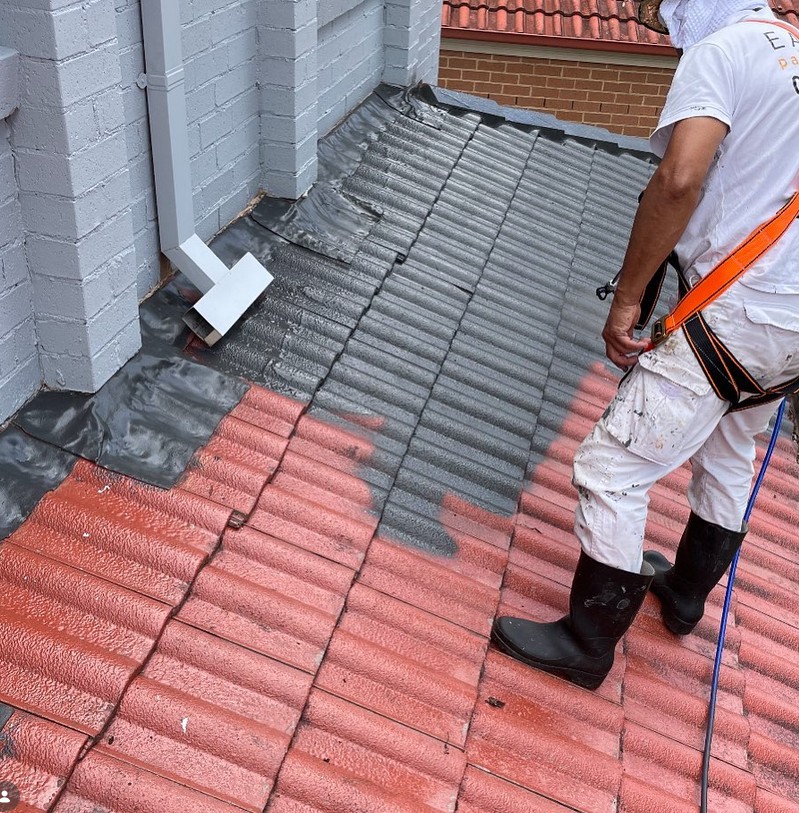
Concrete tile roofs are porous and can accumulate moss, lichen, algae, and dirt over time. Before any paint is applied, the tiles must undergo a high-pressure cleaning to eliminate all biological growth and debris, followed by a fungicide treatment to eradicate what the pressure wash has loosened. Neglecting the clean means you’re painting over an active surface — the biological growth will continue underneath and compromise the coating from below. After that, a penetrating sealer or primer specifically designed for concrete tile is applied before the topcoat. That’s two essential steps before any colour is added.
Colorbond and corrugated iron roofs require a completely different method. The factory finish must be abraded — either by hand sanding or with the appropriate equipment — to provide a mechanical key for the new coating to adhere to. Without this abrasion, paint applied to a bare metal surface relies solely on chemical adhesion, which deteriorates rapidly. A high-quality metal roof paint system must also be UV-stable; inexpensive exterior acrylic paints will chalk and fade much quicker in Sydney’s harsh UV conditions.
Common Shortcuts Taken by Inexpensive Quotes
Having restored numerous roofs, we know precisely where the shortcuts tend to occur. The most frequent include:
Insufficient pressure cleaning. A thorough roof clean on a moss-affected concrete tile typically takes a full day or more for a standard home in the Hills District. Some operators merely spray biocide and leave it there, or perform a low-pressure rinse that fails to adequately remove debris. You cannot discern from the ground whether the cleaning was effective. The paint will reveal the truth within 18 months when it begins to delaminate in patches.
Omitting the fungicide treatment. While pressure washing removes visible moss and algae, it does not eliminate the spores that survive within the tile pores. Applying a fungicide after cleaning, allowing it to dwell, is essential to prevent regrowth beneath the coating. Skipping this step saves 30-60 minutes and a small cost, but homeowners discover the consequences when a green tinge reappears through the paint.
Applying a single coat. A proper roof coating system requires a minimum of two coats — a primer or sealer, followed by at least one to two topcoats. Single-coat applications are thinner, less UV-stable, and more vulnerable to cracking. Some contractors manage to achieve the appearance of two coats by heavily diluting the paint, resulting in inferior coverage per litre compared to specifications.
Using the incorrect primer for the substrate. Concrete tile and metal roofs require different primer systems. Applying a standard exterior primer on Colorbond instead of a metal-specific primer with the appropriate adhesion profile will lead to peeling — it’s just a question of when it will happen.
Understanding Safety and Licensing Requirements
Roof painting involves working at heights, and New South Wales has specific regulations. According to the SafeWork NSW Work Health and Safety Regulation, any work conducted at heights over 2 metres requires fall protection. For roof work, this typically involves scaffolding, roof anchors and harnesses, or ladder restraints, depending on the roof's pitch and configuration.
Qualified painters possess the necessary training and equipment for working at heights. They also carry workers’ compensation insurance and public liability coverage. If something goes wrong on an uninsured job, you could be left vulnerable. This is one of those details that may seem minor until it becomes critical.
Our licence with NSW Fair Trading (Painting Contractor Licence 105492C) covers all residential and commercial painting projects, including roof coatings. We are also members of Master Painters Australia, which mandates current insurance and adherence to industry standards as a condition of membership.
Defining Roof Restoration Versus Roof Repaint
These terms are often used interchangeably, but they refer to different scopes of work.
Roof repaint: The process involves cleaning, treating, priming, and painting. The tiles must be structurally sound, and the ridge capping and pointing should be in good condition. This job is solely focused on applying a coating system. Most roofs in the Hills District require this treatment when the paint begins to fade or when algae becomes evident.
Roof restoration: This encompasses the repainting process, along with repointing or re-bedding the ridge capping, mortar repairs, and sometimes replacing cracked or broken tiles. This level of work is necessary when the mortar securing the ridge capping has cracked and dried out — a common occurrence in homes over 20 years old in the Hills District.
We assess the roof’s condition as part of our quotation process and clearly communicate which scope of work applies. If any tiles require replacement, we will inform you before commencing the job.
Information for Strata Managers and Property Managers
Commercial and strata roof painting must meet the same quality standards but also comply with common property obligations. Roof work within a strata scheme necessitates appropriate insurance from the contractor, and the work must align with the standards outlined in the scheme’s maintenance plan.
We have extensive experience working on strata complexes and commercial properties throughout the Hills District, including navigating compliance requirements. For commercial projects where roof access during business hours is impractical, we offer after-hours scheduling options.
Clarifying the Scope of This Article
If your roof has structural damage, cracked structural elements, significant water penetration, or collapsed sections, those matters fall under the expertise of a roofing contractor, not a painter. We will clearly inform you if we identify any structural issues during our assessment.
If you’re comparing quotes and are primarily focused on finding the cheapest option, we may not be the right choice for you. We prioritise thorough preparation and the use of appropriate products and will not undercut a job simply to secure it.
If you want a roof that has been painted correctly and are open to discussing the specifics of your quote — including preparation, product systems, and the number of coats — we would be glad to hear from you.
Addressing Your Roof Painting and Restoration Queries
How frequently should a roof be repainted?
A high-quality roof paint job on concrete tiles typically endures for 10-15 years in Sydney’s climate when executed properly — including thorough preparation, the right primer, and two full topcoats. Inadequate preparation or thin coats can significantly reduce that lifespan.
Is it possible for me to paint my own roof?
Legally, yes, as a homeowner you are permitted to do so. Practically, it poses risks both in terms of safety when working at heights and the quality of the finished result. The preparation steps are time-consuming and easy to rush, and issues typically emerge within a year or two.
What distinguishes roof restoration from a roof repaint?
A repaint involves applying a coating system — cleaning, treating, priming, and topcoating. A restoration includes the necessary mortar repointing or re-bedding of the ridge capping along with the repaint. Roofs over 20 years old often require this additional mortar work.
Do I require council approval for roof painting in the Hills District?
Generally, no — repainting in the same or a similar colour does not necessitate development approval. altering the colour on a heritage-listed property is a different matter. If uncertain, consult with Hills Shire or Blacktown Council.
Why do roof painting quotes differ so significantly?
The variation is typically due to differences in scope. Be sure to ask specifically about the preparation included and the product system being utilised. That’s where the true differences lie — not merely in the paint brand.
Do you use a harness when working on steep roofs?
Yes. Roofs with a certain pitch require fall protection under SafeWork NSW regulations, and we adhere to this requirement on every roof project.
Contact Us for an Honest Roof Assessment
If your roof in the Hills District is due for a repaint or restoration — or if you’ve received a quote that seems unusually low and are curious about what may have been omitted — reach out to us. We will inspect the roof, assess its condition, and provide you with a comprehensive quote.
Call Nasser at 0416 283 735 or email sales@easycutpainting.com.au. For further information, you can also visit our roof restoration and painting service page.
Easy Cut Painting Services — NSW Fair Trading Painting Contractor Licence 105492C. Member of Master Painters Australia. Owner-operated from Castle Hill, servicing the Hills District, Baulkham Hills, Rouse Hill, Dural, Pennant Hills, and surrounding suburbs. Over 25 years of hands-on experience. 0416 283 735 · easycutpainting.com.au
Original Article First Published At: Why You Need To Use Qualified Painters For Roof Painting And Restoration



You bring up a critical point regarding the often-overlooked complexities of roof painting and restoration. It’s striking how easily homeowners might underestimate the preparation required, seeing it as a simple coating job rather than a detailed, skilled trade. I’ve seen firsthand the fallout from opting for cheaper alternatives. A friend of mine decided to go with a low-cost option for his roof, thinking it would save him money in the short term. A year later, he found himself dealing with peeling paint and extensive moss growth due to inadequate prep work—exactly what you described.
You’ve highlighted some crucial points about roof painting that often get overlooked. It’s fascinating how easily people can underestimate the unique challenges roofs face compared to interior surfaces. Just last year, I had a neighbor who decided to go the cheaper route and hired a less experienced painter. Within months, there were noticeable peeling spots – a perfect example of how the right preparation and materials truly make all the difference.