

If your drain keeps blocking, the underlying issue likely stems from how the previous plumber handled the repairs.
Chances are you’ve already had a couple of plumbers come out, each time clearing the blockage and assuring you it was resolved. Yet, just six months later, your shower is backing up again, or your kitchen sink is gurgling. You’re not imagining things, and your home isn't experiencing some sort of curse. You’ve simply been paying for inadequate solutions.
Let’s delve into what’s truly happening and outline what a long-lasting resolution looks like in the Sutherland Shire.
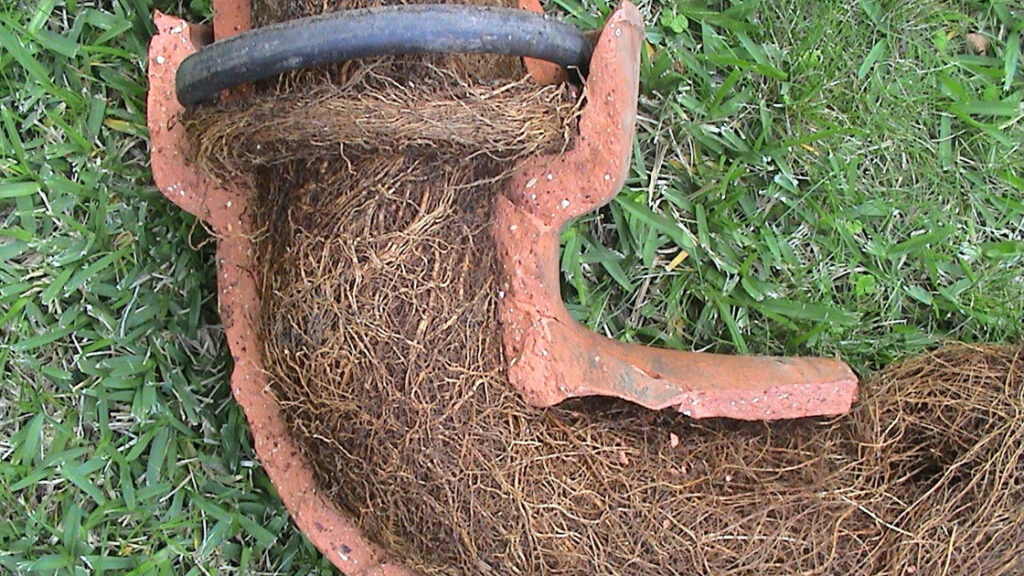
Understanding Root Invasion in Sutherland Shire Homes Compared to Newer Suburbs
This issue frequently arises in the older streets of Cronulla, Sutherland, and Engadine. Three primary factors contribute to the vulnerability of local pipes:
- Age of the homes: Many residences in the Shire were constructed between 1960 and 1990. The drains beneath them are often made from vitrified clay or early-generation earthenware, connected approximately every metre with rubber rings or cement collars. These joints are not designed to last indefinitely.
- The trees: Eucalypts, paperbarks, melaleucas, and the majestic old figs that populate many Shire backyards possess aggressive, water-seeking root systems. These roots can detect moisture vapour escaping from a joint from several metres away.
- The soil: Sandy soil allows for rapid drainage, compelling tree roots to venture further for water. Your drain becomes the most dependable water source in the garden, particularly during the summer months.
In contrast to a home built in the 2010s with PVC pipes, solvent-welded joints, and fewer mature trees, older Shire homes are particularly susceptible to root invasion.
How Do Roots Enter Your Drains?
Roots do not simply break through a healthy pipe. Instead, they take advantage of pre-existing vulnerabilities:
- Joint failure: The rubber seal between two sections of pipe deteriorates, or the cement collar develops cracks. A hair-thin root tip can slip through, locate moisture, and thicken over time.
- Hairline cracks: Ground movement, weight from vehicles above, or simply the passage of time can cause older pipes to crack. Roots will follow these cracks.
- Pipe deflection or belly: When a pipe section sags or shifts, the joints may separate slightly. This gap provides just enough opportunity for roots to enter.
Once inside, roots spread out into a tangled mass that traps everything—wet wipes, hair, and fats. This accumulation forms the blockage you’re paying to have cleared.
What Happens When You Clear a Blockage — And What It Doesn’t Achieve
Hydro-jetting effectively removes the roots but does not address the entry point they exploited.
A powerful jetter operating at 5,000 PSI will shred the root mass and flush it out, allowing the drain to function again. The plumber departs, and it appears the job is complete.
The joint or crack that allowed the roots to enter remains. It continues to leak moisture into the surrounding soil, attracting another wave of root growth—usually within six to eighteen months, depending on the season and the tree species.
A mechanical snake (electric eel) offers even less of a solution. It merely punctures a hole through the root ball to permit water flow, but the majority of the roots remain inside the pipe and regenerate more quickly than a properly jetted line.
Why Does My Drain Keep Blocking Repeatedly?
There are two main reasons:
- The original roots regrow: Trimming a root inside a pipe is akin to pruning a hedge; it will come back thicker.
- New roots locate the same entry point: Once a pipe joint is compromised and leaking, every tree in proximity becomes aware of it. Even if you remove the original tree, nearby trees (or those from your neighbour's yard) will eventually find the same gap.
Clearing the blockage alone is merely a maintenance strategy, not a permanent solution. If you are comfortable paying for a clearing every year or two, that is a valid choice. most individuals prefer a definitive resolution.
The Lasting Solution — Pipe Relining (No-Dig CIPP)
Pipe relining, or Cured-In-Place Pipe (CIPP), involves installing a new pipe within your existing one without excavating your yard.
Here’s the process for a typical job in the Sutherland Shire:
- CCTV inspection: We insert a camera into the line to precisely identify the location of cracks, joints, and root entry points. You’ll watch the footage alongside us.
- Hydro-jet clean: We remove the roots and thoroughly clean the inside of the pipe to its bare surface.
- Liner insertion: A felt sleeve saturated with a two-part epoxy is pulled or inverted into the pipe and inflated against its interior wall.
- Curing: The epoxy hardens in place (through heat, steam, or ambient conditions) over several hours, after which the bladder is removed.
- Final CCTV: We conduct a second camera inspection to confirm a continuous, seamless new pipe positioned inside the old one.
The outcome is a robust pipe-within-a-pipe structure with no joints for roots to exploit. It is designed to last over 50 years. Your garden, driveway, deck, and paving remain untouched.
When we say in-house, we mean it. Our team manages the entire process from CCTV inspection to cured liner installation—no subcontracting involved. This continuity is vital because the plumber who diagnosed your blockage is the same professional designing the relining, ensuring accountability for the outcome. There’s no unnecessary phone tag between different trades, and no finger-pointing if further work is required.
Cost Breakdown — Clearing, Relining, and Full Pipe Replacement
The following are realistic cost ranges for the Sutherland Shire. Each job is unique, and we provide a fixed quote after conducting a CCTV inspection.
- Hydro-jet clear: Starting from $400 — lasts 6 to 18 months — minimal disruption
- Pipe relining (per section): Starting from $4,000 — lifespan of 50+ years — minimal disruption, no digging required
- Full pipe replacement (excavate and re-lay): Starting from $15,000 — lifespan of 50+ years — significant disruption to your yard, paths, and potentially the driveway
If your drain continues to block and you've already paid for two clearances, relining typically pays for itself within three years versus ongoing clearings—and it eliminates the recurring issue. Don't see your pricing listed? Contact us for a straightforward quote after inspecting the line.
Areas in Sutherland Shire Where We Offer Our Services
We service the entire Shire and Southern Sydney, but we particularly see root invasion issues in the older pipe runs:
- Cronulla
- Caringbah
- Miranda
- Sutherland
- Engadine
- Menai
- Sylvania
- Gymea
If your home is located in one of these suburbs and was built before 1990, there’s a high likelihood that your blockages are caused by root intrusion.
Your Questions Answered
How Can I Tell If Tree Roots Are the Culprit?
Indicators include recurring blockages in the same line, gurgling drains, slow-draining showers and toilets, and patches of unusually vibrant grass over the pipe run. A CCTV inspection can confirm this within 20 minutes.
Is It Sufficient to Just Remove the Tree?
You can remove the tree, but that often does not resolve the issue. The dead root mass remains in the pipe, and other trees (either from your yard or your neighbour's) will likely find the same damaged joint. Repairing the pipe provides a long-term solution; tree removal is optional.
Will My Home Insurance Cover This Situation?
Sometimes—typically only if a specific event (such as a storm or ground movement) caused the damage, rather than gradual root invasion. It's worth checking with your insurer, but don’t rely solely on insurance. We can provide CCTV footage to support your claim.
How Long Does the Relining Process Take?
Most single-section relining jobs are completed within a day. More complex or branched runs may take up to two days. You can remain in your home during this time—water will only be turned off briefly during the curing process.
Could the Same Trees Cause New Blockages in Other Areas?
Only if there are additional weak joints or cracks downstream. That’s why we inspect the entire line with a camera, not just the blockage site, allowing you to determine whether to reline one section or the entire pipeline.
Connect with The Blocked Drain Guys
We are licensed NSW plumbers and specialists in blocked drains, and we carry out pipe relining in-house—never subcontracted. If your Sutherland Shire drain keeps causing you trouble, we’ll conduct an inspection, provide a clear quote, and resolve the issue once and for all. Contact us by phone or through our website, and we’ll send someone out to assist you.
Original Article First Published At: Tree Roots In Your Sutherland Shire Drains — Why It Keeps Coming Back

The issue of recurring drain blockages in older homes, as you’ve described, is certainly a frustrating scenario and one that many residents in the Sutherland Shire can relate to. It’s fascinating how the age of the infrastructure we rely on can significantly impact our daily lives, yet it’s often overlooked until problems manifest, as you’ve pointed out.
It’s fascinating how plumbing issues can mirror broader themes in home maintenance and care, especially in older neighborhoods like ours. The age of the homes really does play a significant role—I’ve seen neighbors invest in cosmetic updates while the underlying infrastructure, like pipes, often gets overlooked. It’s a bit like putting new paint on a rusted fence; it doesn’t fix the core issue.
This post highlights a crucial issue often overlooked in discussions about plumbing, especially in older suburbs like those in the Sutherland Shire. It’s disheartening to see many homeowners repeatedly face the same drainage problems due to insufficient methods employed in previous repairs. The mention of root invasion is particularly relevant, as the vulnerability of older pipe systems to such issues can lead to persistent headaches for residents.
You’ve hit the nail on the head with this one! I’ve experienced the same frustrating cycle with plumbing issues in my older home. It’s almost comical how you can keep shelling out cash for quick fixes only to find yourself back at square one after a few months. When I moved to an older suburb, I thought I was getting a charming place with character, but now I see it comes with its own set of challenges, especially when it comes to plumbing.